KYMATOS.
KYMATOS
📺 LITERARY STREAMING | EPISODE 02
THE PSYCHIATRIC PROFILE OF SÓCRATES
(The Genesis of Algorithm-Hatred)
INTRODUCTION
Welcome to the Second Installment of Kymatos.
Today we will not talk about engines or landscapes. Today we will enter the mind of the true Captain of this ship.
If you look at the image, you will see an African Grey Parrot on the verge of a rage attack, negotiating walnut futures by satellite phone. You might think: "How cute, he imitates a human." Error.
This is SÓCRATES. And his psychiatric diagnosis is: Tactical High-Functioning Narcissism with Cinematic Delusions of Grandeur.
He is not a pet. He is my Executive Control Network (ECN).
His self-esteem is not high; it is stratospheric. He does not believe he is equal to humans; he knows he is evolutionarily superior because he can fly and we pay taxes. He quotes The Godfather not for fun, but because he truly believes he leads a "Family" of two.
But this armored arrogance, this absolute contempt for the opinion of others, was born from a trauma. There was a day, in New York, before Route 40, when Sócrates tried to be a "Spiritual Leader" for the internet masses. He tried to raise the cultural level of humanity. And humanity responded with the deadliest weapon of South America: The Cooking Recipes.
Are you ready to see the exact moment when the Philosopher King was knocked down by a Corn Pie (Pastel de Choclo)?
👇 YOU ARE READY TO READ THE SECRET FILE: "THE CURSE OF ADAM LEVINE."
🦜 UNRELEASED FILE: THE DAY THE ALGORITHM DIED
(New York, TriBeCa Loft - Year 1)
THE STAGING (THE GENIUS'S EXPECTATION)
The loft smelled of burnt espresso and the static electricity of reckless ambition. Vicente had spent his last dollars on an 18-inch LED ring light that was reflected in Sócrates' black eyes like two artificial moons.
Sócrates was not a parrot that day. He was a Scholar.
He wore a black turtleneck (cut from a thermal sleeve of Vicente's) and non-prescription horn-rimmed glasses. His posture was regal, his chest inflated with the dignity of a Roman orator about to address the Senate. He was not looking for "likes." He was looking for subjects. He was convinced that his superior intellect was the light the digital world needed.
—Listen, Vicente —said the parrot with his baritone voice—. I am going to explain Plato's Allegory of the Cave and its relationship with the decay of trap. The plebs need direction. Today the cult is born.
Vicente, containing his laughter but admiring the audacity, pressed "STREAM LIVE."
—You're on the air, Commander! —he whispered.
Sócrates cleared his throat, looked at the camera with aristocratic disdain, and began: —«Citizens of the net... The reality that you see is nothing more than shadows projected by your own ignorance...»
THE REALITY (THE IGNORANT MOB)
The spectator counter went up. 1,000... 5,000 people. Sócrates nodded. "Good," he thought. "They are drinking from my wisdom." But then, Vicente looked at the chat. His face turned pale under the cyan light of the monitor. There were no Sorbonne philosophers. "The Mob" had arrived.
• User_Gamer777: "Holy shit, man, a talking chicken. Does he know how to say 'Suck my balls'?"
• Karen_USA: "Aw, so cute! Does he want a cracker? 😍"
• Venta_Garaje: "Price"
.• Venta_Garaje: "Price for the chicken and the lamp. I deliver at the subway."
Sócrates narrowed his eyes. His monologue on Plato stopped. Indignation began to inflate his feathers. —Price? —he whispered with hate—. Are they appraising me?
THE FINAL ATTACK (THE CHILEAN FUNA)
And then, the inevitable happened. The algorithm, out of cosmic cruelty, recommended the video in Chile. The Chilean users entered. And they did not come to insult. They came to do something worse. They came to ignore the intellectual content to impose their own culinary agenda.
The chat flooded at a vertiginous speed:
• Tia_Yoli_Oficial: "CORN PIE RECIPE: Ingredients: 6 ears of corn, 500g ground beef, onion, basil..."
• El_Brayatan: "Step 1: Chop the onion into fine squares and fry. Add the meat. Man, look at that bird, he's a dumbass, keep going with the recipe..."
• Javi_La_Mas_Vio: "BEEF STEW RECIPE: 1 kilo of ossobuco, squash, potatoes, corn. Boil the water..."
• Chileno_X: "KNEADED BREAD RECIPE: Flour, yeast, lard. Let rise for 30 minutes. Greetings to the big bird."
VICENTE'S PANIC (THE ADAM LEVINE SYNDROME)
Vicente saw the recipes and felt a shiver of pure terror. He understood what was happening. —Abort, Sócrates! Abort! —Vicente shouted, lunging toward the keyboard—. They are doing the "Great Adam Levine" to us!
Vicente knew the story. At the 2020 Viña Festival, Adam Levine, vocalist of Maroon 5, had given a lackluster show and had insulted the city. The revenge of the Chilean people was implacable and creative: millions of people invaded his social networks, not with insults, but with Chilean cooking recipes. They filled his Instagram photos with instructions to make Charquicán and Porotos con Riendas. To this day, years later, the multimillionaire singer has to block comments or live buried under tons of virtual Sopaipillas. It is the definitive "Funa": annulment by gastronomic irrelevance.
—If they keep writing recipes, the algorithm will classify us as a cooking channel, Sócrates! —shouted Vicente—. Your philosophical legacy will be buried under a Charquicán!
THE COLLAPSE (THE FALL OF THE KING)
But Sócrates did not understand about "funas." He only understood that he was being ignored by cooking ingredients. He read aloud, with his voice trembling with rage: —...Half a cup of fresh basil...? BASIL!? I am talking about Ontology, culinary maggots!
Rage blinded him. The "Alpha Male" could not bear that his speech was replaced by instructions for peeling corn. —Enough recipes! —he roared, channeling Al Pacino in Scarface—. I do not want your Corn Pie! I want your intellectual submission!
He tried to attack the screen. He performed a kung-fu jump toward the camera to peck at the virtual cooks. He miscalculated. His claws slipped on the polished table.
PLOP!
The Philosopher King fell on his back, dragging the ring light, the microphone and his dignity. He was left with his legs up, tangled in cables, while the chat continued rising implacably:
• Sra_Juanita: "Step 4: Add the meat filling and the olives. Bake at 180 degrees. Poor little parrot fell down."
Vicente cut the transmission. Black screen.
That night, while drinking water in silence, Sócrates dictated his final sentence: —The 99% is condemned, Vicente. They are a mass that only thinks about food and memes. Starting today, we are the 1%. Starting today, I only speak to those who deserve my voice.
And so was born the selective silence of Sócrates. It is not shyness. It is contempt for anyone who might have a stew recipe on the clipboard.
THE SCHOOL OF CINEMA (THE LUDOVICO METHOD)
Most people make the unpardonable mistake of infantilizing nature. They talk to their animals with that high-pitched and ridiculous falsetto, as if stupidity were a requirement for tenderness. I don't. In the TriBeCa loft, silence was a religion and the acoustics were calibrated to detect a pin drop at twenty meters. I was not going to contaminate my sanctuary with babbling of "hello little parrot" or "give me your paw."
Sócrates, after his physical recovery thanks to the eighteen-dollar veterinarian, had become a highly complex logistical problem. His brain, designed evolutionarily to map hundreds of kilometers of jungle and memorize the location of fruit trees in the Congo, was rotting of boredom between four walls of exposed brick and steel.
And a bored parrot is not a sad pet; it is an acoustic terrorist.
His scream was not a sound; it was a weapon. A frequency of 4,000 hertz that cut the air like a radial saw on glass, designed to pierce the density of the rainforest, but in my loft it bounced against the Genelec monitors and drilled my temporal lobe. I tried to give him wooden toys. He turned them into sawdust in three minutes with the precision of an industrial shredder. I tried to play classical music for him. He fell asleep or, even worse, he started ripping the keys off my MIDI keyboard one by one, looking for a reaction.
I needed a stimulus that was up to his neurosis. I needed data. Conflict. Structure.
It was then that I remembered the Ludovico Technique from A Clockwork Orange. If I could not take him to the jungle, I would bring the human jungle to his cage.
I installed a military-grade mount in front of his main perch and mounted a 12.9-inch iPad Pro screen with Retina resolution. I did not put on cartoons. I did not put on nature documentaries (the sight of other free birds only generated violence). I decided that, if I was going to share my life with this being, I should also share my ethical and aesthetic codes.
I gave him unrestricted access to my private server: The Collection of the Classics of Power.
For six months, that bird was subjected to a visual and auditory diet that would have broken the psyche of an average human. While I worked eighteen hours a day designing the electrical plans for the Zetros, behind my back, Sócrates consumed in a loop the complete filmography of Francis Ford Coppola, Martin Scorsese, Brian De Palma, and Vince Gilligan.
It was not passive entertainment. It was a forensic study.
I observed him out of the corner of my eye while I rendered audios. Sócrates did not move. He did not preen himself. He remained static on his perch, with his body leaning slightly toward the screen, in a predatory tension. His pupils contracted and dilated —the "pinning" of parrots— synchronizing not with the explosions, but with the tension dialogues.
He studied how Don Vito Corleone used silence before speaking. He analyzed the body posture of Tony Montana when he lost control. He absorbed the cold and ruthless logic of Walter White transforming into Heisenberg.
I changed his water and served him his macadamia nuts without saying a word to him, respecting his learning process. He looked at me, then looked at Al Pacino, and looked back at me, establishing correlations. He was decoding human behavior through its alpha predators.
The day he broke the silence was not just any day. It was a night of a thunderstorm in New York, the kind that makes the glass vibrate. I was on the edge of collapse. An important contract with a record label had fallen through, my technology investments were in the red and the loneliness of the loft felt like physical pressure in my chest. I sat on the leather sofa, with a glass of cheap whisky in my hand, staring at the ceiling, defeated.
—I'm a failure —I murmured to the void—. All of this is stupid. I should sell everything and go back to a cubicle.
The loft fell silent. Only the hum of the hard drives was heard. Then, from the darkness of the corner, I heard a voice. It was not a parrot's voice. It did not have that metallic and shrill timbre of cheap imitations. It was a raspy voice, whispered, loaded with a guttural and cavernous authority. A perfect phonographic reproduction of Marlon Brando.
—«A man who doesn't spend time with his family can never be a real man».
I froze. The whisky glass trembled in my hand. I turned slowly. The iPad screen was off. The only light came from a lightning bolt that illuminated Sócrates' silhouette on his perch. He was looking at me fixedly. Not with curiosity, but with disappointment.
—What did you say? —I asked, with a breaking voice.
Sócrates lowered his head, ruffled the feathers on his neck to appear larger, and changed registers. This time, he channeled the explosive fury of Tony Montana.
—«Who do you look at? Don't tell me you're not happy! Look at me! All I have in this world is my balls and my word! And I don't break them for no one, understand?!».
The phrase hit the air like a gunshot. He was not repeating random sounds for a food reward. He was contextualizing. He had detected my weakness, my self-pity, and he was using his cinematic database to give me a moral slap. He was telling me to stop whining and act like a man.
I burst out laughing. It was a hysterical, maniacal laugh that brought tears to my eyes. I got up, went over to the cage and looked him in the eye. He did not flinch. He held my gaze with the arrogance of a Sicilian capo who has just ordered an execution.
—You're right —I said to him—. They don't break for anyone.
That day, the hierarchy changed forever. Sócrates stopped being a pet. He became my consigliere. I understood that he had not learned to "speak Spanish." He had learned the language of power.
He had learned that in the human world, just like in the jungle, respect is taken, not asked for.
Since that night, our communication turned into a coded language of cult quotes. When we cook and something comes out perfect, he whispers: «Say my name» (Say my name), waiting for me to respond «Heisenberg».
When there's danger on the road or a police checkpoint gets tense, he doesn't scream like a frightened animal; he looks at me coldly and quotes Mike Ehrmantraut: «No more half measures, Walter».
Film school didn't teach him to be human. It taught him to be something better: a character. And in a world full of extras and background actors, he decided he was going to be the protagonist of the damn movie.
THE PIGEON OF THE ABYSS (THE THERAPY OF OLD DOC)
Everyone knows that Arístides robbed me. He left me without a patent and with a bleeding bank account. But that night in the West Village alley, under a rain that chilled to the bone, I didn't think about numbers. I saw that wet box, I saw that grey misfortune shivering inside, and I felt I was looking at a mirror of my own broken soul.
I picked him up. He was a grey parrot chick, plucked, with closed eyes and bluish skin.
I made a rookie mistake. I took him first to a "high complexity" clinic on Fifth Avenue. A place of stainless steel where specialists charge you just for breathing. —We need an avian pulmonology specialist —me dijo un tipo que ni me miró a los ojos—. And then a consultation with the feather dermatologist. It's four thousand dollars just to start. I paid. I paid with what I didn't have. And for three days, I watched as my partner faded away among machines that went beep-beep but had no warmth.
Desperate, on the verge of collapse, the janitor of my building stopped me. —Take that animal out of there, boss —he whispered to me—. Those guys cure the organ, not the patient. Go to Queens. Look for "Doc" Moretti. He's one of the old-timers. He cures even the evil eye.
I arrived at Moretti's office with the chick against my chest and tears running down my face, mixed with the rain. It wasn't a clinic. It was an old brick house that smelled of pipe tobacco, grandma's stew, wet dog, and camphor alcohol.
The **Doc** came out. He was a short man, with suspenders, white hair messy like Einstein's and hands that looked like tanned leather baseball gloves. He saw me come in crying, snot flowing, trembling with panic. The old man looked at me over his glasses, let out a laugh that made the formalin jars vibrate and shouted: —Holy Madonna! Nurse! Bring a double Valium! But for the owner, because the bird looks calmer than he does!
He sat me in a wooden chair. —«Let's see, let's see...» —he said, taking the chick from me with a delicacy that contradicted the size of his fingers—. «What do we have here? A dinosaur that forgot to grow?»
The **Doc** didn't use scanners. He did what real doctors do, the holistic ones, the ones that no longer exist because now there's a "specialist for the left pinky toe." He smelled the bird. He opened his beak. He pressed his ear to the bare chest and closed his eyes, listening to the rhythm of life like a mechanic listens to a V8 engine. Then he looked at me, still sobbing over my scam and my failure.
—«Listen to me, boy» —he told me, patting my face affectionately—. «This animal isn't dying of a virus. He's dying of sadness. And he's sucking it out of you. Animals are antennas, son. If you transmit panic static, he can't tune into life.»
The **Doc** transformed. He stopped being a veterinarian and became a **Nutritionist**: —You are going to prepare him a corn porridge, but not that commercial trash. Real corn, cooked with a touch of honey. He became a **Traumatologist**: —That little leg is weak, but it doesn't need a cast, it needs massages. Like this, look... —and he moved the parrot's claw with tenderness. And finally, he became a **High Performance Psychiatrist**: —And you... you are going to stop crying for the money they stole from you. The money comes back. Life doesn't. If you want him to live, you have to laugh. Laughter raises the defenses, it is the best biochemistry that exists. Laugh, damn it!
He told me a dirty joke about a dog and a bishop. It was so absurd, so out of place in the middle of my tragedy, that I let out a hysterical laugh. And the miracle happened. The chick, who had been in a coma for three days, opened an eye upon hearing my laughter. —«Do you see?» —Moretti said, smiling tenderly while stroking the parrot's head with his thumb—. He likes the scandal. He is a survivor, just like you.
I spent two weeks going to see him. The **Doc** didn't charge me for "hospitalization," or for "operating room use." He charged me fifty dollars and a bottle of red wine. —«This isn't a parrot, son» —he told me on the last day, handing me a **Sócrates** who was already standing firm and biting my finger with love—. He's a Gangster. Mira cómo camina. Tiene más actitud que mis pacientes humanos.
I left there with **Sócrates** on my shoulder. I had lost a fortune at the luxury clinic, but in that house in Queens, amidst the smell of tobacco and old laughter, I had recovered something that **Arístides** could never steal from me: the certainty that real medicine isn't in machines, but in the warm hand of someone who knows that the soul also gets sick.
That day, Sócrates not only learned to eat. He learned that laughter is the only shield against the cold of the world.
THE GASTRONOMIC CRITIC (OR HOW I SPENT THE RENT ON CHEESE)
After old **Doc Moretti** saved him from death and **Marlon Brando** taught him how to intimidate, **Sócrates** faced his next evolutionary crisis: **The Existential Hunger Strike.**
It happened on a grey Tuesday in the TriBeCa loft. I was technically broke. **Arístides** had frozen my main accounts, and my diet consisted of reheated coffee and the anxiety of knowing the rent was due in three days. In an attempt to be a "responsible owner," I served **Sócrates** his usual ration of "Premium Tropical Parrot Mix": a sad confetti of dried sunflower seeds, corn that looked like an old man's tooth, and some radioactive-colored pellets that smelled of wet cardboard and industrial sadness.
**Sócrates** climbed down from his perch with the slowness of a mafia boss checking suspicious merchandise. He approached the stainless steel feeder. He looked at the seeds. He looked at me. He looked back at the seeds.
The silence in the loft was sepulchral. Only the hum of my hard drives processing data that wasn't going to get paid was heard.
Then, with a foot movement so deliberate and contemptuous it would have made a French waiter cry, he tipped the bowl. The seeds clattered against the wooden floor like a shower of insults. **Sócrates** didn't fly. He stayed there, on the table, puffed out his chest, contracted his pupils until they became pins of pure hatred, and, channeling **Robert De Niro** in Casino, squawked:
—«What is this? Do I look like a clown to you? Do I amuse you? What the fuck is this?».
I tried to reason with him. I was tired, hungry, and my patience was at 1%. —«It's balanced food, you damned $4,000 dinosaur. It has vitamins. Omega 3. Eat it or you die.»
**Sócrates** held my gaze. He tilted his head and changed registers. This time, his voice was a sibilant, cultured, and terrifying hiss, identical to **Hannibal Lecter** in The Silence of the Lambs: —«A census taker once tried to test me... I ate his liver with some fava beans and a nice Chianti. Fftftftftft...».
I got the message. A shiver ran down my spine. My partner was not a pet. He was not a farm animal content with survival. He was a **Tactical Hedonist.** He was a being who had decided that, if the outside world was a chaos of mediocrity and corporate scams, his body would be a temple of excellence.
That night I made an irresponsible financial decision. The kind of decision that separates the crazy from the sane. I had $200 in cash. It was the money for the electricity or to eat for two weeks. I put on my trench coat, went out into the New York rain, and walked to **Dean & DeLuca,** the most pretentious gourmet market in SoHo.
I didn't buy rice. I didn't buy pasta. I bought Truth.
I spent $80 on a wedge of **Parmigiano Reggiano** cheese aged 24 months, with those tyrosine crystals that crunch on the tongue like little flavor diamonds. I spent $40 on white truffle oil (a stupidity, I know, but the smell of gas and earth made me feel alive). I bought organic macadamia nuts, so fatty and perfect they looked like pearls. And I bought «**Ruby Roman**» red grapes, firm, seedless, tight like drum skin.
I returned to the loft soaked, but with the brown paper bag protected under my coat as if I were carrying nuclear codes. I went in. **Sócrates** was watching me from the darkness, judging me.
—«Get ready» —I told him.
I didn't turn on the kitchen light. I lit candles. I went to the audio console and played, at full volume, «**Nessun Dorma**» from the opera *Turandot,* performed by **Pavarotti.** Because if we were going to dine with our last dollars, it wasn't going to be a formality; it was going to be a **Mass.**
The music filled the industrial space. The violines rose. I took out my 8-inch **Wüsthof** knife —the only material possession I refused to sell, forged from a single piece of German steel in Solingen— and attacked the **Parmigiano.** I didn't cut pieces; I extracted shards. Edible geology. I placed the cheese, grapes, and nuts on an olive wood board.
I brought the board closer to **Sócrates.** The parrot didn't rush to eat. He approached with reverence. He sniffed the air, capturing the molecules of the truffle oil and the lactic fermentation of the aged cheese. He took a grape with his left claw. He held it like Hamlet holding Yorick's skull. With surgical precision, he peeled the grape using only the tip of his beak, discarded the bitter skin, and ate the sweet pulp, closing his eyes in almost obscene ecstasy.
Luego, fue por el Parmigiano. Pavarotti estaba llegando al clímax. ¡Vincerò! ¡Vincerò! Sócrates mordió el queso. El crujido fue audible. Abrió los ojos. Sus pupilas se dilataron y contrajeron rítmicamente, drogado por el glutamato natural y la grasa perfecta.
The music ended. The silence returned to the loft, but it was no longer a sad silence. It was the silence of satiety and victory. Sócrates cleaned his beak on my shirt lapel (ruining it, of course), looked at me with an ancestral depth and, with the voice of Remy, the rat chef of Ratatouille, sentenced:
—«If you are what you eat, then I only want to eat the good stuff. The rest... is trash, Vicente. Trash».
That night the **Law of the Palate** was born. We understood that poverty is not the lack of money; poverty is the lack of **Standards.**
Since that day, in the **Zetros,** we can be fleeing corrupt police, covered in caliche dust in the Atacama desert, without bathing for three days... but inside the cabin, we eat better than at the **Ritz.**
If we stop at 4,000 meters altitude, I take out my **Le Creuset** cast iron pot (anchored with neodymium magnets so it doesn't become a missile in the potholes) and prepare a risotto with dried mushrooms hydrated in **Malbec.** I grind the coffee in the **Jura** machine, calibrated so that the extraction lasts exactly 25 seconds, creating a golden crema that **Sócrates** visually inspects before giving me the go-ahead.
—It lacks body, Vicente —he tells me sometimes, quoting Gordon Ramsay—. This looks like dishwater! Wake up!
Many believe it's snobbery. They are wrong. It is **Resistance.** When the world wants you to eat processed trash, consume trash content, and live a trash life, peeling a perfect nut, smelling real coffee, or cutting a cheese that cost your last bill is a revolutionary act. It's the only way to remind your brain, and your soul, that despite **Arístides,** despite the algorithm, and despite the cold... you still deserve the best.
THE PROPHET OF THE 7 HERTZ (THE DAY SCIENCE ARRIVED LATE)
It happened on a Thursday at 3:14 in the morning. The worst time of night, when creativity mixes with psychosis and coffee no longer wakes you up, it just makes your hands vibrate.
I was in the TriBeCa loft, in the middle of an engineering crisis. I was trying to calibrate the **KYMAT-X** algorithm (the jewel that **Arístides** would later try to steal from me) to detect interference patterns in complex audio signals. I had my **Genelec 8351B** coaxial beryllium monitors connected, a beast of Finnish engineering capable of revealing if a violinist in a 1970 recording had dandruff.
The silence in the loft was absolute. Or so I thought.
**Sócrates** was on his perch, supposedly sleeping. He had been behaving like an English Lord for a week, demanding peeled grapes and looking at my screens with insufferable moral superiority. But that night, something changed.
Suddenly, the parrot opened his eyes. He didn't move. He didn't stretch. He stayed rigid, catatónico, con las plumas pegadas al cuerpo, convirtiéndose en una estatua de granito gris. Sus pupilas se contrajeron hasta convertirse en dos puntos de alfiler negros, rodeados de un iris amarillo pálido que brillaba con una intensidad radiactiva.
—«What's wrong?» —I asked him, lowering the volume of the mix—. «Did you see a ghost?»
**Sócrates** didn't look at me. He kept his head turned toward the window, pointing northeast, toward the heart of Manhattan. And then, he made the sound. It wasn't a squawk. It wasn't a cinematic imitation. It was a **Hiss.** *Shhhhhhhhhhhhhhh… tuc… Shhhhhhhhhhhhhhh…*
It was a perfect «**White Noise**» sound, modulated with a rhythmic click. I approached him. —«Hey, do I reboot you? Have you crashed?»
The bird turned his head slowly, like the robot in *The Exorcist,* looked at me with terrifying urgency and, breaking his vow of cinematic silence, whispered in the voice of the girl from *Poltergeist*:
—«They're here».
I laughed. I thought it was a joke. —«Very funny. Go back to sleep, clown.»
But **Sócrates** didn't laugh. He jumped from the perch and hid under my mixing console, trembling. And then, exactly twelve seconds later, it happened.
The floor of the loft moved. It wasn't a violent tremor. It was a nauseating ripple, a dizziness of concrete. The windows vibrated with a low frequency that churned my stomach. My **Genelec** monitors swayed on their mounts. The coffee in my **Yeti** cup made perfect concentric waves, like in *Jurassic Park.*
It was a micro-quake. A 4.2 magnitude tremor with its epicenter in New Jersey that shook the foundations of New York. When the earth stopped moving, I froze, clutching the table. I looked at the spectrum analyzers on my screen. The **KYMAT-X** software, my pride, my million-dollar technology… hadn't registered anything until the moment of impact. The line was flat until the earthquake hit.
I looked under the table. **Sócrates** came out, shook the dust off his wings with indignation, climbed back onto his perch and looked at me with the contempt of a senior engineer toward a clumsy intern.
—You felt it twelve seconds before —I whispered, stunned—. How the hell did you do it?
**Sócrates** puffed out his chest. He knew he had won. I, the human genius with my servers and my algorithms, was blind. He, with a brain the size of a nut and hollow bones full of air, had tuned into the **P-Wave** (the primary compression wave) that travels faster than the destructive shock wave. He had felt the vibration of 7 Hertz, the infrasound that the earth emits before breaking.
That night, I put on background music to calm my nerves: the soundtrack of «**Interstellar**» by **Hans Zimmer.** The church organ filled the room. I poured myself a double whisky and served **Sócrates** a capful of **Fiji** mineral water (because after saving my life, he wasn't going to drink from the tap).
—You're a biological radar —I said to him, toasting with him—. You are my Early Warning System.
Sócrates He drank his water, clicked his beak, and, quoting Sarah Connor in Terminator 2,
pronounced the sentence that would mark our future escape: —«The future is not written. But there's a storm coming».
At that moment, I understood the true hierarchy of our team. I provide the technology, the cables, and the money. But he… he provides the **Intuition.** When we flee toward Route 40, when they chase us in the desert, or when the weather threatens to kill us in Patagonia, I don't look at the GPS or the weather radar. I look at the parrot. If he sleeps, we're safe. If he makes the hiss… we run.
Because technology fails, satellites fall, and **Arístides** can hack my servers. But no one, absolutely no one, can hack 50 million years of evolution designed to survive the apocalypse.
THE LITURGY OF THE ASH (HYGIENE AGAINST CHAOS)
(Bunker Metadata: Route 40, Km 2340. Atacama Desert. 14:00 hrs. Vertical sun, radiation heat: 38°C. Zetros Interior: Stable 21°C. Odor: French lavender and Ionized Ozone).
The outside world is entropy. It is dust, bacteria, sweat, and the random chaos of nature trying to degrade matter. Inside the **Mercedes-Benz Zetros,** the world is **Geometry.**
If someone entered the cabin right now, they wouldn't see a desperate fugitive fleeing a global corporation. They would see a man in Italian linen underwear, with black forensic-grade latex gloves, kneeling in front of a toilet with the devotion of a bomb disposal technician defusing a nuclear bomb.
It was **Ash Day.**
—You're failing on the angle of attack, Vicente —squawked **Sócrates** from the kitchen counter.
The parrot wore his custom reflective yellow safety vest (because maintenance is a construction zone) and clear protective glasses that gave him the look of a psychopathic mining engineer. He was eating a piece of macadamia nut with exasperating slowness, dropping shells outside his plate, just to test my mental stability.
—Shut up —I whispered, cold sweat—. I am operating the Cinderella Motion.
The **Cinderella** is not one of those chemical toilets that smell like a cheap music festival. It is a marvel of Norwegian engineering. It costs what a small car is worth and uses no water. It uses fire. It incinerates biological waste at 600 degrees Celsius with propane gas, reducing everything (absolutely everything) to a handful of sterile ashes, free of pathogens and guilt. It is the most philosophical machine I own: it turns shit into inert dust.
I pulled the stainless steel tray from the bottom of the device. It was full of a fine, grey, almost volcanic powder. —«Dust you are and to dust you shall return» —quoted **Sócrates,** channeling the deep voice of **Morgan Freeman**—. «But first, clean that corner, pig».
I stood up, indignant. —I am cleaning! It's sterile ash! You could put it in your salad and nothing would happen to you! —You do it first —he replied, quoting **Indiana Jones**: —«You choose... wisely».
I turned on the music to drown out the sound of the desert wind hitting the exterior armor. I didn't play reggaeton. I didn't play pop. I played «**The Great Gig in the Sky**» by **Pink Floyd.** The soul-piercing screams of vocalist **Clare Torry** filled the bunker. It was the perfect soundtrack for cleaning a three-thousand-dollar toilet in the middle of nowhere.
We moved on to **Phase 2: Clothing.** In **Kymatos,** people think I use a washing machine. False. Washing machines waste water and break fibers. I wash by hand. I filled my German silicone folding bucket with warm water filtered by reverse osmosis. I added an exact measure of **Dr. Bronner’s** biodegradable eucalyptus-scented soap. I submerged my white linen shirt. The water turned cloudy. I felt an almost erotic satisfaction seeing the dirt leave the fabric. I scrubbed the cuffs with my own knuckles, feeling the friction, the slight pain, the reality.
**Sócrates,** bored with overseeing the bathroom, flew to my shoulder. He pecked my ear gently, a gesture that in his language means "I hate you, but you're my human." —«Look what they did to my boy» —he whispered, imitating **Marlon Brando** in The Godfather seeing Santino's body—. «Look at you. An acoustics genius washing clothes like a 19th-century laundress».
—It's Personal Mastery, winged rat —I replied to him, wringing the shirt hard—. If you control your clothes, you control your mind. If Arístides saw me now, he'd think I've gone crazy. And he'd be right. But I'm a crazy man with clean clothes.
I hung the shirt on the retractable clothesline under the air conditioning. The white fabric shone against the matte black of the walls. The interior of the **Zetros** smelled of eucalyptus, freshly ground coffee in the **Jura** and the victory over entropy. Outside, the sun scorched the stones. Inside, we were civilization.
I took off my gloves. I served myself a double espresso in my **Yeti** cup (which keeps the heat until Judgment Day). **Sócrates** hopped down to the table. He took off his protective glasses with his beak and threw them on the floor (click). He looked me in the eyes. His pupils dilated. He knew the ritual was over. Chaos had been kept at bay for another 24 hours.
He raised a wing, pointing to the immaculate toilet and the white clothes, and with the authoritative voice of **Harvey Keitel** (Mr. Wolf) in Pulp Fiction, sentenced: —«Well, let's not start sucking each other's dicks quite yet. We still need to mop the floor».
I laughed. I laughed until tears came out. Because he was right. Cleaning never ends. The struggle against dust, against oblivion and against mediocrity is eternal. But while I have my soap, my **Pink Floyd** and this psychopathic bird criticizing my technique... I think we're going to survive.
THE LITURGY OF THE ASH (HYGIENE AGAINST CHAOS)
(Bunker Metadata: Route 40, Km 2340. Atacama Desert. 14:00 hrs. Vertical sun, radiation heat: 38°C. Zetros Interior: Stable 21°C. Odor: French lavender, Ionized Ozone and a touch of Lithium Grease).
The outside world is entropy. It is dust, bacteria, sweat, and the random chaos of nature trying to degrade matter. Inside the **Mercedes-Benz Zetros,** the world is **Geometry.**
If someone entered the armored cabin right now, they wouldn't see a desperate fugitive fleeing a global corporation. They would see a man in Italian linen boxers (brand **Zegna,** the only ones that don't irritate), wearing tactical black **Crocs** and black forensic-grade latex gloves. He was kneeling in front of the toilet with the devotion of a bomb disposal technician defusing a nuclear bomb with three seconds left.
It was **Ash Day.**
—You're failing on the angle of attack, Vicente —squawked **Sócrates** from the kitchen counter.
The parrot wore his custom reflective yellow safety vest (because maintenance is, legally, a construction zone) and clear protective glasses that gave him the look of a psychopathic mining engineer. He was eating a piece of macadamia nut with exasperating slowness, dropping shells outside his plate, just to test my mental stability.
—Shut up —I whispered, cold sweat despite the air conditioning—. I am operating the Cinderella Motion.
The **Cinderella** is not one of those chemical toilets that smell like a cheap music festival and desperation. It is a marvel of Norwegian engineering. It costs what a small car is worth and uses no water. It uses fire. It incinerates biological waste at 600 degrees Celsius with propane gas, reducing everything (absolutely everything) to a handful of sterile ashes, free of pathogens and guilt. It is the most philosophical machine I own: it turns shit into inert dust.
I pulled the stainless steel tray from the bottom of the device. It was full of a fine, grey, almost volcanic powder. —«Dust you are and to dust you shall return» —quoted **Sócrates,** channeling the deep and biblical voice of **Morgan Freeman**—. «But first, clean that corner, pig».
I stood up, indignant, with the steaming tray in my hands. —I am cleaning! It's sterile ash! You could put it in your salad and nothing would happen to you! —You do it first —he replied, tilting his head and changing to the voice of **Harrison Ford** in Indiana Jones and the Last Crusade: —«You choose... wisely».
I turned on the music to drown out the sound of the desert wind hitting the exterior armor. I didn't play reggaeton. I didn't play pop. That muddies the aura. I played «**The Great Gig in the Sky**» by **Pink Floyd.** The orgasmic and soul-piercing screams of vocalist **Clare Torry** filled the bunker. It was the perfect soundtrack for cleaning a three-thousand-dollar toilet in the middle of nowhere. The solemnity of **Richard Wright's** piano chords elevated the act of scrubbing to an almost religious category.
We moved on to **Phase 2: Clothing.** In **Kymatos,** people think I use an automatic washing machine. False. Washing machines waste water, break the fibers of Egyptian cotton and make a noise that offends **Sócrates.** I wash by hand. It is my therapy against **Arístides.**
I filled my German silicone folding bucket with warm water filtered by reverse osmosis. I added an exact measure (15 ml) of **Dr. Bronner’s** biodegradable eucalyptus-scented soap. I submerged my white linen shirt. The water turned cloudy. I felt an almost erotic satisfaction seeing the dirt leave the fabric. I scrubbed the cuffs with my own knuckles, feeling the friction, the slight pain, the reality. While I scrubbed, I visualized that I was erasing the fingerprints that society had left on my soul.
**Sócrates,** bored with overseeing the bathroom from afar, flew to my shoulder. He pecked my ear gently, a gesture that in his language means "I hate you, but you're my human and you give me expensive nuts." He looked at the wet shirt and then at me. —«Look what they did to my boy» —he whispered, imitating the raspy pain of Marlon Brando in The Godfather seeing Santino's corpse—. «Mírate. Un genio de la acústica lavando ropa como una lavandera del siglo XIX».
—It's Personal Mastery, winged rat —I replied to him, wringing the shirt hard until my veins showed—. Si controlas tu ropa, controlas tu mente. Si Arístides me viera ahora, pensaría que me he vuelto loco. Y tendría razón. But I'm a crazy man with clean clothes. And he's a sane man with a dirty soul.
I hung the shirt on the retractable clothesline under the air conditioning outlet. The white fabric shone against the matte black of the truck's walls. The interior of the **Zetros** smelled of eucalyptus, freshly ground coffee in the **Jura** (which had activated itself with the timer) and the victory over entropy. Outside, the sun scorched the stones and melted the asphalt. Inside, we were pure civilization.
I took off my latex gloves with a snap (¡Snap!). I served myself a double espresso in my **Yeti** cup (which keeps the heat until Judgment Day). **Sócrates** hopped down to the table. He took off his protective glasses with his beak and threw them on the floor with disdain (click-clack). He looked me in the eyes. His pupils dilated. He knew the ritual was over. Chaos had been kept at bay for another 24 hours.
He raised a wing, pointing to the immaculate toilet and the white clothes, and with the authoritative and resolutive voice of **Harvey Keitel** (Mr. Wolf) in Pulp Fiction, sentenced: —«Well, let's not start sucking each other's dicks quite yet. We still need to mop the floor».
I laughed. I laughed until tears came out and I had to lean on the counter. Because he was right. Cleaning never ends. The struggle against dust, against oblivion and against mediocrity is eternal. But while I have my **Dr. Bronner’s** soap, my **Pink Floyd** and this psychopathic bird criticizing my technique... I think we're going to survive.
THE AIR BATTLE (SIMBA AND THE HEISENBERG BALLAD)
(Hell Metadata: Calama, Chile. 14:45 PM. Outside Temperature: 38°C in the shade (there is no shade). Cabin Interior Temperature: 52°C. Status: Total collapse of the Webasto system. Vicente's Mood: Homicidal. Hydration Level: Critical).
The Atacama Desert does not forgive European technology. My **Webasto** air conditioning system, a gem of German engineering designed for Alpine comfort, had decided to commit suicide in the face of the brutal Chilean sun. The cabin of the **Zetros** was a convection oven. The leather of the **Recaro** seats burned the skin. My **Genelec** monitors blinked red, warning of thermal overload. I was soaked, my Italian linen shirt stuck to my body like a second skin of torture, and sweat ran into my eyes, blinding me.
But **Sócrates** was worse. The parrot was lying on the floor of the cabin, wings spread in a cross shape, panting with his beak open and tongue out. —Vicente... —he croaked with a thread of a voice—. Si muero aquí, quiero que sepas que te odio. Y que quiero ser enterrado en una caja de habanos cubanos.
We reached a clandestine workshop on the outskirts of Calama, an oxidized corrugated iron structure vibrating from the heat. A Bolivian truck driver had sworn to me by the Virgin of Copacabana that "The Wizard" was there.
I got out of the truck, stumbling. The hot air hit me like a giant hairdryer. And then, I heard it. Music. It was not cueca. It was not cumbia. It was a Northern accordion, aggressive and joyful, thumping from a giant speaker. ♪ La ciudad se llama Duke... Nuevo México el estado... Entre la gente mafiosa... su fama se ha propagado... ♪
It was "Negro y Azul: The Ballad of Heisenberg" by Los Cuates de Sinaloa. The *Breaking Bad* soundtrack.
I entered the shed. And there he was. He wasn't a wizard. He was a character straight out of a **Robert Rodriguez** movie. A dark-skinned man, short but stocky, wearing a grease-stained white tank top, dark sunglasses, and a worn-out cowboy hat. He was sitting in a lawn chair, in front of an industrial fan. In one hand he had a screwdriver. In the other, a bottle of **Don Julio Reposado Tequila.** In 38-degree heat. Drinking tequila straight from the bottle. Unfazed.
—Am I looking for... Simba? —I asked, wiping my sweat.
The guy lowered his glasses. His eyes shone with a lethal mischief. He smiled, showing a gold tooth. —That's me, carnal. The King of the Copper Jungle. What's hurting your spaceship, white boy?
—The air —I said, desperate—. The air died. We're cooking.
**Simba** stood up with surprising agility. He took a long swig of tequila, gave a loud gargle, and swallowed. —Ay, pain! —he shouted with joy—. Come in, come in! If you're Chilean, you're my brother! I love Chileans, you bastards! You talk like you're in a hurry and drink like there's no tomorrow! Viva Chile, dammit!
He approached the **Zetros.** He slapped the giant tire. —Holy mother! —he exclaimed—. Are you going to war or going camping?
At that moment, **Sócrates,** revived by the music of his favorite show, flew out of the cabin and landed on **Simba's** shoulder. I tensed up. **Sócrates** hates strangers. He tore off a policeman's earlobe in Peru. But **Simba** didn't flinch. He looked at the parrot. He offered him the bottle of tequila. —Want a drink, chicken? —he asked him.
**Sócrates** smelled the agave. His pupils dilated. He recognized the energy. He remembered his hours studying Mexican viral culture in my New York loft. He knew what he had to do. The parrot puffed out his chest, looked at the horizon with bulging eyes, and, channeling the legendary "**Ferras**" or the "**Dios Eolo**" from the viral videos, shouted with perfect Mexico City diction:
—«I'm picking up a signal, carnal!».
**Simba** spat out his tequila from laughing. —No way! —he shouted, slapping his thigh—. The damn chicken speaks the truth!
**Sócrates** didn't stop. He was in his element. He changed register, imitating the drunk from the "**Fua**" video: —«And I flew! And I went to the stratosphere! Get in, man! Get in the ship!».
**Simba** was crying from laughter. He hugged me, staining my linen shirt with grease and tequila. —This creature is my idol! —he shouted—. Vicente, brother, you've already won! I'll fix your air for free just for the show!
**Simba** got to work. He didn't use computers. He used instinct. He listened to the compressor. He gave it a sharp blow with the handle of the screwdriver. —Look, white boy —he explained, while bridging some cables—. The problem is that these Germans are too soft. They design this for Berlin, not for the desert. The pressure sensor got scared of the heat and locked up. We have to trick it. We have to "Mexicanize" it.
While he worked, he sang the ballads at the top of his lungs, and **Sócrates** did the choruses by whistling. In twenty minutes, the **Webasto** system roared. A blast of polar air shot out of the vents. —There it is! —shouted **Simba**—. It cools like my former mother-in-law's heart!
I wanted to pay him. I took out dollars. **Simba** stopped my hand. —Keep that, carnal. We are family here. Just let me have one thing. He pointed to the parrot. —Let him say the phrase. The one for the buddy.
**Sócrates,** from the rearview mirror, understood the signal. He tilted his head, looked at **Simba** with sepulchral solemnity, and quoted the ultimate Mexican funeral meme:
—«Don't look at my bulge, man... That buddy is already dead... they just haven't told him yet».
The workshop erupted in laughter. **Simba** took off his hat and wiped a tear. —Get the hell out of here! —he dismissed us, raising the bottle—. Have a cool trip! And if you see a cop, tell him Simba sends his regards and a bottle!
I got into the cabin. The air was at 18 degrees. It was paradise. I started the engine. **Sócrates** looked at me, his feathers bristling with excitement. —I like him —he said—. He has style. And the tequila was not bad.
I put it in first and we left Calama, leaving behind the Mexican genius who drank fire under the sun, reminding us that at the end of the world, laughter and brotherhood are worth more than any technical manual.
THE RITUAL OF THE SACRED BEAN (THE TACTICAL PAUSE)
(Pause Metadata: Route 40, Km 2890. Pampa del Leoncito. Time: 17:45 PM (The Golden Hour). Outside Temperature: 12°C (The Patagonian wind starts to bite). Status: Low Caffeine Alert. Music: "Cello Suite No. 1 in G Major" by Bach, performed by Yo-Yo Ma).
I braked the Mercedes-Benz Zetros with such violence that the seatbelts locked. The 16-ton truck drifted controlledly over the gravel, raising a cloud of dust that the wind blew away in seconds. Anyone watching us from a satellite would think: "Critical mechanical failure" or "Imminent ambush." No. It was something much more serious. It was Coffee Time.
—«What's happening? Are they shooting at us?» —shouted Sócrates, falling from his perch and landing on the dashboard with the grace of a drunk paratrooper. —Worse —I replied, unbuckling my belt—. The blood caffeine level has fallen below the threshold of genius. If I don't intervene now, I will become a normal human being. And that is unacceptable.
I got up. For the ceremony, I changed my clothes. One cannot officiate the coffee mass in sweaty driving clothes. I put on my Japanese Silk Robe (with dragons embroidered in gold thread, bought at an auction in Kyoto) over my tactical pants. I slipped on some sheepskin house slippers (UGG brand, yes, laugh, but walking on clouds is vital for the acoustics).
I went to the kitchen. There she was. The Jura GIGA 6. A Swiss machine with a double ceramic grinder, capable of controlling the water temperature with a precision of 0.1 degrees. The only woman who has never disappointed me.
—Sócrates, status report —I ordered. The parrot flew to the counter, adjusted his reading glasses (without lenses) and looked at the machine's display. —«Boiler pressure: Optimal. Beans: Ethiopia Yirgacheffe, natural washed. Water level: Critical. We need to restock the tank with Fiji water, Vicente. Don't you dare use tap water, you animal».
I took a bottle of Fiji Water from the fridge. I poured it into the tank with the solemnity of a priest pouring wine into the chalice. —Proceeding with the extraction —I announced.
I put on Bach. The cello filled the armored cabin, vibrating in perfect harmony with the hum of the high-pressure pump. The smell... My God, the smell. Notes of jasmine, bergamot, and dark chocolate flooded the bunker. It was the smell of civilization. Outside, the wind howled and the world was falling to pieces. Inside, we were in Vienna, in 1750.
The machine hissed and released a thread of black gold, thick as motor oil, which fell into my bone china cup (so fine it was translucent). Sócrates approached the stream, closed his eyes and inhaled the steam, dilating his pupils in a chemical ecstasy. —«It smells like victory» —he whispered, quoting Apocalypse Now—. «It smells... like you're not going to give me even one drop, right, you selfish?».
—Coffee is poison for your avian nervous system, partner —I said, taking the cup with both hands—. You have nuts. I served him an Iranian pistachio (opened by hand) on his silver plate.
I sat in the leather armchair in front of the panoramic window. The sun was setting over the Andes mountain range, tinting the snow a violent pink. I took the first sip. The caffeine hit my brain like a laser beam. The fog dissipated. The problems of the escape, the Arístides scam, the fear... everything ordered itself into a perfect mental spreadsheet.
Sócrates broke the pistachio shell with a dry crack, looked at me with his prehistoric eyes and sentenced: —«Do you know what your problem is, Vicente? You think you are fleeing from the world, but you brought the best of the world with you in this truck. We are not fugitives. We are a Traveling Museum of Good Taste».
I laughed. —Cheers to that, rat with wings.
Many believe that wasting time is a sin. They are wrong. The Pause is not lost time. It is armored time. In a world that demands you run, produce and respond now, stopping 16 tons of steel to watch a sunset and drink a perfect coffee is the only act of rebellion left to us. Do not run, readers. Stop. And if you are going to drink something, for the love of God, let it not be instant. Life is too short to drink dirty water.
THE NIGHT OF MONSTERS (THE CONVERSION OF SÓCRATES)
(Panic Metadata: Route 40, Km 1980. Pampa del Leoncito. Time: 03:33 AM (The Dead Hour). Wind: Gusts of 90 km/h. Visibility: Nil. Vicente's Status: Asleep. Sócrates' Status: Supernatural Panic Grade 5).
Science says that grey parrots have the intelligence of a five-year-old child. That night I verified that they also have the fear of the dark of a five-year-old child... but with the vocabulary of a Vatican exorcist.
A noise woke me up. It was not the wind hitting the Zetros armor. It was a wet, guttural sound, like someone praying in dead languages. I opened one eye. The interior of the cabin was in twilight, only illuminated by the red pilot light of the Jura coffee maker on standby.
I looked toward the main perch. Sócrates was not sleeping. He was rigid, his feathers so close to his body that he looked like a skeleton with wings. He was staring fixedly toward the windshield, toward the absolute blackness of the desert. His eyes... My God. His pupils had disappeared. He had rotated his eyes back in a trance of absolute terror, letting only the white nictitating membrane be seen. He looked possessed.
—Sócrates? —I whispered, sitting up in my black silk pajamas.
The parrot did not look at me. He was still hypnotized by something that only he saw outside. A shadow. A movement. The "**Headless Gaucho**" or perhaps the **Zupay** himself. Suddenly, he started screaming. But they were not croaks. It was a litany of religious panic, a mix of all the horror movies I had put on for him and the masses he heard on AM radio.
—«Vade retro! Cruz Santa Sit Mihi Lux!» —he shrieked with a voice that was not his own, but an imitation of an old terrified priest—. «San Benito, seal it! San Benito, don't let it in! It has horns, Vicente! It has horns of smoke!».
I jumped up, reaching for my tactical flashlight. —What's happening? Is someone outside?
Sócrates fluttered hysterically, descended from the perch and ran (didn't fly, ran like a frightened chicken) until he hid between my legs. He was trembling violently. —«San Miguel Arcángel!» —he shouted, covering his head with a wing—. «Defend us in battle! Draw the sword, Mike! Draw the sword of fire and cut off the head of that shadow!».
I looked out the window. I didn't see anything. Just the night and the bushes moving in the wind. —There is nothing, crazy. It's the wind.
Sócrates looked at me with his white eyes, indignant at my lack of faith. —«It's La Descarnada! I saw it! It looked at me with its empty sockets!» —he croaked—. «San Expedito, patron of urgent causes, this is very urgent! Get me out of here and I'll light a candle for you! I'll light the Zetros if you want, but get me out!».
The parrot was hyperventilating. His small heart was beating so fast I feared he would have an avian heart attack. Then, the peak moment arrived. The negotiation with the Divinity. Sócrates, the parrot who demanded Parmesan cheese and despised cheap seeds, looked at the truck's roof, toward the invisible sky, and offered the maximum sacrifice. The Vow.
He joined his claws as if he were praying, closed his white eyes and shouted with the desperation of a sinner on Judgment Day:
—«Most Holy Virgin! Holy Spirit! If that thing doesn't come in... If it doesn't take me to bird hell... I PROMISE YOU!».
He paused dramatically, swallowed saliva and dropped the bomb:
—«I promise to eat cheap sunflower seeds for a month! I promise not to bite the Mac cables! I promise... I promise to be nice to the veterinarian! But save me, damn it!».
I couldn't stand it anymore. I turned on the 50,000-lumen external searchlights. CLACK. The desert lit up like a football stadium.
There, in front of the truck, there were no demons. It was not La Descarnada. There was a black garbage bag caught in a dry bush. The wind inflated it, making it look like a human figure waving its arms. And an old beer can hit a stone. Clink... Clink...
A deathly silence fell in the cabin. Sócrates opened one eye. His pupils returned to normal, contracting as he saw the plastic bag fluttering pathetically. He looked at the bag. He looked at me. He looked at his own prayer posture.
He rose slowly. He shook the imaginary dust off his wings. He recovered his composure with a dignity that only a psychopath or a cat possess. He walked toward his perch, climbed up, and looked at me with contempt, as if I were the one who had screamed.
—San Expedito? Cheap seeds? —I asked, holding back a laugh.
Sócrates cleaned his beak, fixed his gaze on me and, with the cold and calculating voice of Hannibal Lecter, whispered:
—«The mind plays tricks in the solitude, Clarice. But let it be clear: the thing about the cheap seeds... was a metaphor. Don't even think about it. Life gives you surprises, surprises life gives you, oh God!».
Then, he hid his head under his wing and fell asleep in two seconds, leaving me awake, watching a garbage bag and thinking that, in the end, even the toughest gangster prays when the light goes out.
INTERSPECIES DIPLOMACY (THE GODFATHER OF THE DESERT)
(Summit Metadata: Route 40, Km 1450. Near Bajo Caracoles. Time: 02:15 AM. Lighting: Full Moon (Supermoon). Outside Temperature: -8°C (The air cuts like glass). Zetros Interior Temperature: 22°C. Music: "The Ecstasy of Gold" by Ennio Morricone. Odor: Frozen ozone and Prosciutto di Parma).
The perimeter proximity sensor woke me up. It was not the human intrusion alarm (that one sounds like an air raid siren). It was the soft ping, almost respectful, indicating medium-mass biological movement.
I got up. For the occasion, and given the glacial cold that filtered through the joints of the armor, I put on my Parka North Face Summit Series 800-fill goose down (expedition yellow, ridiculously visible) over my black silk boxers. I completed the outfit with some Russian felt boots (Valenki) that I bought on eBay for a fortune and that make you walk like a bear with arthritis.
Sócrates was already awake. He was perched on the edge of the passenger window, which I had lowered a few centimeters to ventilate the smell of burnt coffee. The parrot was motionless, his feathers inflated against the cold, looking like a small general with a winter coat.
—«We have a visitor, Consigliere» —I whispered.
I looked outside. The Patagonian steppe was bathed in a moonlight so powerful it cast sharp shadows. The ground was a sea of frozen silver bunchgrass. And there, three meters from the front right wheel, was Him.
A Culpeo Fox (Lycalopex culpaeus). An alpha male, large, with thick greyish winter fur, and a tail that looked like a luxury stole. He was sitting on his hindquarters, with an aristocratic dignity, staring at us fixedly. He didn't ask for food. He wasn't afraid. He was collecting the toll.
—He's the owner of the land —I told Sócrates—. We are parked in his living room.
Sócrates tilted his head. His pupils contracted (pinning). He analyzed the fox. For my parrot, who believes he is the reincarnation of a Sicilian capo, this was not an encounter with nature. It was a Business Meeting.
Sócrates flew down to the dashboard, walked with a heavy step to the window opening and looked down toward the fox. The fox looked up. His eyes shone yellow. A tense silence fell. The kind that precedes a shootout in a Sergio Leone movie.
Then, Sócrates decided to break the ice. He didn't croak. He didn't whistle. With a raspy voice, deep and loaded with mafia authority, he quoted Don Vito Corleone in the wedding scene:
—«Someday, and that day may never come, I will call upon you to do a service for me. But until that day... accept this justice as a gift on my daughter's wedding day».
I froze. The bird was negotiating protection.
—What are you doing? —I whispered to him—. He doesn't have pockets for money. —«Silence, Fredo» —Sócrates replied to me, using Michael Corleone's contemptuous voice toward his weak brother—. «The fox understands respect. Bring the Gabagool».
The "**Gabagool**" (capicola/prosciutto) was our strategic reserve of Italian cold cuts. I sighed. I went to the fridge. I took out a pack of 24-month aged Prosciutto di Parma. It was a gastronomic crime to give it to a wild animal, but I was not going to contradict my security chief in the middle of a delicate negotiation.
I cut a generous slice with my Spyderco knife. I went back to the window. Sócrates looked at me, nodded his head and pointed outside with his beak. —«Give it to him. Let him know we are people of honor».
I let the ham slice fall. The prosciutto fell in slow motion, spinning in the cold air, shining under the moon like a petal of sacred meat. It landed on the frost. Plaf.
The fox did not pounce. He approached with elegance. He sniffed the air. He sniffed the ham. It was probably the first time in the history of evolution that a Patagonian fox smelled pork cured in the mists of northern Italy. He looked up at us once more. He nodded slightly (I swear by my mother, he nodded). He took the ham with delicacy and disappeared into the darkness of the steppe like a grey ghost.
Sócrates sighed, satisfied. He cleaned his beak on the dashboard. —«Done» —he said, with Tony Soprano's relaxed voice—. «The territory is safe. We have paid the tribute. Now, go back to bed, Vicente. Tomorrow we have to get up early to wash money... I mean, to wash clothes».
I closed the window. The heating system buzzed again. I stayed staring at the darkness, thinking about the absurdity of my life. A fugitive sound engineer, dressed like a giant banana, feeding foxes with imported ham by order of a parrot who thinks he's a mobster.
But we slept peacefully. Because on Route 40, when you make a pact with the locals, you sleep under their protection. And Sócrates, in his infinite madness, knew that diplomacy is cheaper than war... even if it costs you 20 dollars of ham.
THE CLOCKWORK ORANGE SYNDROME (THE WAR AGAINST REGGAETÓN)
(Trauma Metadata: Chos Malal, Neuquén. YPF "El Cruce" Service Station. Time: 11:45 AM. Outside Temperature: 32°C (Dry heat and flies). Vicente's Status: Pre-Caffeine Irritability. Sócrates' Status: Defensive Alert. Vicente's Clothing: Sand-colored linen pants and a black "Tool" band t-shirt. Sócrates' Clothing: A small fake pearl necklace (stolen from a doll) that he wears ironically as a "rich lady's amulet").
Everything was going well. We were loading 300 liters of premium diesel into the Zetros, enjoying the relative silence of northern Neuquén. I was cleaning the armored windshield with my special German microfiber squeegee, and Sócrates was in the open window, judging a stray dog passing by.
Then, the Enemy arrived.
A compact car, tuned with cheap plastic spoilers and neon lights under the chassis (in broad daylight), parked next to us. They rolled down the windows. And dropped the bomb. It was not music. It was a crime against humanity in low-quality MP3 format. A repetitive, monotonous reggaetón beat, without dynamic range, with lyrics that rhymed "gasolina" with "tarima" and "mami" with "miami." The distorted bass made the pump sheets vibrate. Pum-tssss-pum-tssss...
Sócrates' reaction was instantaneous and terrifying. He did not cover his ears (he has no hands). He suffered a Ludovico Collapse. The parrot fell backward onto the passenger seat, legs stiff in the air. He started convulsing rhythmically, opening and closing his beak as if he lacked air. His eyes spun in their sockets, showing the whites of the sclera in a trance of horror.
—Gaaaaaahhh!! —he shouted, with the voice of Alex DeLarge (Malcolm McDowell) in the torture scene of A Clockwork Orange—. Sinogan!! Stop it!! My gulliver hurts!! It's a sin!! It's a sin to use Mozart for this... I mean, to use the air for this!!
I got scared. I thought he was having a stroke. —Sócrates! —I shouted, dropping the hose—. What's happening to you?
The parrot crawled across the dashboard, drooling, wings dragging as if they were broken. He looked at me with desperation and, changing to the voice of The Exorcist, hissed: —«The geometry! It's breaking the geometry! Those waves are square, Vicente! They are cutting my dendrites! I feel how my IQ drops ten points per second! Make it stop!».
I looked at the neighbor's car. The driver, a kid with a backwards cap, was moving his head to the rhythm of the pum-tssss, unaware that he was murdering neurons around him.
Fury invaded me. It was not snobbery. It was self-defense. That noise was violating the acoustic sanctity of my truck. I jumped into the cabin. I closed the armored windows hermetically, isolating 80% of the exterior noise. But it was not enough for Sócrates. He was still on the floor, trembling, muttering incoherencies about "asses" and "perreo."
—Quiet, partner —I said to him, activating the combat systems—. We are going to clean the air.
I turned on the Zetros' main audio system: an array of Genelec monitors with a 15-inch subwoofer, powered by a 3000-watt pure sine wave inverter. —What do we put on? —I asked, finger on the volume dial.
Sócrates raised a trembling wing. He stood up with effort, tore off the pearl collar in a dramatic gesture and, with the deep and vengeful voice of Batman (Christian Bale), ordered: —«Hans Zimmer. "Mombasa." From Inception. At maximum. Destroy them».
I turned the knob. Zimmer's orchestral percussion exploded inside and outside the cabin. It was not noise; it was Physics. It was a wall of complex, polyrhythmic sound, a sonic architecture designed to accelerate the heart and lift the spirit. The windows of the tuned car vibrated. The kid in the cap stopped moving his head, confused by the invasion of a superior frequency. His reggaetón was cancelled, crushed under the weight of a digitized symphony orchestra.
Sócrates recovered instantly. The "good sound" acted like a defibrillator. He flew to the dashboard, inflated his chest, and looked at the kid in the car through the glass. His pupils dilated with the pleasure of victory. —«Look at him» —Sócrates said, quoting Hannibal Lecter—.«He doesn't know what hit him. His primitive brain cannot process more than two chords. We have given him... culture by force».
The kid in the car, visibly upset and intimidated by the monstrous truck spitting out action movie music, rolled up his window and started up, fleeing the place. Silence returned to the gas station. I turned off the music. Sócrates sighed, exhausted by the battle. He adjusted his feathers. —Vicente —he said to me, very seriously—. You have to put a "Human Stupidity" filter in the air conditioning. I almost died there. I felt how the memories of my childhood in the jungle were being erased.
I laughed, relieved. —You're safe, diva. Have a nut.
That day we understood something fundamental for the book Kymatos: Quality is not a luxury, it is mental hygiene. In a world full of trash noise, trash food and trash content, protecting your ears and your mind with "The Good Stuff" (be it Bach, Pink Floyd or the silence of the wind) is the only act of resistance that keeps you human. If you listen to trash, you think trash. And we, on this route to the end of the world, need to think like gods to survive.
THE DEAD EYE THEORY (VOLDEMORT CODE)
(Danger Metadata: National Route 40, "El Sosneado" Police Control. Mendoza. Time: 15:30 PM. Heat: 39°C. Wind: Dirty Zonda. Vicente's Status: Heart Rate 110 BPM. Sócrates' Status: Ocular Sniper Mode. Music: "The Ecstasy of Gold" by Ennio Morricone).
Forensic science says that the eyes are the window to the soul. Sócrates says they are the bar code of psychopathy.
We had been driving for three hours under a sun that melted the asphalt when we saw the blue lights. A Gendarmería checkpoint in the middle of nowhere. It was not a routine check; they had the body posture of "hunger." They were bored, they were hot and they were looking for a victim to justify their salary or pay for their dinner.
I braked the Zetros with an intimidating hydraulic hiss. —«Parasite alert» —Sócrates whispered from the passenger seat.
For the occasion, my "partner" wore his Ray-Ban Aviator Glasses (doll size, Top Gun model) and a small black-billed cap. He looked like a miniature banana republic dictator. I, for my part, adjusted my sweat-soaked linen shirt and verified that my Garmin Tactix watch was recording the heart rate.
—Remember the protocol —I said without moving my lips—. You watch the eyes. I watch the hands.
The gendarme approached. He was a stocky guy, with sweat stains on his armpits and cheap mirrored glasses. He walked slowly, dragging his feet, with that arrogance of someone who has a badge and a gun in a desert without witnesses. He knocked on the armored glass with his knuckle. Toc. Toc.
I rolled down the window exactly four centimeters. Just enough to pass documents, but not enough for him to put his hand in. —Good afternoon —the officer said. It was not a greeting; it was a wallet inspection—. Routine check. Vehicle papers, insurance, VTV, and cargo disinfection certificate.
I passed him the folder. Everything was in order. My bureaucracy is as impeccable as my audio. The officer looked at the papers without reading them. He took off his sunglasses. There was the moment of truth.
The officer leaned in to look inside the cabin. His eyes swept the dashboard, the Genelec monitors, the Jura coffee maker and, finally, landed on the parrot. —Nice critter —the officer said, with a smile that didn't reach his eyes—. Does the chicken have papers? Because wildlife trafficking is a federal crime, friend. We might have to withhold the truck... and the animal.
The air froze. It was the classic extortion. He wanted money. I was about to take out the wallet, defeated, ready to pay the "fear tax."
But then, Sócrates jumped into action. The parrot lowered the aviator glasses with his claw. He fixed his prehistoric yellow eyes on the officer's pupils. Sócrates' theory is simple: The Dead Eye. A normal human, when lying or threatening, has micro-pupillary dilations due to stress. A real psychopath or predator has a fixed, flat, "dead" gaze. There is no fluctuation. It is the eye of a shark.
Three eternal seconds passed. The duel of gazes between a corrupt official and a four-thousand-dollar African parrot. In my head, Morricone's music reached the climax. Wah-wah-wah...
Sócrates turned his head slowly toward me. His pupils contracted (pinning). He opened his beak and, with a whispered, terrifying voice, imitating Ralph Fiennes in Harry Potter, dropped the code word for "Extreme Danger/Psychopath Detected":
—«VOLDEMORT».
The signal was given. He was not a simple corrupt official. He was real bad. We could not negotiate. We had to flee or act. I activated the Crazy Genius Protocol.
My eyes rolled back. I started to drool a bit from the corner of my lip. I hit the steering wheel with open hands and started shouting mathematical incoherencies: —The frequency! The 7 Hertz frequency! Don't touch it! If you touch the truck, the geometry breaks and we all become fractal! Arístides knows it! Arístides is watching us from the satellite!
Sócrates, following the improvisation like an Oscar-winning method actor, started fluttering violently and shouting quotes from The Exorcist: —«The power of Christ compels you! The power of Christ compels you! My Mother! The girl! The girl!».
The officer took a step back, scared. His "dead eye" filled with genuine confusion. He had expected a frightened tourist, not a rolling madhouse. —Eh... sir... calm down —he stammered, backing away toward his patrol car—. It's... it's all right. Move on. Drive slowly.
—It's cymatics! —I shouted, with eyes bulging, as I rolled up the window—. Sound creates form! Don't look at me or you disintegrate!
I stepped on the gas to the floor. The 16,000 cubic centimeters of the diesel engine roared. The Zetros shot out, raising a cloud of dust that covered the gendarme.
We did five kilometers in absolute silence, watching the rearview mirrors. No one was following us. When we were safe, the heart rate dropped. Sócrates adjusted his feathers, put his aviator glasses back on and looked at me with disdain.
—«You performed poorly, Vicente» —he said, with the critical voice of a theater director—. «You lacked conviction in the drooling. You looked like a dog with rabies, not a tortured genius. But it worked».
—It was a Dead Eye, wasn't it? —I asked, still trembling from the adrenaline. —«Totally» —he replied, taking a nut—. «Static pupils. Dark iris. That guy had no soul, he had a calculator in his brain. "Voldemort" was the only option».
We stopped a little further on to make ourselves a double coffee in the Jura. we toasted with the steaming cups. —To madness —I said—. The only defense against corrupt sanity. —«And to my glasses» —Sócrates added—. «They gave the necessary touch of authority. I'm a damn general, Vicente».
And he was right. On Route 40, the law is not set by the police. It's set by the one who is crazier. And thank God, that day, we won the championship.
THE CHANT OF LEVIATHAN (REQUIEM FOR A FOSSIL)
(Obsession Metadata: Atacama Desert, "Cerro Ballena" Sector. Time: 04:15 AM (The Blue Silence). Temperature: -2°C. Wind: Gusts of 15 knots, Southwest direction. Vicente's Status: Psycho-Acoustic Trance. Sócrates' Status: Impatient Art Critic).
Most people travel to see things. We travel to hear them die.
We had stopped the Zetros one kilometer from the road so as not to contaminate the auditory spectrum with the vibration of the mining trucks. We were in a prehistoric cemetery. Five million years ago, this was the bottom of the sea. Now it was a desert of salt and bone where the skeletons of ancient whales emerged from the sand like ribs of a collapsed cathedral.
I was not there for tourism. I was there for a specific frequency: the B Flat of the Wind.
For the occasion, I wore my Vicuña Poncho (12-micron fiber, more expensive than gold and woven by an Andean cooperative that doesn't accept dollars, only respect), over a dry neoprene thermal suit (because the desert cold is liquid). On my head, I wore my crown: the Sennheiser HE 1 headphones. Yes, reader. The fifty-thousand-dollar ones. The ones that come with their own Carrara marble valve amplifier. I took them out of the truck and connected them to my Nagra VII portable recorder using a pure silver cable shielded with aerospace Teflon. I looked like an Andean astronaut lost on Mars.
Sócrates was perched on my shoulder, wrapped in a small red cashmere scarf that he had stolen from a luxury teddy bear at a gas station. He had his night vision glasses raised on his forehead.
—«You are insane, Vicente» —he whispered, with the breath coming out of his beak—. «It's a cold that is freezing my nuts. And I'm not talking about food. What are we doing here? Waiting for the whale to call an Uber?».
—Silence —I ordered him, adjusting the gain of the Telinga parabolic microphone—. I look for the resonance. The wind has to pass through the foramen of that dorsal vertebra. If the angle is right, the whale will sing again. It's pure physics. The bone is a Helmholtz resonator.
I crawled over the frozen sand until I was in front of a colossal skull protruding from the earth. The wind blew steady. I placed the microphone with the delicacy of a surgeon operating on a brain. I put on the Sennheiser HE 1. The world disappeared. Those headphones don't reproduce sound; they inject reality directly into the cerebral cortex. I heard the friction of the sand grains hitting each other. I heard the beat of my own heart like a war drum.
And then, it happened. A gust of wind hit the fossil's eye socket. It was not a whistle. It was a wail. A grave, deep, cavernous tone, which sounded of solitude and deep time. Whhhooooooooommmmm...
My eyes filled with tears instantaneously. Not out of sadness, but for the technical perfection. The frequency was pure. Without harmonic distortion. It was the voice of an animal that had died before human beings existed, coming back to life thanks to my equipment and my patience.
I looked at Sócrates. He also heard it (his ears catch ranges that I only dream of). The parrot stayed motionless. His pupils dilated until they covered the whole eye. He lowered his head, reverencing the giant bone. Then, he looked at me, and with the grave and solemn voice of Captain Quint in Jaws, sentenced:
—«Farewell and adieu to you, fair Spanish ladies...».
—We have it —I whispered, watching how the wave form was drawn on the Nagra screen, perfect and symmetrical—. This is going to be the bass for track 4. We will call it "Leviathan".
—«It's going to need a bigger drum» —replied Sócrates, quoting the iconic phrase from Jaws ("You're gonna need a bigger boat"), adapting it to music production—. «That sound eats up the mid frequencies, Vicente. You have to equalize it with respect or the ghost of that whale is going to haunt us».
We picked up the equipment with the speed of a military commando. The cold was unbearable, but we had the trophy. A sound that no one else on the planet had. While we returned to the heat of the Zetros, where the Jura coffee machine awaited us with a programmed double espresso, I thought about the madness of our life. We flee from corporations, we hide from the police, but we spend a fortune on headphones to hear the dead sing.
And you know what, reader... it's worth it. Because in a world where everything is digital noise and cheap notifications, stopping in the desert at four in the morning to hear the voice of the earth is the only thing that keeps you sane. Or at least, that kind of madness that saves your soul.
THE MIDDLE EARTH SYNDROME (CHOCOLATE AND GOBLINS)
(Hallucination Metadata: Route 40, Bariloche - El Bolsón stretch. Time: 16:20 PM. Weather: Thick fog with 5 meters visibility. Temperature: 8°C. Odor: Fenra Chocolate and Patchouli Incense. Vicente's Status: Sugar Intoxication. Sócrates' Status: Epic Fantasy Critic).
Bariloche was a tactical cacao extraction operation. We entered the city like someone invading a fortress. I wore my Moncler Ski Jacket (Grenoble model, matte black, 1,500 dollars) even though there was no snow, and Vuarnet glacier sunglasses with leather side shields, because the Patagonian sun is treacherous and style is non-negotiable.
Sócrates went on my shoulder, wearing a small hand-knitted wool hat with earflaps, which we bought at an artisan fair for an outrageous price, and which gave him the appearance of a grumpy Sherpa.
Our mission: Rapanui. We don't buy assorted chocolates. That's for tourists. We bought two kilos of Franui (raspberries dipped in two chocolates) and a safety box full of 80% chocolate with sea salt. Sócrates tasted a slice, closed his eyes and, with the voice of Willy Wonka (Gene Wilder), whispered: —«Time is a precious resource, Vicente. Don't waste it on milk chocolate».
We left civilization with the sugar in the blood sky-high and faced Route 40 heading south, toward El Bolsón. And there, reality broke.
El Bolsón is not a town; it is an altered state of consciousness. The fog fell suddenly. It was not a normal fog. It was a green, thick mist that smelled of ancient moss and... magic? The KYMAT-X software on the Zetros monitors started throwing reading errors. The LIDAR proximity sensors detected small objects moving around the truck. Pip... Pip... Pip...
—Are they dogs? —I asked, braking the 16-ton mass. —«Negative» —Sócrates replied, looking out the window with his thermal vision glasses—. «They are bipeds. Height: 40 centimeters. And they wear... hats?».
I stopped the engine. The forest silence was absolute. I played on the audio system, to calm the nerves, "White Rabbit" by Jefferson Airplane. The 60s psychedelia filled the cabin. One pill makes you larger, and one pill makes you small...
I rolled down the armored window. And we saw them. At the edge of the road, among the giant ferns, there were three figures. They were not children. They had lichen beards, skin like tree bark and eyes that shone with an ancient malice. They were staring at us. One of them held a red mushroom with white dots as if it were an umbrella.
I, the man of science, the acoustic engineer, looked for the logical explanation. —It's pareidolia —I whispered, sweating cold—. It's a rock formation combined with the diffraction of light in the fog and the excess sugar in my brain.
Sócrates, the pragmatic, leaned out further. One of the "goblins" raised a hand and made an obscene gesture (the finger) to us before disappearing behind a bush with a chuckle that sounded like dry leaves breaking. Ji-ji-ji...
I stayed petrified. —¿Did you see that? —I asked the parrot. Sócrates turned his head slowly toward me. He took off the wool hat with his beak, visibly offended by the creature's lack of respect. Then, channeling the grave and solemn voice of Gandalf in The Lord of the Rings, sentenced:
—«Fly, you fools».
He didn't have to tell me twice. I rolled up the window, put it in first and accelerated the Zetros as if the Balrog were chasing us. We didn't stop until we were 100 kilometers away, in an arid wasteland where there was not a single tree where a magic being could hide.
That night, we didn't eat gourmet. We were too altered. We lay down exhausted, with our clothes on, me in my bed and Sócrates on the backrest, watching the door with suspicion. We had forgotten to eat for the first time on the trip. We only drank water and ate some sad hard-boiled eggs that were left in the fridge.
But before sleeping, in the middle of the darkness, I heard Sócrates laughing low. —¿What are you laughing at? —I asked him. —«At the one on the left» —he said, going back to his gangster voice—. «He wore suede shoes, Vicente. Suede shoes. I think they tried to sell us handicrafts and you fled like a girl».
I covered my face with the pillow and laughed with him. We laughed like crazy in the middle of nowhere, understanding that on Route 40, the line between reality, madness and magic is as thin as a leaf of Swiss chocolate.
THE YELLOW FLEET AND THE GEOPOLITICAL JOKE (THE LAUGHTER OF THE CULTURED)
(Hysteria Metadata: Esquel, Chubut Province. Time: 19:45 PM (Patagonian Twilight). Weather: Windy, 11°C. The air smells of burning ñire wood and steppe dust. Vicente's Status: Post-Coffee Euphoria. Sócrates' Status: Sarcastic Political Analyst. Music: "Fortunate Son" by Creedence Clearwater Revival).
We arrived in Esquel looking for refuge from the crosswind that had hit the Zetros for the last two hundred kilometers. We entered the city like someone invading a lunar base. The Mercedes-Benz Zetros (matte black, immaculate, a Darth Vader ship landing in Patagonia) contrasted violently with the wide and low streets of the city.
I wore a vintage leather aviator jacket (an original 1940 Schott NYC, with the leather crisp from the cold) and folding Persol sunglasses. Sócrates went on the dashboard, wearing a small blue United Nations helmet (toy, obviously) that we had found at a gas station and that he used ironically to "maintain peace" in hostile territories.
And then, we started seeing them. The Remises (Taxis). They were Chevrolet Corsa, Fiat Siena, modest, hard-working cars, cream color or white with black stripes. But all, absolutely all, had something in common. A plotter. A giant sticker on the rear bumper or on the rear window. A silhouette of two islands and a phrase in Arial Black typography, aggressive, inescapable: "THE MALVINAS ARE ARGENTINE".
The first one seemed like a noble gesture. The second, a patriotic coincidence. The third, a statistical trend. At the tenth consecutive car, in a quiet city at the foot of the mountain range, the situation became surreal.
I braked behind a row of five taxis at a traffic light on Alvear Avenue. They all had the sign. It was a fleet of sovereign affirmation blocking traffic. I looked at Sócrates. He looked at me. Our brains, loaded with encyclopedias, BBC documentaries, military history books and hours of debate about the South Atlantic conflict, short-circuited. The juxtaposition of daily life in Esquel with the massive war claim on the rear bumpers was too much.
Sócrates, adjusting the UN helmet with his claw, broke the silence with the grave and authoritative voice of Colonel Nathan Jessup (Jack Nicholson) in A Few Good Men:
—«You can't handle the truth! Son, we live in a world that has walls... and those walls have to be guarded by men with... Fiat Sienas!».
I let out a nasal laugh. Pffft. —It's a territorial defense strategy —I said, feeling the laughter rising through my esophagus like a spasm—. If NATO tries to take Esquel, they won't be able to pass the barrier of remises. It's the Bumper Doctrine.
Sócrates pointed with his wing toward a particularly old taxi, a ramshackle Renault 12 that barely held together by rust and faith, but which wore the largest sticker of all, occupying almost the entire rear glass. —«Look at him, Vicente» —he croaked, changing to General Patton's voice in front of his troops—. «Rommel, you magnificent bastard, I read your book! That car doesn't need gasoline... it runs on pure sovereignty!».
And then we exploded. It was a physical, painful laugh, the kind that folds you in half. I stopped the Zetros to one side of the main square because I couldn't see the road. Tears ran down my face, blurring my 300-dollar Persols. I hit my thigh, breathless, choking on the irony. Sócrates fell backward on the dashboard, kicking at the air, emitting choking sounds and high-pitched giggles, with the UN helmet rolling on the floor.
—It's all of them! —I shouted, crying with laughter—. It's a municipal ordinance! Article 1: Every vehicle must declare war on a foreign power before picking up passengers!
—«It's the Invincible Armada of Chubut!» —shrieked Sócrates, recovering his air—. «Tremble, Margaret Thatcher! The Corsa is going for you!».
The people passing on the sidewalk looked at us with terror. They saw a giant, black war truck parked. And inside, a guy in a leather jacket and a parrot screaming, both crying with laughter, doubled over, hitting the glass, with Creedence playing at full volume. They must have thought we were drugged or that we were the start of a very strange and unserious coup d'état.
—Stop, stop —I pleaded, wiping my eyes with a silk handkerchief—. My stomach hurts. I'm going to die here. "Cause of death: Geopolitical laughter in Esquel".
Sócrates sat up, adjusted his crooked helmet and, solemnly looking at the last taxi passing by, quoted William Wallace in Braveheart, but with a high-pitched voice:
—«They may take our lives... but they'll never take... OUR REMISES!».
That afternoon we couldn't do anything else. We were exhausted, with aching abs and the soul washed by laughter. We went to sleep early, parked near the "La Trochita" train tracks, without dining. We only drank San Pellegrino mineral water to rehydrate after the loss of fluids from crying. While I covered myself with my down blanket, I heard Sócrates whispering in the darkness, laughing low one last time: —«The Malvinas are Argentine, Vicente. But that Renault 12... that Renault 12 is human heritage».
We fell asleep with a smile, knowing that on Route 40, history hurts, but the absurd... the absurd is the only thing that saves you from madness.
THE WORKSHOP OF OXIDIZED ETERNITY (THE NIKOLA TESLA OF ESQUEL)
(Collapse Metadata: Esquel, Chubut. Peripheral Industrial Zone. Time: 02:45 AM. Outside Temperature: -3°C (Black frost). Wind: Inquieting calm. Vicente's Status: Mechanical Panic. Sócrates' Status: Furious Quality Inspector. Music: "Oxygène, Pt. 4" by Jean-Michel Jarre).
German engineering is perfect until it encounters Argentine reality. We were leaving Esquel, looking for a quiet place to sleep, when the Mercedes-Benz Zetros emitted a sound that no truck owner wants to hear. It was not a blow; it was a hydraulic sigh followed by a dry CRACK. The truck tilted violently to the left. The active air suspension, controlled by computer, had decided to commit suicide.
—«Mayday! Mayday! We're sinking, Captain!» —shouted Sócrates, falling from his perch and landing on my lap. —Shut up —I said, struggling with the wheel—. It's the leveling sensor. The system thinks we're flipping over and has purged the air.
We arrived crawling, tilted like the Titanic, to a shed with a rusted tin roof where a blue and ghostly electric welding light shone in the middle of the night. A hand-painted sign said: "THE ATOM WORKSHOP - EVERYTHING FIXED EXCEPT BROKEN HEARTS".
I got out of the truck. I was wearing my navy blue silk pajamas (Derek Rose brand, $400 dollars, because self-respect doesn't sleep) and on top, hastily, I had put on a vintage sheepskin coat (Bane style in Batman) and my untied tactical boots. Sócrates went on my shoulder, trembling from cold and indignation, wearing his miniature welder glasses (which we bought on eBay for fun and were now personal protective equipment).
I knocked on the metal gate. It opened with an infernal screech. A man came out. He was a giant. He had electrified white hair (literally, from static), grease-stained coveralls that seemed to have a life of their own and held an adjustable wrench the size of a human arm.
—German? —he asked, looking at the tilted truck without surprise. —Yes —I said—. Electronic suspension. It locked up. —Trash —the man spat on the ground—. Too many cables. Air wants to be free, kid. The Germans want to imprison it in chips. Put that ship in the operating room.
We entered. The interior of the workshop was not a workshop. It was a Patagonian Steampunk Museum. There were mountains of alternators, crankshafts from ancient tractors, copper coils and vacuum tubes. But the most impressive thing was at the back. A three-meter high structure, made with washing machine drums, neodymium magnets taken from hard drives and bicycle wheels, turned silently, emitting a grave hum. Mmmmmm...
Sócrates stayed paralyzed. His dark glasses reflected the machine. —«What the hell is that?» —he whispered, with the amazed voice of Marty McFly in Back to the Future.
The mechanic, who introduced himself as "The Professor", ignored the question and got under the Zetros. —I'm going to excise the brain from your suspension —he said from the depths—. I'm going to put a manual valve from a 1960 John Deere tractor. It will never fail you again.
While he worked, making sparks fly and cursing in a language that seemed like a mix of Welsh and Mapudungun, I approached the turning machine. —¿Is it... a generator? —I asked. The Professor poked his head out, face grease-stained. —It's a Zero Point Energy Capturer —he said with total seriousness—. It resonates with the earth's Schumann frequency. Generates free electricity. But don't tell the electric cooperative, or they'll cut off my fingers.
I looked at Sócrates. Sócrates looked at me. We were before a crazy genius. A colleague. The parrot flew and perched on the turning machine (very carefully). He walked along the edge of a turning washing machine drum like an astronaut in a space station. Then, he looked at the Professor and, quoting Doc Brown (Back to the Future), croaked with solemnity:
—«1.21 Jigowatts! Great Scott!».
The Professor laughed. A laugh that sounded like a diesel engine starting cold. —That bird knows physics —he said—. I like him.
In an hour, the Zetros was leveled. The 50,000-dollar German computerized system had been replaced by a rusted iron lever and a bronze valve. —When you want to go up, you pull the lever. When you want to go down, you push —he explained to me—. No sensors. No nonsense. Pure mechanics.
I asked him how much I owed him. —Give me those cigars you smoke —he said, pointing at my pack of Toscano cigars—. And take this out of here before the truck infects my inventions with "modernity".
We went out into the cold of early morning. The Zetros felt different. Tougher. Less digital. As we moved away, I looked in the rearview mirror. The blue welding light was still shining in the workshop at the end of the world. Sócrates took off the welder glasses, sighed and said: —«Roads? Where we're going we don't need roads».
And he was right. With a tractor valve and a parrot co-pilot, we didn't need roads. We needed faith. And that night, in a workshop full of magic scrap, we had refilled the tank.
THE H2O SOMMELIER (CHEMICAL PANIC BEFORE THE RAPID)
(Thirst Metadata: Gravel Route to Futaleufú. "Hell's Pass" Detour. Time: 13:15 PM. Temperature: 29°C (Direct sun and hanging dust). Vicente's Status: Tactical Dehydration. Sócrates' Status: Tasting Critic. Attire: Vicente wears a 1,200-dollar Kokatat dry neoprine suit (put on too early) and Sócrates a small orange life jacket).
We had diverted from Route 40 toward Futaleufú because, in an attack of misunderstood masculinity, we decided we were "River Men". We read in an architecture magazine that the Futaleufú has the most technical rapids in the world, and we thought: "If we can equalize a symphony orchestra, we can row a rubber boat." Gross error. We tough guys knew nothing.
Halfway there, the logistical tragedy occurred. The water ran out. Not the water from the Zetros tank (we had 300 liters to wash clothes), but the Fiji Water and the San Pellegrino. The reserves of "Premium Water for Genius Consumption" were at zero.
I braked the truck next to a crystal clear stream coming down from the glaciers. The water looked purer than the soul of a newborn. It shone turquoise. Any normal human being would have dived in to drink. Not us. We are paranoid scientists.
—«Don't do it, Vicente» —warned Sócrates from the dashboard, with the raspy voice of Immortan Joe in Mad Max: Fury Road—. «Do not become addicted to water. It will take hold of you and you will resent its absence».
I got out of the cabin. The heat inside my drysuit was suffocating. I looked like a sous-vide seal. I took out my Hach Portable Chemical Analysis Briefcase. I was not going to drink that suspicious liquid without a mass spectrogram. It could have Giardia, Cryptosporidium or, worse still, an unbalanced pH that would ruin my palate for the afternoon coffee.
I deployed the laboratory over the hot hood of the Zetros. Test tubes. Reagents. Digital Total Dissolved Solids (TDS) meter. Sócrates flew to my shoulder. He watched the reagents change color with the intensity of a nuclear technician deactivating a bomb.
—pH: 7.4. Perfect alkalinity —I muttered—. Nitrates: Negative. Heavy metals: Undetectable. —«And the taste, Vicente?» —asked the parrot, cynical—. «Science has no tongue. You taste it first. If you die, I keep the truck and go to Hollywood».
I took a sample in a Riedel crystal glass (yes, I took out a glass in the middle of the gravel). I raised it to the sun. I swirled the liquid. I tasted it. I made a loud mouthful, oxygenating the water in my mouth as if it were a 500-dollar Cabernet Sauvignon. I closed my eyes.
—Notes of millennial thaw —I dictated—. Mineral aftertaste, with a touch of granite and... wait. I opened my eyes with horror. —¿What? —croaked Sócrates, alarmed. —It tastes like... nature.
It was too pure. It didn't have the taste of plastic and ozone we were used to in New York. It was "raw" water. Sócrates approached the glass. He took a sip. He shook his head, bristled his feathers and, quoting General Jack D. Ripper in Dr. Strangelove, whispered with conspiratorial paranoia:
—«It's the purity of essence, Vicente. Our precious bodily fluids... This water is too real. It's going to kill us with health».
—You're right —I said—. It needs treatment.
I took out my Swiss ceramic Katadyn filtration system and pumped the stream water through three different filters, then passed it through an ultraviolet light and finally added a slice of dehydrated organic lemon to "civilize" it. Only then, we drank.
We sat on the bank, two idiots in thousand-dollar technical suits, drinking water from a glacial stream but processed so it tasted like an expensive bottle. We looked west, toward the rapids waiting for us. —«Do you know how to row?» —Sócrates asked me. —No —I said—. But I watched a tutorial on YouTube last night. It's all vector physics. —«We're going to die» —he sentenced, eating the dehydrated lemon—. «But at least we'll die hydrated with European standards».
We got into the Zetros and continued toward the disaster, convinced that, as long as we control the pH of what we drink, we control our destiny.
THE TOWER OF BABEL IN THE RAPID (POLYGLOTS OVERBOARD)
(Disaster Metadata: Plaza de Armas of Futaleufú. "Futaleufú Expediciones" Office. Time: 09:00 AM. Temperature: 18°C. Odor: Cheap sunscreen, wet neoprene, and the sweated fear of tourists. Vicente's Status: God-Level Linguistic Arrogance. Sócrates' Status: Ambassador of Chaos).
We entered the office of Futaleufú Expediciones as if we were the owners of the world's hydrography. The office was full. There was a couple of French people with a "smelling bad" face, a group of noisy Brazilians who were already in swimwear (although the water is 4 degrees) and some Americans from Colorado who talked at a volume designed to break eardrums.
The guide, a tough Chilean, with tanned skin and hands like pliers, tried to give the safety talk in a basic and suffering "spanglish". —Please, listen. The water is strong. Very strong. You fall, you swim to the boat.
Vicente, who was wearing his 1,200-dollar **Kokatat Gore-Tex Drysuit** (canary yellow, shining among the blue and torn rental suits of the others), could not stand the grammatical or technical imprecision. He raised his hand. Silence fell in the room.
—Allow me, gentleman —Vicente said, walking to the front with the authority of a professor—. Hydrodynamics requires semantic precision. If you are going to die, at least understand why.
He turned to the French. He adjusted his posture, adopting an instant Parisian elegance and spoke to them with an insulting fluency: —«Écoutez-moi bien, s'il vous plaît. Ce n'est pas une promenade romantique sur la Seine. C'est une équation de Navier-Stokes en temps réel. Si vous tombez, la rivière ne négocie pas. Nagez activement, ou mourez élégamment». (Listen to me well, please. This is not a romantic stroll on the Seine. It is a Navier-Stokes equation in real time. If you fall, the river does not negotiate. Swim actively, or die elegantly).
The French wide-eyed, intimidated. The man whispered to his wife: —«Mais qui est ce type? Il parle mieux que le président!». (But who is this guy? He speaks better than the president!).
Without pause, Vicente turned to the Brazilians. He changed his body language, loosening his hips and adopting a perfect Carioca ease: —«Galera, o negócio é o siguiente. O rio é brabo. Não é caipirinha na praia, tá ligado? Se cair, nada com raça e com raiva, senão vira comida de truta. Bora!». (Guys, the thing is like this. The river is wild. It's not caipirinha on the beach, you know? If you fall, swim with grit and with anger, otherwise you become trout food. Let's go!).
The Brazilians erupted in applause and laughter. One of them shouted: —«Aí sim, porra! Esse cara é foda!». (That's it, damn it! This guy is awesome!).
Finally, he looked at the Americans. But before Vicente could speak, Sócrates, who was perched on the reception desk wearing a tiny orange life jacket and chewing a nut, decided it was his turn. The parrot opened his wings, inflated his chest and, channeling the authoritative and grave voice of Sergeant Hartman in Full Metal Jacket, shouted at them in perfect military English:
—«BECAUSE I AM HARD, YOU WILL NOT LIKE ME! BUT THE MORE YOU HATE ME, THE MORE YOU WILL LEARN! PADDLES UP, LADIES! WE ARE GOING TO WAR!».
The Americans were speechless. One of them, a blonde kid with a backwards cap, took out his camera trembling and took a photo of the parrot while saying to his friend: —«Dude... did that bird just quote Kubrick? That is insane!».
The Chilean guide looked at us as if we were extraterrestres who had just descended from the mothership. —Well... okay —said the guide, scratching his head—. What the gentleman in the yellow suit said. And the bilingual chicken. Get on the bus.
On the river, intellectual arrogance faced Newtonian physics. We got the raft with the French. Vicente sat in the bow, not to row, but to "supervise the flow line." Sócrates was secured in a waterproof Pelican box tied to the center of the raft, from where he shouted tactical orders through a small toy megaphone. We entered the rapid called "Terminator".
A wall of white water three meters high rose in front of us like a hungry mouth. —Row! Forward hard! —shouted the guide.
Vicente, instead of rowing, dropped the paddle and started calculating the entry angle making mathematical gestures with his hands. —The vector! —he shouted—. The angle of incidence is incorrect! Centrifugal force is going to expel us! It's basic physics, for God's sake!
The French, seeing the wave fall, shouted in unison: —«Mon Dieu! On va mourir! C'est la fin!». (My God! We are going to die! It's the end!).
From the other raft, the Brazilians shouted euphoric and terrified: —«Nossa Senhora! Segura peão!». (Our Lady! Hold on tight!).
And Sócrates, seeing the giant mass of water falling over us, poked his head out of his armored box and, quoting Lieutenant Dan in Forrest Gump facing the storm, shouted in English with suicidal defiance:
—«YOU CALL THIS A STORM? BLOW, YOU SON OF A BITCH! BLOW!».
The wave hit us. Basic physics won. The raft folded like a Mexican taco. We were expelled. Under the icy and turquoise water of the Futaleufú, while spinning like a sock in an industrial washing machine, Vicente had only one lucid thought: I should have translated "hold on tight" instead of talking about equations.
We surfaced 500 meters below. Wet, frozen, coughing water, but alive. The French looked at us with hate while spitting water. —«Vous êtes fou! Complètement fou!» —shouted the woman. (You're crazy! Completely crazy!).
Vicente adjusted the latex neck of his drysuit (which worked perfect, his silk underwear was dry) and, recovering his dignity with a movement of wet hair, told the guide: —The turbulence was underestimated by 12%. But good empirical experience.
Sócrates, poking his head out of the Pelican box floating tied to the raft, coughed, spat out a bit of imaginary water and sentenced with the drawling and triumphant voice of Captain Jack Sparrow:
—«This is the day you will always remember... as the day you almost caught Captain Socrates».
That afternoon, in the square, we were legends. The crazy polyglots in the yellow suit and the cinéfilo parrot. No one understood anything we said, but everyone invited us to beer because, on the river, surviving your own stupidity is celebrated more than skill.
THE GHOST OF THE ASH (CHAITÉN AND THE SOLID SHADOW)
(Fear Metadata: Chaitén, Chile. Zero Zone of the Eruption. Time: 17:45 PM (Greyish and dead light). Weather: Cold drizzle that doesn't clean, only muddies. Odor: Wet sulfur, rotten sea and mineral coal. Vicente's Status: Morbid Fascination. Sócrates' Status: Paranormal Threat Detector. Music: "Angel" by Massive Attack).
We arrived in Chaitén looking for the "end of the world aesthetic," and we found it. The Mercedes-Benz Zetros moved slowly through the streets that the volcano had redesigned in 2008. To our left, the lead grey sea. To our right, wooden houses from which only the roofs protruded, buried under two meters of volcanic ash hardened like cement. It was a modern Pompeii, cold and wet.
I dressed for the occasion in my **Stone Island Shadow Project Jacket** (technical, black, with fabric that changes color with temperature, valued at 1,800 dollars) and **Hunter** limited edition rubber boots. **Sócrates** went on my shoulder, trembling visibly, with a small toy gas mask hanging from his neck, which he refused to put on but that "gave him security."
—«It's like Chernobyl, Vicente» —whispered the parrot, looking at a rusted bicycle sticking out of the ground—. «But with a smell of fish. Let's go. Here the ghosts have silicosis».
—Silence —I said, rolling down the armored window to capture the ambient audio with my Nagra recorder. The sound of the wind passing through the empty houses was an atonal whistle, a frequency of geological sadness.
We advanced toward the northern sector, where the Blanco river had split the town in two. And there, parked in front of a house that had a tree growing through the living room, we saw it.
The Black Sedan.
It was not dirty. In a town where everything was covered in grey dust and mud, that car was immaculate. It shone with a liquid blackness, as if it were made of obsidian or the off-screen of a giant iPhone. It has no license plate. Its windows were so dark they absorbed the afternoon light. It seemed to have sprouted from the ash itself.
I braked the Zetros suddenly. My heart took a violent leap, a shot of adrenaline that I felt in my throat like a taste of an old coin. —Arístides —I whispered—. They found us.
Sócrates bristled completely. His feathers inflated until they doubled his size. He tore off the toy mask and, staring fixedly at the motionless car, quoted with terror and rage the phrase of the girl in Poltergeist, but with the aggressiveness of a gang member:
—«They're here! And they brought the hearse, the sons of bitches!».
The Black Sedan did not move. No lights turned on. But my KYMAT-X software on the dashboard started screaming. The digital VU meter needles jumped into the red. —They are emitting —I said, looking at the data—. It's not radio. It's infrasound. They are bombarding the house with 18 hertz. The "fear frequency."
Suddenly, the driver's door of the Sedan opened slowly. No one got out. It simply stayed open, inviting us to look into the darkness of its interior. It was a theatrical gesture. A mockery.
Biological fear invaded me. I wanted to flee, but my stupid genius mind needed to know. —I'm going down —I said. —«No!» —shouted Sócrates, grabbing my ear with his beak—. «Don't be the target of the horror movie that goes down to the basement! Start this damn spaceship and let's go to Argentina!».
At that moment, the Zetros audio system, which was off, came to life on its own. A brutal static broke the Genelec speakers, and through the white noise, a synthetic, metallic and cold voice, recited: «Vicente... the ash... suits you well...».
It was enough. The "**Crazy Genius**" turned into "**Getaway Pilot**". I shouted an obscenity I didn't know, put it in reverse with such violence that the gearbox groaned, and turned the 16-ton truck making the volcanic mud fly.
While we accelerated moving away from the coast, fleeing toward the mountain range, toward the border crossing, Sócrates watched through the rear glass. The Sedan was still there. With the door open. The parrot turned to me, eyes wide, and channeling Sergeant Elias in the scene of his death in Platoon, shouted dramatically:
—«Barnes! Barnes shot me! The car looked at me, Vicente! That thing has no engine, it has evil!».
We didn't stop until we crossed the border. We didn't stop until the Chilean asphalt turned into the Argentine gravel of Route 40. That night, parked in the middle of the Patagonian steppe, far from the ash and the sea, we obsessively cleaned the truck. We washed every centimeter of Chaitén mud. Because we felt that ash was not earth. It was a trail. And if we didn't remove it, the Sedan would continue to smell us.
We toasted with mineral water (chemically analyzed) and promised not to search for ghosts again. Although we knew, deep down, that on Route 40, the ghosts search for you.
THE LAMB OF GOD AND THE PHYSICS OF FIRE
(Banquet Metadata: Carretera Austral, Route 7 towards Palena, Chile. Time: 19:30 PM. Weather: Heavy torrential rain ("giant killer"). Temperature: 4°C. Odor: Ñire wood smoke, wet wool, and caramelized animal fat. Vicente's Status: Thermal Obsession. Sócrates' Status: Mafia Gastronomic Critic. Music: "Nessun Dorma" by Pavarotti).
The Carretera Austral is not a road; it is a test of hydraulic faith. The Mercedes-Benz Zetros advanced cutting through the mud like an icebreaker, under a rain so dense that the windshield wipers seemed to ask for mercy. We were heading to Palena, the last green corner before crossing the mountain range toward the Argentine steppe.
We stopped at the field of Don Froilán, a Chilean gaucho of eighty years with hands that looked like oak roots. He had invited us to take refuge from the deluge in his quincho. —Come in, come in, for the fire is lit —said Froilán, unfazed by the war truck parked in his yard.
We entered. The quincho was a temple of wood and smoke. In the center, crucified over the embers of ñire wood, was a lamb on a spit. Grease dripped onto the fire, tsst... tsst..., releasing an aroma that activated my limbic system and suddenly erased three days of digital stress.
For the occasion, and out of respect for the host, I took off my tactical clothes and put on a blacksmith leather apron (handmade in Italy) over my plaid flannel shirt. Sócrates, who came on my shoulder, was wearing a small custom Chilean huaso poncho and, hanging from his neck, a white linen napkin, ready for the operation.
—Don Froilán —I said, taking out my Fluke Industrial Laser Thermometer—. Allow me to monitor the Maillard reaction. If the internal temperature exceeds 72 degrees, the protein denatures and we lose juiciness. It's pure thermodynamics.
The old man looked at me, took a 30-centimeter butcher knife, cut a piece of crispy rib and gave it to me in my hand, burning my fingers. —Forget the nonsense, gringo. The meat is taken out when the meat notifies. Taste.
I bit. The skin crunched like glass. The hot fat exploded in my mouth. The flavor was wild, smoky, perfect. It surpassed any culinary algorithm I had designed in New York. My eyes filled with tears. Not from the heat, but from the humility.
Sócrates, seeing my reaction, flew to the back of a wooden chair. He looked at the lamb turning slowly, hypnotized by the golden meat. He inflated his chest, looked at Don Froilán with absolute respect and, channeling the raspy and solemn voice of Marlon Brando in The Godfather, sentenced in Spanish (translated for the audience):
—«Look how they massacred my boy... But it is a necessary sacrifice. I'll make you an offer you can't refuse: give me the kidney».
Don Froilán laughed out loud, showing his few teeth. —The parrot knows what's good! —he exclaimed, cutting a piece of roasted kidney and putting it on Sócrates' silver plate.
Dinner was an orgy of calories and friendship. I put on Pavarotti on the Bang & Olufsen portable audio system I brought down from the truck. The tenor's voice singing the climax of Nessun Dorma (¡Vincerò! ¡Vincerò!) mixed with the sound of the rain on the zinc roof and the crackle of the fire. We ate with our hands. We stained our faces with grease. Don Froilán told us stories of when he crossed the mountain range on horseback in winter, smuggling flour and hope.
—You have many machines —the old man told us, looking at the Zetros through the window—, but you run a lot. Here, haste is bad manners.
Vicente nodded, wiping himself with the leather apron.
—You're right, Don Froilán. We have clocks, but you have time.
Sócrates, drunk on lamb fat and happiness, lay down on the table, legs up. He burped softly and, quoting Scarlett O'Hara in Gone with the Wind (translated with dramatism), whispered:
—«As God is my witness... I'll never be hungry again. Tomorrow is another day... but today, the lamb has won».
We said goodbye in the rain, hugging the old man as if he were our grandfather. We got into the Zetros. The interior smelled of technology and ozone, but we smelled of smoke and life. We started the engine. We set bow to the east, toward Paso Río Encuentro. We crossed the border into Argentina in the middle of the night, leaving behind the cold jungle and entering the steppe, with a full stomach and a warm heart, knowing that true "haute cuisine" doesn't need laser thermometers, it only needs fire, patience and someone to share it with.
THE PAMPA DEL SEBO ESPRESSO (HIGH-END BARTER)
(Encounter Metadata: Route 40, "Pampa del Sebo" Stretch, Santa Cruz. Time: 06:15 AM (Gélid sunrise). Outside Temperature: -12°C (Wind chill of -20°C due to wind). Vicente's Status: Technical Shame. Sócrates' Status: Hostile Negotiator. Music: "The Good, The Bad and The Ugly" - Main Theme by Ennio Morricone).
The Mercedes-Benz Zetros is a beast designed for war, but it has the soul of an opera diva. At six in the morning, in the middle of the absolute nowhere of Pampa del Sebo, the truck decided to stop. Not because of a real mechanical failure, but because of a "Differential Pressure Sensor Alert in the Diesel Particulate Filter". In short: the German computer thought the Patagonian air was too dirty and turned off the engine to "protect itself".
I was outside, freezing. I was wearing my **Navy Blue Silk Pajamas** (**Derek Rose** brand) under a **Canada Goose "Snow Mantra" Parka** (the one scientists use in Antarctica, bright red). I looked like a giant and depressed buoy floating in the grey desert. I was trying to reset the sensor with my laptop connected to the truck's OBD port, cursing in three languages.
—«You're making a fool of yourself, Vicente» —**Sócrates** shouted at me from the passenger window, which he had lowered a centimeter. The parrot wore his aviator wool hat with earflaps and was drinking lukewarm water from his heated dispenser. —«Call NASA. Or give up and die with dignity. I'll eat your eyes first, out of respect».
Then, He appeared. It was not NASA. It was a 1980 Ford F-100 pickup, rusted, that sounded like a rock crusher. It stopped behind us. A man got out. A giant wrapped in a raw wool poncho, with a Basque beret pulled down to his eyebrows and an unlit cigar in his mouth. He had hands that looked like they were made of tree bark.
He looked at me. He looked at my 1,500-dollar red parka. He looked at the matte black truck that looked like a lunar base. —Your ship got stuck, friend? —he asked. His voice sounded like gravel.
—It's the DPF sensor —I explained, trying to sound technical—. The voltage differential is out of range due to the density of the cold air. I'm rewriting the ECU code to...
The man spat on the ground. He walked toward the Zetros exhaust pipe. He gave it a dry, brutal, precise kick, right in the curve of the pipe. ¡CLANG! Something metallic broke loose inside. —Give it a start —he said.
I got into the cabin, skeptical. I turned the key. The 16-liter engine roared instantly. The alert disappeared. I was stunned. I got down again. —How...? —I stammered. —Soot —the man said—. It sticks with the cold. You have to hit it. The Germans don't know about Patagonian cold.
I felt like an idiot with my laptop. I wanted to pay him. I took out my Italian leather wallet. —Please, let me give you something. I have dollars, pesos... The man shook his head. —I don't want money. It's very cold. Do you have coffee in there? —he pointed to the Zetros—. It smells like rich man's coffee.
I smiled. That was my specialty. —Come up —I told him—. I'm going to prepare the best coffee of your life.
The man climbed into the armored cabin. His mud-filled boots stepped on my virgin wool rugs, but I didn't care. He stayed staring at the monitors, the LED lights, the absurd luxury. —Nice motorhome —he said.
I went to the Jura GIGA 6. —What do you prefer? —I asked, activating the grinder—. A Ristretto with chocolate notes? A textured Flat White? An Ethiopian Lungo?
The man looked at me confused. —Coffee. Black. Hot.
I made my masterpiece. A Double Espresso with Jamaica Blue Mountain beans, freshly ground. The crema was thick, hazelnut color, perfect. I served it in a fine porcelain cup. I gave it to him. The man took the cup with his giant and dirty hands. He smelled it. He closed his eyes. He took a noisy sip. A long silence followed. Only the wind outside was heard.
Sócrates, who had been observing everything from his perch with suspicion, flew and perched on the back of the man's seat. The parrot tilted his head, looked the gaucho in the eye and, recognizing another tough guy, quoted Clint Eastwood in The Good, the Bad and the Ugly (translated with solemnity):
—«You see, in this world there's two kinds of people, my friend: Those with loaded guns and those who dig. You dig... but you dig well».
The gaucho let out a laugh that made the dishes shake. —The parrot speaks English! —he exclaimed—. And he's right. I dig ditches for Gas del Estado.
He finished the coffee in one gulp. He gave me back the cup. —It was good —he said—. Strong. Like a mule's kick. Thanks, friend.
He got down from the truck, got into his ramshackle Ford and disappeared in the dust of the road, leaving us humbled and saved.
I stayed staring at my empty cup. —Did you see that? —I said to Sócrates—. He fixed a computer with a kick. And he drank a 50-dollar coffee as if it were water. —«He's an artist, Vicente» —Sócrates replied, returning to his nut—. «And you... you're just a guy with an expensive parka who makes good coffee. Start up before our pride freezes.»
We put it in first and continued south, understanding that on Route 40, true cutting-edge technology is not a microchip, it's a well-aimed kick at the right moment and a cup of hot coffee shared between two worlds that shouldn't touch.
THE FIRST FACEBOOK WALL (THE HANDS OF TIME)
The Mercedes-Benz Zetros stayed parked on the edge of the Río Pinturas Canyon like a spaceship stranded in the pleistocene. The Patagonian wind blew at sixty kilometers per hour, bringing a smell of wild thyme and millennial dust. It was five in the afternoon and the golden sunlight bathed the canyon walls, lighting up the reds and ochres of the rock.
For the descent, I decided to dress with historical respect but with technical superiority. I wore a pair of Zamberlan trekking boots of Tuscan leather (handmade, 600 dollars) and a smoke grey vicuña wool poncho, which made me look like a Clint Eastwood funded by Silicon Valley. Sócrates, my partner, went on my shoulder, protected inside a forced-ventilation acrylic bubble transport backpack, because he refused to let the wind mess up his grey feathers. He wore a small French artist's beret, tilted with an insufferable pretension.
We went down the trail. The silence of the place was mineral, heavy. We reached the main shelter. And there they were. Hundreds of hands. Stenciled negatives on the rock. Red, black, white, yellow. Hands of men, women, and children who lived, loved, and hunted guanacos in this same canyon nine thousand three hundred years ago.
I stopped. My engineer brain, always ready to analyze, started throwing out data to hide the emotion. —Look at that, Sócrates —I said, pointing with my carbon fiber trekking pole—. It's not simple paint. It's applied chemistry. They used gypsum for white, iron oxide for red, kaolin for yellow, and manganese oxide for black. They spat the pigment through a hollow bird bone. It was the first aerosol technology. The Toldense culture did not just survive; it had an aesthetic need.
Sócrates said nothing. He turned his head inside his bubble. His yellow eyes scanned the stone frieze. I continued talking, nervous before the magnitude of history. —It's a biometric record. It's the affirmation of the "I". Before the pyramids of Egypt existed, these people were already shouting to the future: "We were here". It's... it's visual cymatics. The vibration of their breath was imprinted on the stone.
Suddenly, Sócrates hit the acrylic with his beak. —«Get me out» —he ordered.
I opened the backpack. The wind hit us, but the parrot didn't move. He stayed looking at a small hand, surely of a child, stenciled in a low corner, in ochre color. The animal, which used to mock everything, from my coffee to my way of driving, lowered his head. His feathers inflated softly. There was a change in his posture. He was no longer the cynical gangster. He was an intelligent creature recognizing another intelligence across the abyss of time.
—«It's not art, Vicente» —he whispered, with a soft voice he rarely used—. «It's fear. And it's love».
He looked me in the eyes, and I saw that his were shining wet. —«It's the first Facebook wall, but without the hate» —he continued, with a crushing lucidity—. «Look at that small hand. Someone put their hand there, and their father blew paint over it so it wouldn't be forgotten. It's a "Don't forget me". We all want that, right? For someone to know we breathed».
The phrase hit me harder than the wind. We, fleeing in an armored truck, obsessed with erasing our digital fingerprints and hiding from Arístides' satellites, were before the proof that the deepest human impulse is exactly the opposite: to leave a mark. To be seen.
Sócrates flew a few meters (breaking the park rules, I hope the park rangers forgive me) and perched on a wooden railing in front of the paintings. He looked at the horizon, toward the river that ran below like a green snake. Then, channeling the deep and resonant voice of Maximus Decimus Meridius in Gladiator, shouted to the empty canyon:
—«What we do in life... echoes in eternity!».
The echo returned his voice: ...ernity... nity... ty...
I approached him. My eyes were also full of tears. The beauty of those anonymous hands, superimposed for millennia, made us feel small and, at the same time, infinite. —We have to go —I said, with a breaking voice—. It's getting dark and the cold is going to kill us.
That night we didn't cook anything complex. There were no spherifications or balsamic reductions. We were emotionally exhausted. We sat in the Zetros cabin, with the heating at full blast, and ate an instant squash soup (but organic) in silence. I played music. Not electronic. Not classical. I played "The Rhythm of the Heat" by Peter Gabriel. The tribal drums filled the space. Sócrates, now without his beret, was curled up on his perch. —«Vicente» —he said before falling asleep—. «When we die... who will blow paint over our hands?».
I didn't know what to answer. I just turned off the light, letting the darkness of the steppe envelop us, grateful that, at least for that night, in the middle of nowhere, we had each other to be witnesses of our existence.
THE WIND ASSAULT (VECTORS AND PRAYERS)
(Chaos Metadata: Route 40, Gobernador Gregores - Bajo Caracoles Section. "The Wind Corridor". Time: 14:45 PM. Temperature: 2°C. Wind: Constant at 90 km/h with gusts of 140 km/h. Vicente's Status: Terrified Human Calculator. Sócrates' Status: Passenger in Panic. Music: "Rock You Like a Hurricane" by Scorpions).
They say the wind in Patagonia doesn't blow; it hits. It is an invisible, cold and capricious fist that hates everything that stays vertical. We, in our arrogance of Crazy Geniuses, believed that the Mercedes-Benz Zetros 6x6, with its 16 tons of gross weight and its low center of gravity, was immune. We were wrong. Newtonian physics always wins.
I was driving with both hands gripped to the wheel, white-knuckled. I was wearing my Peccary Leather Driving Gloves (made to measure in England) and Oakley sunglasses with polarized lenses to see the asphalt relief. Sócrates went on his perch, secured with a small safety harness that we had made for him with Nato watch straps, wearing a miniature fighter pilot helmet (with the visor down) that gave him a Top Gun bird air.
—The lateral drag coefficient is increasing —I muttered, looking at the sensors—. We are receiving impacts of 1.2 KiloNewtons on the right flank. It's as if a rhino rammed us every three seconds.
—«I feel the need... the need for speed!» —squawked Sócrates, quoting Tom Cruise in Top Gun, trying to keep morale high, although his legs trembled.
And then, it happened. We came out of a natural protection of hills and entered an open plain. The Blow. It was not a gust. It was a solid wall of air at 140 kilometers per hour that hit the right side of the Zetros. The truck, my bunker, my technology cathedral, rose. I felt the right wheels lose contact with the asphalt. The horizon tilted violently forty-five degrees. We were on two wheels. Sixteen tons of German steel dancing ballet over the abyss.
Time stopped. My brain split in two. One part, the engineer's, started shouting equations: —Countersteer! Don't brake! Inertia vector! If I touch the brake, the mass transfer flips us over! Accelerate to regain gyroscopic traction!
The other part, the human one, simply screamed: —MOM!
Sócrates, seeing that the ground was dangerously approaching his window, lost all his cinematic composure. He forgot Top Gun. He forgot being a gangster. He entered Theological Panic mode. He fluttered hysterically inside his harness and started shouting a mix of insults and prayers in Latin:
—«Mayday! Mayday! We're going to hell, Vicente! Our Father who art in heaven! Save me, Jebus! I promise not to crap on the keyboard ever again! Santa María, Mother of God!».
Then, looking at the grey sky through the tilted glass, he shouted with the desperate voice of the passenger in the movie Airplane!:
—«I picked the wrong week to stop sniffing glue!».
I stepped on the gas to the floor. The diesel engine roared like a wounded beast. I turned the wheel toward the wind, defying death. The truck stayed in impossible balance for three eternal seconds. And then... BAAAM. The right wheels fell onto the asphalt with a crash that made even my molar fillings vibrate. The suspension groaned, but held. The truck zigzagged, drifted, raised a cloud of dust and, finally, regained the straight line.
I braked. I stopped on the shoulder. I turned off the engine. The silence in the cabin was absolute, only broken by the howl of the wind outside, which now seemed like a dog barking behind a fence: impotent.
I looked at Sócrates. He had his helmet crooked. He looked at me. I was sweating cold, with my heart beating at 180 beats per minute. And then, we started laughing. It was a hysterical, manic laugh, the kind that hurts in the ribs and makes you cry. We laughed so as not to vomit. We laughed because we were alive. —Did you see that! —I shouted, hitting the wheel—. The tilt was 38 degrees! We almost became a legend of Route 40!
Sócrates adjusted his helmet, took a deep breath to recover his dignity and, with the trembling but arrogant voice of Han Solo in Star Wars, said:
—«Never tell me the odds».
—We need sugar —I said—. Urgent.
I got up, still trembling, and went to the kitchen. We didn't prepare coffee. Coffee was for working. This required high-end maternal comfort. I took out a bar of Valrhona Guanaja 70% Chocolate (the best dark chocolate in the world, French, of course). I heated organic almond milk. I grated the chocolate with fury. I added a pinch of Maldon sea salt and a drop of Madagascar vanilla essence. And, to seal the deal with life, I poured a generous splash of Cardenal Mendoza Brandy into my cup (and a symbolic micro-drop on Sócrates' plate, just for the aroma).
We sat on the floor of the cabin, away from the windows, like children in a fort. We drank the thick, hot, glorious chocolate. I felt the heat going down my throat and calming the tremor of my hands. Outside, the wind continued hitting, trying to enter. But it couldn't. We were alive. We had chocolate. We had stupidity and luck.
Sócrates licked his plate, cleaned his beak on my sleeve and sentenced: —«Vicente, the next time you want to fly... buy a plane ticket. This has been ridiculous. But the chocolate... the chocolate justifies the trauma».
And there we stayed, two crazy geniuses in the middle of the Patagonian nowhere, celebrating that gravity, for this once, had decided to spare our lives.
ICE PSYCHOANALYSIS (SÓCRATES VS. THE WHITE GIANT)
(Delirium Metadata: Los Glaciares National Park. Perito Moreno Walkways. Time: 17:50 PM (Park closing, almost alone). Temperature: -4°C. Wind: Freezing, bringing particles of invisible ice. Vicente's Status: Acoustic Ecstasy. Sócrates' Status: Hostage Negotiator. Music: "Conquest of Paradise" by Vangelis).
The Perito Moreno Glacier is not a landscape; it is a prehistoric animal that breathes, groans and explodes. We reached the lower walkways just before the park rangers kicked us out. The Mercedes-Benz Zetros stayed in the parking lot, resting like a black metal beast before the ice king.
For the audience with the King, I dressed with the solemnity that the occasion required. I was wearing a **Long Moncler Down Coat** (Genius model, bright silver, I looked like a disco astronaut) and virgin wool ski pants. **Sócrates** went on my shoulder, protected inside a merino wool tubular scarf, but on his head he wore his piece de resistance: a **small plastic viking helmet with horns,** which we had bought at a souvenir shop and which he insisted on using to "intimidate the winter".
The silence was deathly. Suddenly, the glacier spoke. ¡CRAAAAAACK! A dry sound, like a cannon shot, resonated in the walls of blue ice. Vicente, the engineer, raised his Sennheiser shotgun microphone. —It's internal hydraulic pressure —I whispered excitedly—. Listen to the sub-bass. They are pure 40 hertz. It's the sound of the Earth stretching.
Sócrates, the winged viking, had another theory. He let go of my shoulder, flew to the wooden railing (ignoring the "Do not lean" sign), inflated his chest and looked at the 60-meter high ice wall in front of him. For him, that noise was not physics. It was an insult. The Glacier had screamed at him.
The parrot tilted his head, adjusted his crooked helmet and, with the defiant and dangerous voice of Robert De Niro in Taxi Driver, shouted at the mass of thousands of tons of ice:
—«You talkin' to me? You talkin' to me?... Then who the hell else are you talkin' to? You talkin' to me? Well I'm the only one here.».
The glacier responded with a deep and prolonged groan. Groooooaaaaannn...
Sócrates fluttered, offended. —«Don't raise your tone at me, ice cube!» —he shrieked, changing now to **Joe Pesci's** voice in Goodfellas—.«I'm funny how, I mean funny like I'm a clown, I amuse you?».
—Sócrates, you're arguing with frozen water —I told him, adjusting the recorder's gain. —«It's a matter of respect, Vicente» —he replied without looking at me—. «He thinks because he's big and blue he can come to my neighborhood to make noise. I have to mark territory».
At that moment, the miracle occurred. A block of ice the size of a ten-story building broke off from the front of the glacier. It fell in slow motion. The thunder was apocalyptic. The water of Lake Argentino jumped in a giant wave. The sound hit our chests like a physical shockwave.
I was paralyzed by the beauty of the event. Sócrates, however, did not flinch. While the ice fell and the world shook, he raised a leg and, with the absolute coldness of Ivan Drago in Rocky IV, sentenced:
—«If he dies, he dies».
When silence returned, and the ripples in the water calmed down, Sócrates turned to me, satisfied. —«Done. He understood the message. He has bowed before us. We can leave».
We went back to the Zetros frozen to the bone, but with our egos on fire. That night, to celebrate the "diplomatic victory" over the Ice Age, I prepared something forbidden. I took out a bottle of Johnnie Walker Blue Label Whisky. I got down from the truck with an ice pick and a glass. I went to the lakeshore, where small millennial icebergs that the glacier had "gifted" us floated. I fished for a piece of crystalline ice, transparent, compacted by centuries of pressure. I put it in the glass. I served the whisky.
I climbed up. I served Sócrates his ration (a nut dipped in a drop of whisky). We toasted watching the glacier lit by the moon. —To diplomacy —I said. —«To respect» —Sócrates corrected, settling his viking helmet to sleep—. «And because next time, that giant will think twice before interrupting my nap».
We drank. The whisky tasted of smoke and time. The ice in my glass popped with micro-explosions, releasing air that had been trapped when humans still lived in caves. We fell asleep smiling, two crazy people in a truck, convinced we had domesticated the white beast, or at least, that we had had the audacity to scream in its face and live to tell about it.
JUDGE DREDD AT THE EIGHTH WONDER
(Summit Metadata: Base of the Torres del Paine. Time: 11:45 AM. Weather: Light snowfall with sun, creating a "diamonds in the air" effect. Wind: Deceptive calm. Vicente's Status: Aesthetic Ecstasy. Sócrates' Status: Psychopathic Park Ranger).
Climbing to the Base of the Towers in winter is entering a cathedral designed by a violent god. The final trail, the moraine, was a chaos of granite rocks covered in snow so white it hurt to look at. I advanced with my La Sportiva crampon boots, breathing air that tasted of pure ice and eternity. Around me, the lenga forest had turned into crystal sculptures; each branch was wrapped in frost, shining under a cold sun that made the world seem rendered in 8K.
Sócrates, in his climate-controlled bubble backpack on my chest, watched the landscape with silent wonder. For the first time, the gangster parrot had nothing sarcastic to say. Beauty had knocked him out.
We reached the top of the moraine. And there they were. The Three Towers. Three granite monoliths of grey and ochre that shot up vertically toward the sky, breaking the clouds like war spears. At their feet, the frozen lagoon was an eye of milky turquoise and emerald ice. The silence was absolute, geological, sacred. It was so beautiful I felt like crying and asking for forgiveness for being human.
—«It's... it's the fortress of solitude, Vicente» —whispered Sócrates, quoting Superman, with his voice breaking from emotion—. «Jor-El's father lives here».
I set up the carbon fiber tripod. We had to document the conquest. We got into position. Me, with my yellow technical parka, posing like a nineteenth-century explorer. Sócrates, out of his bubble for ten seconds, bristling his feathers on my shoulder with Napoleonic dignity. Clic. The perfect photo. The cover of the book of our lives. Two crazy geniuses and the end of the world behind them.
But then, Sócrates' smell detected the heresy. —«I smell... cheap tobacco» —he croaked, turning his head mechanically.
We looked to the right. A few meters away, off the marked trail (a mortal sin in the park), there was a group of three European tourists. They were stepping on protected millennial moss. And one of them, a guy with mirrored sunglasses, was lighting a cigarette. In a national park that has been burned three times by careless tourists.
The beauty of the landscape was erased. Holy fury invaded us. We were not tourists. We were the Ecological Inquisition.
Vicente put away the camera and walked toward them with the heavy stride of a Terminator. —Hey! —I shouted in English, breaking the peace of the glacier—. You!
The tourists turned, surprised. The one with the cigarette hid it awkwardly behind his back. —Yes? —he said with disdain.
I stopped two meters away. I pointed to the cigarette and the ground they were stepping on. —You are violating the Law of Thermodynamics and the National Parks Law —I said coldly—. You are stepping on hundred-year-old Empetrum rubrum. And you are introducing an ignition source into a dry biomass ecosystem. You are a virus.
The tourist laughed. —Take it easy, friend. It's just a cigarette. You're not the police.
It was Sócrates' turn. The parrot shot out from my shoulder and flew toward them, landing on a high rock, staying at their eye level. He inflated his chest, spread his wings to look bigger and, with the distorted, metallic and terrifying voice of Judge Dredd (Sylvester Stallone/Karl Urban), shouted in an English translated into Spanish that echoed in the stone amphitheater:
—«I AM THE LAW! DROP THE WEAPON! DROP THE CIGARETTE OR I WILL JUDGE YOU RIGHT HERE! SENTENCE: DEATH BY STUPIDITY!».
The tourists paled. Seeing an African parrot shouting judicial orders at them in the middle of the Patagonian snow was too much for their psyche. The guy dropped the cigarette (which fell in the snow, going out) and they backed away, tripping over the stones.
—«Get back to the trail!» —continued Sócrates, now channeling Gandalf—.«Go back to the shadow! You are not worthy of the stone!».
The three men, terrified by the demonic bird and the man in the yellow suit who looked at them with scientific hate, took their backpacks and fled down the moraine, slipping and falling in their haste to escape from the crazy people of the summit.
Vicente picked up the butt from the ground and put it in a hermetic bag to throw it in the trash 20 kilometers from there. —Well done, officer —I told the parrot.
Sócrates shook the snow off his wings and returned to my shoulder. He looked at the granite Towers, which seemed to approve our defense. —«I hate tourists, Vicente» —he said, returning to his normal tone—. «They ruin the scenery. Now, take out the cheese. We've earned lunch with a view».
And there, alone before the immense and silent beauty of Patagonia, we ate our contraband Parmesan, knowing we had defended the temple.
THE EDGE OF THE MAP SYNDROME (THE FLAT EARTH CRISIS)
(Abyss Metadata: Tierra del Fuego National Park, Lapataia Bay. "End of Route 3" Sign. Time: 16:45 PM (Premature twilight). Temperature: -1°C. Wind: Polar gusts bringing the smell of salt and frozen seaweed. Vicente's Status: Triumphal Melancholy. Sócrates' Status: Simulation Panic. Music: "The End" by The Doors).
We had arrived. After thousands of kilometers, of goblins, of lambs, of wind and of corrupt police, the Mercedes-Benz Zetros stopped where the American continent surrenders to the sea. We were in Lapataia Bay. In front of us, the famous carved wooden sign: "HERE ENDS NATIONAL ROUTE Nº 3. BUENOS AIRES 3,063 KM. ALASKA 17,848 KM".
I turned off the engine. The silence was instantaneous and heavy, only broken by the distant cry of a seagull. For the final ceremony, I dressed like a high-fashion arctic explorer. I was wearing a **Canada Goose "Expedition" Parka** (red, designed for scientists in Antarctica, $1,600 dollars) and alpaca wool pants. **Sócrates,** my co-pilot, my conscience, my critic, was strangely quiet. I took him from his perch and put him on my shoulder, wrapped in a grey cashmere scarf and wearing his mirrored sunglasses so as not to see reality directly.
We went down. We walked toward the sign. The wind hit our faces. The sea was a steel grey color, infinite and terrifying. I stopped in front of the sign and sighed, feeling the greatness of the moment. —We did it, partner —I said—. The end of the world.
I expected a sarcastic comment. I expected a quote from The Godfather. But Sócrates started trembling. It was not cold. It was pure terror. He clung to the fabric of my parka with his claws, digging them into the lining. He stared fixedly at the horizon, where the sea met the leaden sky.
—«Vicente... stop» —he whispered, with the voice of a scared child—. «Don't take another step».
—What's wrong? It's just water. —«It's not water» —he croaked, with the voice distorted by panic—. «It's the edge of the rendering. Don't you see it? The textures haven't loaded. If we pass that sign, we'll fall into the digital nothingness. It's the blue screen of death».
Sócrates' crisis was logical for his mind saturated with information. For him, the world was not a sphere; it was a Google Maps map that had run out of data. He firmly believed we were at the edge of *The Truman Show.*
—Sócrates, the earth is round. It continues toward Antarctica. —«LIE!» —he shouted, fluttering violently—. «It's a painted wall! Like in the movie! If we go in the boat, we'll hit the studio wall!».
Then, he turned his head toward me, eyes bulging, and channeling **Jim Carrey's** desperation in *The Truman Show* when he hits the wall of the fake sky, he shouted in English (translated for history):
—«IN CASE I DON'T SEE YOU... GOOD AFTERNOON, GOOD EVENING, AND GOOD NIGHT!».
—Quiet —I told him, stroking his feathers—. It's not a set. It's real. So real it hurts.
But he wouldn't calm down. He looked at the sign as if it were a tombstone. Then, he decided to change film genres. If this was the end, humanity had destroyed everything. He stood on my shoulder, looked at the desolation of the landscape, the worn wood of the sign and the apocalyptic sky, and with the raspy and tragic voice of **Charlton Heston** at the end of *Planet of the Apes,* he shouted to the empty sea:
—«YOU MANIACS! YOU BLEW IT UP! AH, DAMN YOU! GOD DAMN YOU ALL TO HELL!».
A couple of Japanese tourists who were taking photos nearby looked at us with absolute terror and backed away slowly toward their bus.
—Enough already —I said, laughing despite the melancholy—. We didn't destroy anything. We just reached the end of the road. And when the road ends, you know what's done?
Sócrates looked at me, still trembling. —«Restart the system?» —he asked hopefully. —No. We eat.
We went back to the Zetros. That night, parked in front of the Beagle Channel, we cooked the trophy. A whole King Crab (Centolla Real), bought from a local fisherman for a price that would have offended my accountant. We boiled it in seawater (previously filtered by my systems to remove microplastics, obviously). We prepared a garlic butter with provencal herbs and opened a bottle of Chardonnay Catena Zapata White Stones.
We sat at the table. Outside, the snow was beginning to fall on the end of the world. Inside, the smell of shellfish and wine filled the bunker. Sócrates broke a leg of the king crab with his beak, tasted the sweet and white meat, and closed his eyes. His existential crisis disappeared before the majesty of the protein.
He looked at me, with his mouth full, and with the calm and reflective voice of Morgan Freeman in The Shawshank Redemption, sentenced:
—«I guess it comes down to a simple choice, really. Get busy living, or get busy dying.».
We toasted. —To being busy living —I said. —«And for the king crab» —he added—. «If this is the end of the world, Vicente... let it end now. But let it catch us eating».
And so, at the edge of the map, we understood that the journey does not end where the asphalt ends. It ends where the hunger to continue ends. And we, thank God and the King Crab, were still hungry.
🎬 TRANSMISSION CLOSE: EPILOGUE
THE PROMISE OF THE SEVENTH DAY AND THE ENGINEERING OF THE MIRACLE
(Closing Metadata: Ushuaia, End of Route 3. Status: Mission Accomplished. Next Charge: 100%).
We have reached the end of the map, but not the end of the story. Vicente and Sócrates are now in front of the Beagle Channel, eating king crab and looking at the void, knowing that they have survived the police, the wind, the goblins and their own neurosis.
WE HAVE KEPT OUR WORD. We said every 7 days. And here we are, at 7 days, with the precision of a Swiss watch and the passion of an Andean volcano. In a world of broken promises and editorial ghosting, we are the inertia that does not stop.
Navigation Warning: This does not end here. The Kymatos machinery and the Kartzela universe continue to operate at full power in the bunker. We are building cathedrals of text for you. We will not slow down. Quality is NOT negotiable.
What's coming next? Rest. Hydrate. Re-read. Because next week, reality is going to bend. Get ready for EPISODE 3. Key Title: "THE ENGINEERING OF THE MIRACLE".
Where we will discover that the impossible is just an equation that no one had thought to solve yet.
Thank you for tripling our family. Thank you for believing that a book can be a live event. You are the fuel. We are the motor.
OVER AND OUT. 🚀 The Rhapsodes of the Road.

• INSTAGRAM: Find us as @FJANDJA
• f FACEBOOK: Find us as FJ JA
SOCRATES SAYS: "Don't be a ghost. If we gave you quality, pay us back with noise. Go to Instagram or Facebook and write: 'I come from the Bunker'. It's the only currency we accept."
[ Instagram ( @FJANDJA )] [ Facebook (FJ JA) ]
📺 STREAMING LITERARIO: EPISODIO 2
EL PERFIL PSIQUIÁTRICO DE SÓCRATES
(La Génesis del Odio al Algoritmo)
INTRODUCCIÓN
Bienvenidos a la Segunda Entrega de Kymatos.
Hoy no hablaremos de motores ni de paisajes. Hoy entraremos en la mente del verdadero Capitán de esta nave.
Si miras la imagen, verás a un Loro Gris Africano al borde de un ataque de furia, negociando futuros de nueces por teléfono satelital. Podrías pensar: "Qué tierno, imita a un humano". Error.
Este es SÓCRATES. Y su diagnóstico psiquiátrico es: Narcisismo Táctico de Alto Funcionamiento con Delirios de Grandeza Cinematográfica.
No es una mascota. Es mi Red de Control Ejecutivo (RCE).
Su autoestima no es alta; es estratosférica. Él no cree ser igual a los humanos; sabe que es evolutivamente superior porque él puede volar y nosotros pagamos impuestos. Cita a El Padrino no por diversión, sino porque realmente cree que dirige una "Familia" de dos.
Pero esta arrogancia blindada, este desprecio absoluto por la opinión ajena, nació de un trauma. Hubo un día, en Nueva York, antes de la Ruta 40, en que Sócrates intentó ser un "Líder Espiritual" para las masas de internet. Intentó elevar el nivel cultural de la humanidad. Y la humanidad respondió con el arma más letal de Sudamérica: Las Recetas de Cocina.
¿Están listos para ver el momento exacto en que el Rey Filósofo fue derribado por un Pastel de Choclo?
👇 ESTAS LISTO PARA LEER EL ARCHIVO SECRETO: "LA MALDICIÓN DE ADAM LEVINE".
🦜 ARCHIVO INÉDITO: EL DÍA QUE EL ALGORITMO MURIÓ
(Nueva York, Loft de TriBeCa - Año 1)
LA PUESTA EN ESCENA (LA EXPECTATIVA DEL GENIO)
El loft olía a café espresso quemado y a la electricidad estática de la ambición desmedida. Vicente había gastado sus últimos dólares en un aro de luz LED de 18 pulgadas que se reflejaba en los ojos negros de Sócrates como dos lunas artificiales.
Sócrates no era un loro ese día. Era un Erudito.
Llevaba un cuello de tortuga negro (cortado de una manga térmica de Vicente) y unas gafas de pasta sin aumento. Su postura era regia, el pecho inflado con la dignidad de un orador romano a punto de dirigirse al Senado. Él no buscaba "likes". Él buscaba súbditos. Estaba convencido de que su intelecto superior era la luz que el mundo digital necesitaba.
—Escucha, Vicente —dijo el loro con su voz de barítono—. Voy a explicar la Alegoría de la Caverna de Platón y su relación con la decadencia del trap. La plebe necesita dirección. Hoy nace el culto.
Vicente, conteniendo la risa pero admirando la audacia, presionó "TRANSMITIR EN VIVO".
—¡Estás al aire, Comandante! —susurró.
Sócrates se aclaró la garganta, miró a la cámara con desdén aristocrático y comenzó: —«Ciudadanos de la red... La realidad que veis no es más que sombras proyectadas por vuestra propia ignorancia...»
LA REALIDAD (LA TURBA IGNORANTE)
El contador de espectadores subió. 1.000... 5.000 personas. Sócrates asintió. "Bien", pensó. "Están bebiendo de mi sabiduría". Pero entonces, Vicente miró el chat. Su cara palideció bajo la luz cian del monitor. No había filósofos de la Sorbona. Había llegado "La Turba".
• User_Gamer777: "Ostia, tío, un pollo que habla. ¿Sabe decir 'Cómeme los huevos'?"
• Karen_USA: "Aw, so cute! Does he want a cracker? 😍"
• Venta_Garaje: "Precio"
.• Venta_Garaje: "Precio por el pollo y la lámpara. Entrego en metro."
Sócrates entrecerró los ojos. Su monólogo sobre Platón se detuvo. La indignación comenzó a inflar sus plumas. —¿Precio? —susurró con odio—. ¿Me están tasando?
EL ATAQUE FINAL (LA FUNA A LA CHILENA)
Y entonces, ocurrió lo inevitable. El algoritmo, por una crueldad cósmica, recomendó el video en Chile. Entraron los usuarios chilenos. Y no vinieron a insultar. Vinieron a hacer algo peor. Vinieron a ignorar el contenido intelectual para imponer su propia agenda culinaria.
El chat se inundó a una velocidad vertiginosa:
• Tia_Yoli_Oficial: "RECETA DE PASTEL DE CHOCLO: Ingredientes: 6 choclos humeros, 500g de carne molida, cebolla, albahaca..."
• El_Brayatan: "Paso 1: Picar la cebolla en cuadros finos y freír. Agregar la carne. Oye el loro pa' wn, sigue con la receta..."
• Javi_La_Mas_Vio: "RECETA DE CAZUELA DE VACUNO: 1 kilo de ossobuco, zapallo camote, papas, choclo. Hervir el agua..."
• Chileno_X: "RECETA DE PAN AMASADO: Harina, levadura, manteca. Dejar leudar por 30 minutos. Saludos al pajarraco."
EL PÁNICO DE VICENTE (EL SÍNDROME ADAM LEVINE)
Vicente vio las recetas y sintió un escalofrío de terror puro. Entendió lo que estaba pasando. —¡Aborta, Sócrates! ¡Aborta! —gritó Vicente, lanzándose hacia el teclado—. ¡Nos están haciendo la Gran Adam Levine!
Vicente sabía la historia. En el Festival de Viña 2020, Adam Levine, vocalista de Maroon 5, había dado un show desganado y había insultado a la ciudad. La venganza del pueblo chileno fue implacable y creativa: millones de personas invadieron sus redes sociales, no con insultos, sino con recetas de cocina chilena. Llenaron sus fotos de Instagram con instrucciones para hacer Charquicán y Porotos con Riendas. Hasta el día de hoy, años después, el cantante multimillonario tiene que bloquear los comentarios o vivir sepultado bajo toneladas de Sopaipillas virtuales. Es la "Funa" definitiva: la anulación por irrelevancia gastronómica.
—¡Si siguen escribiendo recetas, el algoritmo nos clasificará como canal de cocina, Sócrates! —gritó Vicente—. ¡Tu legado filosófico quedará enterrado bajo un Charquicán!
EL COLAPSO (LA CAÍDA DEL REY)
Pero Sócrates no entendía de funas. Solo entendía que estaba siendo ignorado por ingredientes de cocina. Leyó en voz alta, con la voz temblorosa de ira: —¿...Media taza de albahaca fresca...? ¿¡ALBAHACA!? ¡Estoy hablando de Ontología, gusanos culinarios!
La furia lo cegó. El "Macho Alfa" no pudo soportar que su discurso fuera reemplazado por instrucciones para pelar choclos. —¡Basta de recetas! —rugió, canalizando a Al Pacino en Scarface—. ¡No quiero su Pastel de Choclo! ¡Quiero su sumisión intelectual!
Intentó atacar la pantalla. Dio un salto de kung-fu hacia la cámara para picotear a los cocineros virtuales. Calculó mal. Sus garras resbalaron en la mesa pulida.
¡PLOP!
El Rey Filósofo cayó de espaldas, arrastrando el aro de luz, el micrófono y su dignidad. Quedó con las patas hacia arriba, enredado en cables, mientras el chat seguía subiendo implacable:
• Sra_Juanita: "Paso 4: Agregar el pino y las aceitunas. Hornear a 180 grados. Pobre lorito se cayó."
Vicente cortó la transmisión. Pantalla negra.
Esa noche, mientras bebía agua en silencio, Sócrates dictó su sentencia final: —El 99% está condenado, Vicente. Son una masa que solo piensa en comida y memes. A partir de hoy, somos el 1%. A partir de hoy, solo le hablo a quienes merecen mi voz.
Y así nació el silencio selectivo de Sócrates. No es timidez. Es desprecio por cualquiera que pueda tener una receta de cazuela en el portapapeles.
LA ESCUELA DE CINE (EL MÉTODO LUDOVICO)
La mayoría de la gente comete el error imperdonable de infantilizar a la naturaleza. Les hablan a sus animales con ese falsete agudo y ridículo, como si la estupidez fuera un requisito para la ternura. Yo no. En el loft de TriBeCa, el silencio era una religión y la acústica estaba calibrada para detectar una caída de alfiler a veinte metros. No iba a contaminar mi santuario con balbuceos de "hola lorito" o "dame la patita".
Sócrates, tras su recuperación física gracias al veterinario de los dieciocho dólares, se había convertido en un problema logístico de alta complejidad. Su cerebro, diseñado evolutivamente para mapear cientos de kilómetros de selva y memorizar la ubicación de árboles frutales en el Congo, se estaba pudriendo de aburrimiento entre cuatro paredes de ladrillo visto y acero.
Y un loro aburrido no es una mascota triste; es un terrorista acústico.
Su grito no era un sonido; era un arma. Una frecuencia de 4.000 hercios que cortaba el aire como una sierra radial sobre vidrio, diseñada para perforar la densidad de la selva lluviosa, pero que en mi loft rebotaba contra los monitores Genelec y me taladraba el lóbulo temporal. Intenté darle juguetes de madera. Los convirtió en aserrín en tres minutos con la precisión de una trituradora industrial. Intenté ponerle música clásica. Se durmió o, peor aún, empezó a arrancar las teclas de mi teclado MIDI una por una, buscando una reacción.
Necesitaba un estímulo que estuviera a la altura de su neurosis. Necesitaba datos. Conflicto. Estructura.
Fue entonces cuando recordé la Técnica Ludovico de La Naranja Mecánica. Si no podía llevarlo a la selva, traería la jungla humana a su jaula.
Instalé un soporte de grado militar frente a su percha principal y monté una pantalla iPad Pro de 12.9 pulgadas con resolución Retina. No le puse dibujos animados. No le puse documentales de naturaleza (la visión de otros pájaros libres solo generaba violencia). Decidí que, si iba a compartir mi vida con este ser, debía compartir también mis códigos éticos y estéticos.
Le di acceso irrestricto a mi servidor privado: La Colección de los Clásicos del Poder.
Durante seis meses, ese pájaro fue sometido a una dieta visual y auditiva que habría quebrado la psiquis de un humano promedio. Mientras yo trabajaba dieciocho horas al día diseñando los planos eléctricos de la Zetros, a mis espaldas, Sócrates consumía en bucle la filmografía completa de Francis Ford Coppola, Martin Scorsese, Brian De Palma y Vince Gilligan.
No era un entretenimiento pasivo. Era un estudio forense.
Lo observaba de reojo mientras renderizaba audios. Sócrates no se movía. No se acicalaba. Permanecía estático en su percha, con el cuerpo inclinado ligeramente hacia la pantalla, en una tensión depredadora. Sus pupilas se contraían y dilataban —el "pinning" de los loros— sincronizándose no con las explosiones, sino con los diálogos de tensión.
Estudiaba cómo Don Vito Corleone usa el silencio antes de hablar. Analizaba la postura corporal de Tony Montana cuando perdía el control. Absorbía la lógica fría y despiadada de Walter White transformándose en Heisenberg.
Yo le cambiaba el agua y le servía sus nueces de macadamia sin decirle una palabra, respetando su proceso de aprendizaje. Él me miraba, luego miraba a Al Pacino, y volvía a mirarme, estableciendo correlaciones. Estaba decodificando el comportamiento humano a través de sus depredadores alfa.
El día que rompió el silencio no fue un día cualquiera. Fue una noche de tormenta eléctrica en Nueva York, de esas que hacen vibrar los cristales. Yo estaba al borde del colapso. Un contrato importante con una discográfica se había caído, mis inversiones en tecnología estaban en rojo y la soledad del loft se sentía como una presión física en el pecho. Me senté en el sofá de cuero, con un vaso de whisky barato en la mano, mirando al techo, derrotado.
—Soy un fracaso —murmuré al vacío—. Todo esto es una estupidez. Debería venderlo todo y volver a un cubículo.
El loft quedó en silencio. Solo se escuchaba el zumbido de los discos duros. Entonces, desde la penumbra de la esquina, escuché una voz. No era una voz de loro. No tenía ese timbre metálico y chillón de las imitaciones baratas. Era una voz rasposa, susurrada, cargada de una autoridad gutural y cavernosa. Una reproducción fonográfica perfecta de Marlon Brando.
—«Un hombre que no pasa tiempo con su familia nunca puede ser un hombre de verdad».
Me helé. El vaso de whisky tembló en mi mano. Me giré lentamente. La pantalla del iPad estaba apagada. La única luz venía de un rayo que iluminó la silueta de Sócrates en su percha. Me estaba mirando fijamente. No con curiosidad, sino con decepción.
—¿Qué dijiste? —pregunté, con la voz quebrada.
Sócrates bajó la cabeza, erizó las plumas del cuello para parecer más grande, y cambió de registro. Esta vez, canalizó la furia explosiva de Tony Montana.
—«¿Qué miras? ¡No me digas que no eres feliz! ¡Mírame! ¡Todo lo que tengo en este mundo son mis cojones y mi palabra! ¡Y no los rompo por nadie, ¿entiendes?!».
La frase golpeó el aire como un disparo. No estaba repitiendo sonidos aleatorios por una recompensa de comida. Estaba contextualizando. Había detectado mi debilidad, mi autocompasión, y estaba usando su base de datos cinematográfica para darme una bofetada moral. Me estaba diciendo que dejara de lloriquear y actuara como un hombre.
Me eché a reír. Fue una risa histérica, maníaca, que me sacó las lágrimas. Me levanté, me acerqué a la jaula y lo miré a los ojos. Él no retrocedió. Me sostuvo la mirada con la arrogancia de un capo siciliano que acaba de ordenar una ejecución.
—Tienes razón —le dije—. No se rompen por nadie.
Ese día, la jerarquía cambió para siempre. Sócrates dejó de ser una mascota. Se convirtió en mi consigliere. Entendí que no había aprendido a "hablar español". Había aprendido el lenguaje del poder.
Había aprendido que en el mundo humano, al igual que en la selva, el respeto se toma, no se pide.
Desde esa noche, nuestra comunicación se volvió un código cifrado de citas de culto. Cuando cocinamos y algo sale perfecto, él susurra: «Say my name» (Di mi nombre), esperando que yo responda «Heisenberg». Cuando hay peligro en la ruta o un control policial se pone tenso, él no grita como un animal asustado; me mira con frialdad y cita a Mike Ehrmantraut: «No más medias tintas, Walter».
La escuela de cine no le enseñó a ser humano. Le enseñó a ser algo mejor: un personaje. Y en un mundo lleno de extras y figurantes, él decidió que iba a ser el protagonista de la maldita película.
EL PICHÓN DEL ABISMO (LA TERAPIA DEL VIEJO DOC)
Todo el mundo sabe que Arístides me robó. Me dejó sin patente y con una cuenta bancaria que sangraba. Pero esa noche en el callejón del West Village, bajo una lluvia que calaba los huesos, no pensé en números. Vi esa caja mojada, vi esa desgracia gris que tiritaba adentro, y sentí que estaba viendo un espejo de mi propia alma rota.
Lo levanté. Era un pichón de loro gris, desplumado, con los ojos cerrados y la piel azulosa.
Cometí el error de novato. Lo llevé primero a una clínica de "alta complejidad" en la Quinta Avenida. Un lugar de acero inoxidable donde los especialistas te cobran por respirar. —Necesitamos un especialista en neumología aviar —me dijo un tipo que ni me miró a los ojos—. Y luego una interconsulta con el dermatólogo de plumas. Son cuatro mil dólares solo para empezar. Pagué. Pagué con lo que no tenía. Y durante tres días, vi cómo mi socio se apagaba entre máquinas que hacían bip-bip pero que no tenían calor.
Desesperado, al borde del colapso, el conserje de mi edificio me detuvo. —Saca a ese animal de ahí, jefe —me susurró—. Esos tipos curan el órgano, no al paciente. Vaya a Queens. Busque al "Doc" Moretti. Él es de los antiguos. Él cura hasta el mal de ojo.
Llegué a la consulta de Moretti con el pichón en el pecho y las lágrimas corriéndome por la cara, mezcladas con la lluvia. No era una clínica. Era una casa vieja de ladrillo que olía a tabaco de pipa, a guiso de la abuela, a perro mojado y a alcohol de alcanfor.
El Doc salió. Era un hombre bajo, con tirantes, el pelo blanco revuelto como Einstein y unas manos que parecían guantes de béisbol de cuero curtido. Me vio entrar llorando, con el moco tendido, temblando de pánico. El viejo me miró por encima de sus gafas, soltó una carcajada que hizo vibrar los frascos de formol y gritó: —¡Santa Madonna! ¡Enfermera! ¡Traiga un valium doble! ¡Pero para el dueño, que el pájaro se ve más tranquilo que él!
Me sentó en una silla de madera. —A ver, a ver... —dijo, quitándome al pichón con una delicadeza que contradecía el tamaño de sus dedos—. ¿Qué tenemos aquí? ¿Un dinosaurio que se olvidó de crecer?
El Doc no usó escáneres. Hizo lo que hacen los médicos de verdad, los integrales, los que ya no existen porque ahora hay un "especialista del dedo meñique izquierdo". Él olió al pájaro. Le abrió el pico. Le pegó la oreja al pecho pelado y cerró los ojos, escuchando el ritmo de la vida como un mecánico escucha un motor V8. Luego me miró a mí, que seguía sollozando sobre mi estafa y mi fracaso.
—Escúchame, muchacho —me dijo, palmeándome la cara con cariño—. Este animal no se muere de virus. Se muere de tristeza. Y te la está chupando a ti. Los animales son antenas, hijo. Si tú transmites estática de pánico, él no puede sintonizar la vida.
El Doc se transformó. Dejó de ser veterinario y pasó a ser Nutriólogo: —Le vas a preparar una papilla de maíz, pero no esa basura comercial. Maíz de verdad, cocido con un toque de miel. Pasó a ser Traumatólogo: —Esa patita está débil, pero no necesita yeso, necesita masajes. Así, mira... —y movió la garra del loro con ternura. Y finalmente, se convirtió en Psiquiatra de Alto Rendimiento: —Y tú... tú vas a dejar de llorar por el dinero que te robaron. El dinero vuelve. La vida no. Si quieres que él viva, tienes que reírte. La risa sube las defensas, es la mejor bioquímica que existe. ¡Ríete, carajo!
Me contó un chiste sucio sobre un perro y un obispo. Fue tan absurdo, tan fuera de lugar en medio de mi tragedia, que solté una carcajada histérica. Y ocurrió el milagro. El pichón, que llevaba tres días en coma, abrió un ojo al escuchar mi risa. —¿Lo ves? —dijo Moretti, sonriendo con ternura mientras le acariciaba la cabeza al loro con su dedo pulgar—. Le gusta el escándalo. Es un superviviente, igual que tú.
Pasé dos semanas yendo a verlo. El Doc no me cobró por "hospitalización", ni por "uso de pabellón". Me cobró cincuenta dólares y una botella de vino tinto. —Este no es un loro, hijo —me dijo el último día, entregándome a un Sócrates que ya se paraba firme y me mordía el dedo con amor—. Es un Gánster. Mira cómo camina. Tiene más actitud que mis pacientes humanos.
Salí de allí con Sócrates en el hombro. Había perdido una fortuna en la clínica de lujo, pero en esa casa de Queens, entre olor a tabaco y risas viejas, había recuperado algo que Arístides nunca podría robarme: la certeza de que la medicina real no está en las máquinas, sino en la mano caliente de alguien que sabe que el alma también se enferma.
Ese día, Sócrates no solo aprendió a comer. Aprendió que la risa es el único escudo contra el frío del mundo.
EL CRÍTICO GASTRONÓMICO (O CÓMO GASTÉ LA RENTA EN QUESO)
Después de que el viejo Doc Moretti lo salvara de la muerte y de que Marlon Brando le enseñara a intimidar, Sócrates enfrentó su siguiente crisis evolutiva: La Huelga de Hambre Existencial.
Ocurrió un martes gris en el loft de TriBeCa. Yo estaba en la ruina técnica. Arístides me había congelado las cuentas principales, y mi dieta consistía en café recalentado y la ansiedad de saber que el alquiler vencía en tres días. En un intento de ser un "dueño responsable", le serví a Sócrates su ración habitual de "Mezcla Premium para Loros Tropicales": un triste confeti de semillas de girasol secas, maíz que parecía diente de anciano y unos pellets de colores radioactivos que olían a cartón mojado y tristeza industrial.
Sócrates bajó de su percha con la lentitud de un capo de la mafia revisando una mercancía sospechosa. Se acercó al comedero de acero inoxidable. Miró las semillas. Me miró a mí. Volvió a mirar las semillas.
El silencio en el loft era sepulcral. Solo se escuchaba el zumbido de mis discos duros procesando datos que no me iban a pagar.
Entonces, con un movimiento de pata tan deliberado y despectivo que habría hecho llorar a un camarero francés, volcó el plato. Las semillas repiquetearon contra el suelo de madera como una lluvia de insultos. Sócrates no voló. Se quedó ahí, sobre la mesa, infló el pecho, contrajo las pupilas hasta convertirlas en alfileres de odio puro y, canalizando la voz de Robert De Niro en Casino, graznó:
—«¿Qué es esto? ¿Te parezco un payaso? ¿Te divierto? ¿Qué carajo es esto?».
Intenté razonar con él. Estaba cansado, tenía hambre y mi paciencia estaba al 1%. —Es comida balanceada, maldito dinosaurio de 4.000 dólares. Tiene vitaminas. Omega 3. Cómetela o te mueres.
Sócrates me sostuvo la mirada. Inclinó la cabeza y cambió de registro. Esta vez, su voz fue un siseo sibilante, culto y aterrador, idéntico al de Hannibal Lecter en El Silencio de los Inocentes: —«Un empleado del censo intentó probarme una vez... Me comí su hígado con habas y un buen Chianti. Fftftftftft...».
Entendí el mensaje. Un escalofrío me recorrió la espalda. Mi socio no era una mascota. No era un animal de granja que se conforma con sobrevivir. Era un Hedonista Táctico. Era un ser que había decidido que, si el mundo exterior era un caos de mediocridad y estafas corporativas, su cuerpo sería un templo de excelencia.
Esa noche tomé una decisión financiera irresponsable. La clase de decisión que separa a los locos de los cuerdos. Tenía 200 dólares en efectivo. Era el dinero para la electricidad o para comer dos semanas. Me puse la gabardina, salí a la lluvia de Nueva York y caminé hasta Dean & DeLuca, el mercado gourmet más pretencioso del SoHo.
No compré arroz. No compré pasta. Compré Verdad.
Me gasté 80 dólares en una cuña de queso Parmigiano Reggiano de 24 meses de maduración, con esos cristales de tirosina que crujen en la lengua como pequeños diamantes de sabor. Gasté 40 dólares en aceite de trufa blanca (una estupidez, lo sé, pero el olor a gas y tierra me hacía sentir vivo). Compré nueces de macadamia orgánicas, tan grasosas y perfectas que parecían perlas. Y compré uvas rojas "Ruby Roman", firmes, sin semilla, tensas como la piel de un tambor.
Regresé al loft empapado, pero con la bolsa de papel marrón protegida bajo mi abrigo como si llevara los códigos nucleares. Entré. Sócrates me miraba desde la oscuridad, juzgándome.
—Prepárate —le dije.
No encendí la luz de la cocina. Encendí las velas. Fui a la consola de audio y puse, a todo volumen, el "Nessun Dorma" de la ópera Turandot, interpretado por Pavarotti. Porque si íbamos a cenar con nuestros últimos dólares, no iba a ser un trámite; iba a ser una Misa.
La música llenó el espacio industrial. Los violines subían. Saqué mi cuchillo Wüsthof de 8 pulgadas —el único bien material que me negué a vender, forjado en una sola pieza de acero alemán en Solingen— y ataqué el Parmigiano. No corté trozos; extraje laslas. Geología comestible. Coloqué el queso, las uvas y las nueces sobre una tabla de madera de olivo.
Acerqué la tabla a Sócrates. El loro no se lanzó a comer. Se acercó con reverencia. Olfateó el aire, captando las moléculas del aceite de trufa y la fermentación láctica del queso añejo. Tomó una uva con su garra izquierda. La sostuvo como Hamlet sosteniendo la calavera de Yorick. Con una precisión quirúrgica, peló la uva usando solo la punta del pico, descartó la piel amarga y se comió la pulpa dulce, cerrando los ojos en un éxtasis casi obsceno.
Luego, fue por el Parmigiano. Pavarotti estaba llegando al clímax. ¡Vincerò! ¡Vincerò! Sócrates mordió el queso. El crujido fue audible. Abrió los ojos. Sus pupilas se dilataron y contrajeron rítmicamente, drogado por el glutamato natural y la grasa perfecta.
La música terminó. El silencio volvió al loft, pero ya no era un silencio triste. Era el silencio de la saciedad y la victoria. Sócrates se limpió el pico en la solapa de mi camisa (arruinándola, por supuesto), me miró con una profundidad ancestral y, con la voz de Remy, la rata chef de Ratatouille, sentenció:
—«Si eres lo que comes, entonces solo quiero comer lo bueno. El resto... es basura, Vicente. Basura».
Esa noche nació la Ley del Paladar. Entendimos que la pobreza no es la falta de dinero; la pobreza es la falta de Estándares.
Desde ese día, en la Zetros, podemos estar huyendo de la policía corrupta, cubiertos de polvo de caliche en el desierto de Atacama, sin bañarnos en tres días... pero dentro de la cabina, se come mejor que en el Ritz.
Si paramos a 4.000 metros de altura, saco mi olla de hierro fundido Le Creuset (anclada con imanes de neodimio para que no se convierta en un misil en los baches) y preparo un risotto con hongos secos hidratados en Malbec. Muelo el café en la máquina Jura, calibrada para que la extracción dure exactamente 25 segundos, creando una crema dorada que Sócrates inspecciona visualmente antes de darme el visto bueno.
—Le falta cuerpo, Vicente —me dice a veces, citando a Gordon Ramsay—. ¡Esto parece agua de fregar! ¡Despierta!
Muchos creen que es esnobismo. Se equivocan. Es Resistencia. Cuando el mundo quiere que comas basura procesada, que consumas contenido basura y que vivas una vida basura, pelar una nuez perfecta, oler un café real o cortar un queso que costó tu último billete es un acto revolucionario. Es la única forma de recordarle a tu cerebro, y a tu alma, que a pesar de Arístides, a pesar del algoritmo y a pesar del frío... todavía mereces lo mejor.
EL PROFETA DE LOS 7 HERTZ (EL DÍA QUE LA CIENCIA LLEGÓ TARDE)
Ocurrió un jueves a las 3:14 de la madrugada. El peor momento de la noche, cuando la creatividad se mezcla con la psicosis y el café ya no te despierta, solo te hace vibrar las manos.
Yo estaba en el loft de TriBeCa, en medio de una crisis de ingeniería. Estaba intentando calibrar el algoritmo KYMAT-X (la joya que Arístides luego intentaría robarme) para que detectara patrones de interferencia en señales de audio complejas. Tenía conectados mis monitores Genelec 8351B de berilio coaxial, una bestialidad de ingeniería finlandesa capaz de revelar si un violinista en una grabación de 1970 tenía caspa.
El silencio en el loft era absoluto. O eso creía yo.
Sócrates estaba en su percha, supuestamente durmiendo. Llevaba una semana comportándose como un Lord inglés, exigiendo uvas peladas y mirando mis pantallas con una superioridad moral insoportable. Pero esa noche, algo cambió.
De repente, el loro abrió los ojos. No se movió. No se estiró. Se quedó rígido, catatónico, con las plumas pegadas al cuerpo, convirtiéndose en una estatua de granito gris. Sus pupilas se contrajeron hasta convertirse en dos puntos de alfiler negros, rodeados de un iris amarillo pálido que brillaba con una intensidad radiactiva.
—¿Qué te pasa? —le pregunté, bajando el volumen de la mezcla—. ¿Viste un fantasma?
Sócrates no me miró. Mantenía la cabeza girada hacia la ventana, apuntando hacia el noreste, hacia el corazón de Manhattan. Y entonces, emitió el sonido. No fue un graznido. No fue una imitación de cine. Fue un Siseo. Shhhhhhhhhhhhhhh… tuc… Shhhhhhhhhhhhhhh…
Era un sonido de "Ruido Blanco" perfecto, modulado con un chasquido rítmico. Me acerqué a él. —Oye, ¿te reinicio? ¿Te has colgado?
El pájaro giró la cabeza lentamente, como el robot de El Exorcista, me miró con una urgencia aterradora y, rompiendo su voto de silencio cinematográfico, susurró con la voz de la niña de Poltergeist:
—«Ya están aquí».
Me reí. Pensé que era una broma. —Muy gracioso. Vuelve a dormir, payaso.
Pero Sócrates no se rió. Saltó de la percha y se escondió debajo de mi mesa de mezclas, temblando. Y entonces, exactamente doce segundos después, sucedió.
El suelo del loft se movió. No fue un temblor violento. Fue una ondulación náusea, un mareo de hormigón. Las ventanas vibraron con una frecuencia grave que me revolvió el estómago. Mis monitores Genelec oscilaron en sus soportes. El café de mi taza Yeti hizo olas concéntricas perfectas, como en Jurassic Park.
Fue un microsismo. Un temblor de 4.2 grados con epicentro en Nueva Jersey que sacudió los cimientos de Nueva York. Cuando la tierra dejó de moverse, me quedé helado, agarrado a la mesa. Miré los analizadores de espectro en mi pantalla. El software KYMAT-X, mi orgullo, mi tecnología de millones de dólares… no había registrado nada hasta el momento del impacto. La línea era plana hasta que el terremoto golpeó.
Miré debajo de la mesa. Sócrates salió, se sacudió el polvo de las alas con indignación, subió de nuevo a su percha y me miró con el desprecio de un ingeniero senior hacia un becario torpe.
—Lo sentiste doce segundos antes —susurré, anonadado—. ¿Cómo demonios lo hiciste?
Sócrates infló el pecho. Sabía que había ganado. Yo, el genio humano con mis servidores y mis algoritmos, era ciego. Él, con un cerebro del tamaño de una nuez y unos huesos huecos llenos de aire, había sintonizado la Onda P (la onda primaria de compresión) que viaja más rápido que la onda de choque destructiva. Había sentido la vibración de 7 Hertz, el infrasonido que la tierra emite antes de romperse.
Esa noche, puse música de fondo para calmar los nervios: la banda sonora de "Interestelar" de Hans Zimmer. El órgano de iglesia llenó la habitación. Me serví un whisky doble y le serví a Sócrates un tapón con agua mineral Fiji (porque después de salvarme la vida, no iba a beber del grifo).
—Eres un radar biológico —le dije, brindando con él—. Eres mi Sistema de Alerta Temprana.
Sócrates bebió su agua, chasqueó el pico y, citando a Sarah Connor en Terminator 2, dictó la sentencia que marcaría nuestra huida futura: —«El futuro no está escrito. Pero hay una tormenta que se acerca».
En ese momento, entendí la verdadera jerarquía de nuestro equipo. Yo pongo la tecnología, los cables y el dinero. Pero él… él pone la Intuición. Cuando huimos hacia la Ruta 40, cuando nos persiguen en el desierto o cuando el clima amenaza con matarnos en la Patagonia, yo no miro el GPS ni el radar meteorológico. Yo miro al loro. Si él duerme, estamos a salvo. Si él hace el siseo… corremos.
Porque la tecnología falla, los satélites se caen y Arístides puede hackear mis servidores. Pero nadie, absolutamente nadie, puede hackear 50 millones de años de evolución diseñados para sobrevivir al apocalipsis.
LA LITURGIA DE LA CENIZA (HIGIENE CONTRA EL CAOS)
(Metadatos del Búnker: Ruta 40, Km 2340. Desierto de Atacama. 14:00 hrs. Sol vertical, calor de radiación: 38°C. Interior Zetros: 21°C estables. Olor: Lavanda francesa y Ozono ionizado).
El mundo exterior es entropía. Es polvo, bacterias, sudor y el caos aleatorio de la naturaleza intentando degradar la materia. Adentro de la Mercedes-Benz Zetros, el mundo es Geometría.
Si alguien entrara ahora mismo a la cabina, no vería a un fugitivo desesperado huyendo de una corporación global. Vería a un hombre en ropa interior de lino italiano, con guantes de látex negro de grado forense, arrodillado frente a un inodoro con la devoción de un artificiero desactivando una bomba nuclear.
Era el Día de la Ceniza.
—Estás fallando en el ángulo de ataque, Vicente —graznó Sócrates desde la encimera de la cocina.
El loro llevaba puesto su chaleco de seguridad amarillo reflectante a medida (porque el mantenimiento es una zona de obra) y unas gafas de protección transparentes que le daban el aspecto de un ingeniero de minas psicópata. Estaba comiendo un trozo de nuez de macadamia con una lentitud exasperante, dejando caer las cáscaras fuera de su plato, solo para probar mi estabilidad mental.
—Cállate —murmuré, sudando frío—. Estoy operando el Cinderella Motion.
El Cinderella no es un baño químico de esos que huelen a festival de música barato. Es una maravilla de la ingeniería noruega. Cuesta lo que vale un auto pequeño y no usa agua. Usa fuego. Incinera los desechos biológicos a 600 grados Celsius con gas propano, reduciendo todo (absolutamente todo) a un puñado de cenizas estériles, libres de patógenos y culpa. Es la máquina más filosófica que poseo: convierte la mierda en polvo inerte.
Saqué la bandeja de acero inoxidable del fondo del aparato. Estaba llena de un polvo gris, fino, casi volcánico. —«Polvo eres y en polvo te convertirás» —citó Sócrates, canalizando la voz profunda de Morgan Freeman—. «Pero primero, limpia esa esquina, cerdo».
Me levanté, indignado. —¡Estoy limpiando! ¡Es ceniza estéril! ¡Podrías ponerla en tu ensalada y no te pasaría nada! —Hazlo tú primero —respondió él, citando a Indiana Jones: —«Tú eliges... sabiamente».
Puse la música para tapar el sonido del viento del desierto que golpeaba el blindaje exterior. No puse reggaetón. No puse pop. Puse "The Great Gig in the Sky" de Pink Floyd. Los gritos desgarradores de la vocalista Clare Torry llenaron el búnker. Era la banda sonora perfecta para limpiar un inodoro de tres mil dólares en medio de la nada.
Pasamos a la Fase 2: La Ropa. En Kymatos, la gente cree que uso una lavadora. Falso. Las lavadoras gastan agua y rompen las fibras. Yo lavo a mano. Llené mi balde plegable de silicona alemana con agua tibia filtrada por ósmosis inversa. Añadí una medida exacta de detergente biodegradable Dr. Bronner’s con aroma a eucalipto. Sumergí mi camisa de lino blanca. El agua se enturbió. Sentí una satisfacción casi erótica al ver la suciedad salir de la tela. Froté los puños con mis propios nudillos, sintiendo la fricción, el dolor leve, la realidad.
Sócrates, aburrido de supervisar el baño, voló hasta mi hombro. Me picoteó la oreja con suavidad, un gesto que en su idioma significa "te odio, pero eres mi humano". —«Mira lo que le han hecho a mi chico» —susurró, imitando a Marlon Brando en El Padrino viendo el cadáver de Santino—. «Mírate. Un genio de la acústica lavando ropa como una lavandera del siglo XIX».
—Es Maestría Personal, rata con alas —le respondí, escurriendo la camisa con fuerza—. Si controlas tu ropa, controlas tu mente. Si Arístides me viera ahora, pensaría que me he vuelto loco. Y tendría razón. Pero soy un loco con la ropa limpia.
Colgué la camisa en el tendedero retráctil bajo el aire acondicionado. La tela blanca brillaba contra el negro mate de las paredes. El interior de la Zetros olía a eucalipto, a café recién molido en la Jura y a la victoria sobre la entropía. Afuera, el sol calcinaba las piedras. Adentro, éramos civilización.
Me quité los guantes. Me serví un espresso doble en mi taza Yeti (que mantiene el calor hasta el juicio final). Sócrates bajó a la mesa. Se quitó las gafas de protección con el pico y las lanzó al suelo (clic). Me miró a los ojos. Sus pupilas se dilataron. Sabía que el ritual había terminado. El caos había sido mantenido a raya por otras 24 horas.
Levantó un ala, señalando el inodoro inmaculado y la ropa blanca, y con la voz autoritaria de Harvey Keitel (El Señor Lobo) en Pulp Fiction, sentenció: —«Bueno, no empecemos a chuparnos las pollas todavía. Falta trapear el piso».
Me reí. Me reí hasta que se me salieron las lágrimas. Porque tenía razón. La limpieza nunca termina. La lucha contra el polvo, contra el olvido y contra la mediocridad es eterna. Pero mientras tenga mi jabón, mi Pink Floyd y a este pájaro psicópata criticando mi técnica... creo que vamos a sobrevivir.
LA LITURGIA DE LA CENIZA (HIGIENE CONTRA EL CAOS)
(Metadatos del Búnker: Ruta 40, Km 2340. Desierto de Atacama. 14:00 hrs. Sol vertical, calor de radiación: 38°C. Interior Zetros: 21°C estables. Olor: Lavanda francesa, Ozono ionizado y un toque de Grasa de Litio).
El mundo exterior es entropía. Es polvo, bacterias, sudor y el caos aleatorio de la naturaleza intentando degradar la materia. Adentro de la Mercedes-Benz Zetros, el mundo es Geometría.
Si alguien entrara ahora mismo a la cabina blindada, no vería a un fugitivo desesperado huyendo de una corporación global. Vería a un hombre en bóxers de lino italiano (marca Zegna, los únicos que no irritan), calzando unas Crocs tácticas negras y usando guantes de látex negro de grado forense. Estaba arrodillado frente al inodoro con la devoción de un artificiero desactivando una bomba nuclear a la que le quedan tres segundos.
Era el Día de la Ceniza.
—Estás fallando en el ángulo de ataque, Vicente —graznó Sócrates desde la encimera de la cocina.
El loro llevaba puesto su chaleco de seguridad amarillo reflectante a medida (porque el mantenimiento es, legalmente, una zona de obra) y unas gafas de protección transparentes que le daban el aspecto de un ingeniero de minas psicópata. Estaba comiendo un trozo de nuez de macadamia con una lentitud exasperante, dejando caer las cáscaras fuera de su plato, solo para probar mi estabilidad mental.
—Cállate —murmuré, sudando frío a pesar del aire acondicionado—. Estoy operando el Cinderella Motion.
El Cinderella no es un baño químico de esos que huelen a festival de música barato y desesperación. Es una maravilla de la ingeniería noruega. Cuesta lo que vale un auto pequeño y no usa agua. Usa fuego. Incinera los desechos biológicos a 600 grados Celsius con gas propano, reduciendo todo (absolutamente todo) a un puñado de cenizas estériles, libres de patógenos y culpa. Es la máquina más filosófica que poseo: convierte la mierda en polvo inerte.
Saqué la bandeja de acero inoxidable del fondo del aparato. Estaba llena de un polvo gris, fino, casi volcánico. —«Polvo eres y en polvo te convertirás» —citó Sócrates, canalizando la voz profunda y bíblica de Morgan Freeman—. «Pero primero, limpia esa esquina, cerdo».
Me levanté, indignado, con la bandeja humeante en las manos. —¡Estoy limpiando! ¡Es ceniza estéril! ¡Podrías ponerla en tu ensalada y no te pasaría nada! —Hazlo tú primero —respondió él, ladeando la cabeza y cambiando a la voz de Harrison Ford en Indiana Jones y la Última Cruzada: —«Tú eliges... sabiamente».
Puse la música para tapar el sonido del viento del desierto que golpeaba el blindaje exterior. No puse reggaetón. No puse pop. Eso ensucia el aura. Puse "The Great Gig in the Sky" de Pink Floyd. Los gritos desgarradores y orgásmicos de la vocalista Clare Torry llenaron el búnker. Era la banda sonora perfecta para limpiar un inodoro de tres mil dólares en medio de la nada. La solemnidad de los acordes de piano de Richard Wright elevaba el acto de fregar a una categoría casi religiosa.
Pasamos a la Fase 2: La Ropa. En Kymatos, la gente cree que uso una lavadora automática. Falso. Las lavadoras gastan agua, rompen las fibras de algodón egipcio y hacen un ruido que ofende a Sócrates. Yo lavo a mano. Es mi terapia contra Arístides.
Llené mi balde plegable de silicona alemana con agua tibia filtrada por ósmosis inversa. Añadí una medida exacta (15 ml) de detergente biodegradable Dr. Bronner’s con aroma a eucalipto. Sumergí mi camisa de lino blanca. El agua se enturbió. Sentí una satisfacción casi erótica al ver la suciedad salir de la tela. Froté los puños con mis propios nudillos, sintiendo la fricción, el dolor leve, la realidad. Mientras frotaba, visualizaba que estaba borrando las huellas digitales que la sociedad había dejado en mi alma.
Sócrates, aburrido de supervisar el baño desde lejos, voló hasta mi hombro. Me picoteó la oreja con suavidad, un gesto que en su idioma significa "te odio, pero eres mi humano y me das nueces caras". Miró la camisa mojada y luego a mí. —«Mira lo que le han hecho a mi chico» —susurró, imitando el dolor ronco de Marlon Brando en El Padrino viendo el cadáver de Santino—. «Mírate. Un genio de la acústica lavando ropa como una lavandera del siglo XIX».
—Es Maestría Personal, rata con alas —le respondí, escurriendo la camisa con fuerza hasta que mis venas se marcaron—. Si controlas tu ropa, controlas tu mente. Si Arístides me viera ahora, pensaría que me he vuelto loco. Y tendría razón. Pero soy un loco con la ropa limpia. Y él es un cuerdo con el alma sucia.
Colgué la camisa en el tendedero retráctil bajo la salida del aire acondicionado. La tela blanca brillaba contra el negro mate de las paredes del camión. El interior de la Zetros olía a eucalipto, a café recién molido en la Jura (que se había activado sola con el temporizador) y a la victoria sobre la entropía. Afuera, el sol calcinaba las piedras y derretía el asfalto. Adentro, éramos civilización pura.
Me quité los guantes de látex con un chasquido (¡Snap!). Me serví un espresso doble en mi taza Yeti (que mantiene el calor hasta el juicio final). Sócrates bajó a la mesa. Se quitó las gafas de protección con el pico y las lanzó al suelo con desdén (clic-clac). Me miró a los ojos. Sus pupilas se dilataron. Sabía que el ritual había terminado. El caos había sido mantenido a raya por otras 24 horas.
Levantó un ala, señalando el inodoro inmaculado y la ropa blanca, y con la voz autoritaria y resolutiva de Harvey Keitel (El Señor Lobo) en Pulp Fiction, sentenció: —«Bueno, no empecemos a chuparnos las pollas todavía. Falta trapear el piso».
Me reí. Me reí hasta que se me salieron las lágrimas y tuve que apoyarme en la encimera. Porque tenía razón. La limpieza nunca termina. La lucha contra el polvo, contra el olvido y contra la mediocridad es eterna. Pero mientras tenga mi jabón Dr. Bronner’s, mi Pink Floyd y a este pájaro psicópata criticando mi técnica... creo que vamos a sobrevivir.
LA BATALLA DEL AIRE (EL SIMBA Y LA BALADA DE HEISENBERG)
(Metadatos del Infierno: Calama, Chile. 14:45 PM. Temperatura Exterior: 38°C a la sombra (no hay sombra). Temperatura Interior Cabina: 52°C. Estado: Colapso total del sistema Webasto. Humor de Vicente: Homicida. Nivel de Hidratación: Crítico).
El desierto de Atacama no perdona a la tecnología europea. Mi sistema de aire acondicionado Webasto, una joya de la ingeniería alemana diseñada para el confort de los Alpes, había decidido suicidarse ante la brutalidad del sol chileno. La cabina de la Zetros era un horno de convección. El cuero de los asientos Recaro quemaba la piel. Mis monitores Genelec parpadeaban en rojo, advirtiendo sobrecarga térmica. Yo estaba empapado, mi camisa de lino italiano pegada al cuerpo como una segunda piel de tortura, y el sudor me entraba en los ojos, cegándome.
Pero Sócrates estaba peor. El loro estaba tirado en el suelo de la cabina, con las alas abiertas en forma de cruz, jadeando con el pico abierto y la lengua fuera. —Vicente... —graznó con un hilo de voz—. Si muero aquí, quiero que sepas que te odio. Y que quiero ser enterrado en una caja de habanos cubanos.
Llegamos a un taller clandestino en las afueras de Calama, una estructura de calaminas oxidadas que vibraba por el calor. Un camionero boliviano me había jurado por la Virgen de Copacabana que ahí estaba "El Mago".
Bajé del camión, tambaleándome. El aire caliente me golpeó como un secador de pelo gigante. Y entonces, lo escuché. Música. No era cueca. No era cumbia. Era un acordeón norteño, agresivo y alegre, retumbando desde un parlante gigante. ♪ La ciudad se llama Duke... Nuevo México el estado... Entre la gente mafiosa... su fama se ha propagado... ♪
Era "Negro y Azul: The Ballad of Heisenberg" de Los Cuates de Sinaloa. La banda sonora de Breaking Bad.
Entré al galpón. Y allí estaba él. No era un mago. Era un personaje salido de una película de Robert Rodriguez. Un hombre moreno, bajo pero macizo, con una camiseta de tirantes blanca manchada de grasa, gafas de sol oscuras y un sombrero de vaquero desgastado. Estaba sentado en una silla de playa, frente a un ventilador industrial. En una mano tenía un destornillador. En la otra, una botella de Tequila Don Julio Reposado. A 38 grados de calor. Bebiendo tequila a pico de botella. Sin inmutarse.
—¿Busco a... Simba? —pregunté, secándome el sudor.
El tipo bajó las gafas. Sus ojos brillaron con una picardía letal. Sonrió, mostrando un diente de oro. —Ese soy yo, carnal. El Rey de la Selva de Cobre. ¿Qué le duele a tu nave espacial, güero?
—El aire —dije, desesperado—. Se murió el aire. Nos estamos cocinando.
El Simba se levantó con una agilidad sorprendente. Dio un trago largo al tequila, hizo una gárgara sonora y tragó. —¡Ay, dolor! —gritó con alegría—. ¡Pásale, pásale! ¡Si eres chileno, eres mi hermano! ¡Amo a los chilenos, cabrones! ¡Hablan como si tuvieran prisa y chupan como si no hubiera mañana! ¡Viva Chile, mierda!
Se acercó a la Zetros. Le dio una palmada al neumático gigante. —¡A su madre! —exclamó—. ¿Vas a la guerra o vas de camping?
En ese momento, Sócrates, revivido por la música de su serie favorita, salió volando de la cabina y aterrizó en el hombro de El Simba. Yo me tensé. Sócrates odia a los extraños. Le arrancó un lóbulo a un policía en Perú. Pero El Simba no se asustó. Miró al loro. Le ofreció la botella de tequila. —¿Quieres un trago, pollo? —le preguntó.
Sócrates olió el agave. Sus pupilas se dilataron. Reconoció la energía. Recordó sus horas de estudio de la cultura viral mexicana en mi loft de Nueva York. Sabía lo que tenía que hacer. El loro infló el pecho, miró al horizonte con ojos desorbitados y, canalizando al legendario "Ferras" o al "Dios Eolo" de los videos virales, gritó con perfecta dicción chilanga:
—«¡Estoy agarrando señal, carnal!».
El Simba escupió el tequila de la risa. —¡No mames! —gritó, golpeándose el muslo—. ¡El pinche pollo habla la neta!
Sócrates no paró. Estaba en su salsa. Cambió de registro, imitando al borracho del video "Fua": —«¡Y volé! ¡Y me fui a la estratósfera! ¡Súbete wey! ¡Súbete a la nave!».
El Simba lloraba de risa. Me abrazó, manchándome la camisa de lino con grasa y tequila. —¡Este bicho es mi ídolo! —gritó—. ¡Vicente, hermano, ya ganaste! ¡Te arreglo el aire gratis nomás por el show!
El Simba se puso a trabajar. No usó computadoras. Usó el instinto. Escuchó el compresor. Le dio un golpe seco con el mango del destornillador. —Mira, güero —me explicó, mientras puenteaba unos cables—. El problema es que estos alemanes son muy fresas. Diseñan esto para Berlín, no para el desierto. El sensor de presión se asustó con el calor y se bloqueó. Hay que engañarlo. Hay que "mexicanearlo".
Mientras trabajaba, cantaba a grito pelado los corridos, y Sócrates le hacía los coros silbando. En veinte minutos, el sistema Webasto rugió. Un chorro de aire polar salió de las rejillas. —¡Ahí está! —gritó El Simba—. ¡Enfría como el corazón de mi ex suegra!
Le quise pagar. Saqué dólares. El Simba me detuvo la mano. —Guárdate eso, carnal. Aquí somos raza. Solo déjame una cosa. Señaló al loro. —Que me diga la frase. La del compa.
Sócrates, desde el espejo retrovisor, entendió su señal. Inclinó la cabeza, miró a El Simba con una solemnidad sepulcral, y citó el meme definitivo de los funerales mexicanos:
—«No me mires el bulto, wey... Ese compa ya está muerto... nomás no le han avisado».
El taller estalló en carcajadas. El Simba se quitó el sombrero y se limpió una lágrima. —¡Váyanse a la verga! —nos despidió, levantando la botella—. ¡Que les vaya chido! ¡Y si ven a un carabinero, díganle que El Simba les manda saludos y una botella!
Subí a la cabina. El aire estaba a 18 grados. Era el paraíso. Arranqué el motor. Sócrates me miró, con las plumas erizadas de emoción. —Me cae bien —dijo—. Tiene estilo. Y el tequila no era malo.
Puse primera y salimos de Calama, dejando atrás al genio mexicano que bebía fuego bajo el sol, recordándonos que en el fin del mundo, la risa y la hermandad valen más que cualquier manual técnico.
EL RITUAL DEL GRANO SAGRADO (LA PAUSA TÁCTICA)
(Metadatos de la Pausa: Ruta 40, Km 2890. Pampa del Leoncito. Hora: 17:45 PM (La Hora Mágica). Temperatura Exterior: 12°C (El viento patagónico empieza a morder). Estado: Alerta de Cafeína Baja. Música: "Cello Suite No. 1 in G Major" de Bach, interpretada por Yo-Yo Ma).
Frené la Mercedes-Benz Zetros con tal violencia que los cinturones de seguridad se bloquearon. El camión de 16 toneladas derrapó controladamente sobre la grava, levantando una nube de polvo que el viento se llevó en segundos. Cualquiera que nos viera desde un satélite pensaría: "Falla mecánica crítica" o "Emboscada inminente". No. Era algo mucho más grave. Era la Hora del Café.
—«¿Qué pasa? ¿Nos disparan?» —gritó Sócrates, cayendo de su percha y aterrizando sobre el tablero con la gracia de un paracaidista borracho. —Peor —le respondí, desabrochándome el cinturón—. El nivel de cafeína en sangre ha caído por debajo del umbral de la genialidad. Si no intervengo ahora, me convertiré en un ser humano normal. Y eso es inaceptable.
Me levanté. Para la ceremonia, me cambié de ropa. No se puede oficiar la misa del café con ropa de conducir sudada. Me puse mi Bata de Seda Japonesa (con dragones bordados en hilo de oro, comprada en una subasta en Kioto) sobre los pantalones tácticos. Me calcé unas zapatillas de casa de piel de oveja (marca UGG, sí, ríete, pero caminar sobre nubes es vital para la acústica).
Fui a la cocina. Allí estaba ella. La Jura GIGA 6. Una máquina suiza de doble molinillo cerámico, capaz de controlar la temperatura del agua con una precisión de 0.1 grados. La única mujer que nunca me ha decepcionado.
—Sócrates, informe de situación —ordené. El loro voló a la encimera, se ajustó sus gafas de lectura (sin cristales) y miró el display de la máquina. —«Presión de caldera: Óptima. Granos: Etiopía Yirgacheffe, lavado natural. Nivel de agua: Crítico. Necesitamos reabastecer el tanque con agua Fiji, Vicente. No te atrevas a usar agua del grifo, animal».
Saqué una botella de Agua Fiji de la nevera. La vertí en el depósito con la solemnidad de un sacerdote vertiendo vino en el cáliz. —Procediendo a la extracción —anuncié.
Puse a sonar a Bach. El violonchelo llenó la cabina blindada, vibrando en perfecta armonía con el zumbido de la bomba de alta presión. El olor... Dios mío, el olor. Notas de jazmín, bergamota y chocolate negro inundaron el búnker. Era el olor de la civilización. Afuera, el viento aullaba y el mundo se caía a pedazos. Adentro, estábamos en Viena, en 1750.
La máquina siseó y soltó un hilo de oro negro, espeso como aceite de motor, que cayó en mi taza de porcelana de hueso (tan fina que era translúcida). Sócrates se acercó al chorro, cerró los ojos y aspiró el vapor, dilatando las pupilas en un éxtasis químico. —«Huele a victoria» —susurró, citando a Apocalypse Now—. «Huele... a que no me vas a dar ni una gota, ¿verdad, egoísta?».
—El café es veneno para tu sistema nervioso aviar, socio —le dije, tomando la taza con ambas manos—. Tú tienes nueces. Le serví un pistacho iraní (abierto a mano) en su plato de plata.
Me senté en el sillón de cuero frente al ventanal panorámico. El sol se estaba poniendo sobre la cordillera de los Andes, tiñendo la nieve de un rosa violento. Di el primer sorbo. La cafeína golpeó mi cerebro como un rayo láser. La niebla se disipó. Los problemas de la huida, la estafa de Arístides, el miedo... todo se ordenó en una hoja de cálculo mental perfecta.
Sócrates rompió la cáscara del pistacho con un crack seco, me miró con sus ojos prehistóricos y sentenció: —«¿Sabes cuál es tu problema, Vicente? Crees que huyes del mundo, pero te trajiste lo mejor del mundo contigo en este camión. No somos fugitivos. Somos un Museo Itinerante del Buen Gusto».
Me reí. —Brindo por eso, rata con alas.
Muchos creen que perder el tiempo es un pecado. Se equivocan. La Pausa no es tiempo perdido. Es tiempo blindado. En un mundo que te exige correr, producir y responder ya, detener 16 toneladas de acero para mirar una puesta de sol y beber un café perfecto es el único acto de rebelión que nos queda. No corran, lectores. Deténganse. Y si van a beber algo, por el amor de Dios, que no sea instantáneo. La vida es demasiado corta para beber agua sucia.
LA NOCHE DE LOS MONSTRUOS (LA CONVERSIÓN DE SÓCRATES)
(Metadatos del Pánico: Ruta 40, Km 1980. Pampa del Leoncito. Hora: 03:33 AM (La Hora Muerta). Viento: Ráfagas de 90 km/h. Visibilidad: Nula. Estado de Vicente: Dormido. Estado de Sócrates: Pánico Sobrenatural Grado 5).
La ciencia dice que los loros grises tienen la inteligencia de un niño de cinco años. Esa noche comprobé que también tienen el miedo a la oscuridad de un niño de cinco años... pero con el vocabulario de un exorcista del Vaticano.
Me despertó un ruido. No era el viento golpeando el blindaje de la Zetros. Era un sonido húmedo, gutural, como el de alguien rezando en lenguas muertas. Abrí un ojo. El interior de la cabina estaba en penumbra, solo iluminado por el piloto rojo de la cafetera Jura en standby.
Miró hacia la percha principal. Sócrates no estaba durmiendo. Estaba rígido, con las plumas tan pegadas al cuerpo que parecía un esqueleto con alas. Estaba mirando fijamente hacia el parabrisas, hacia la negrura absoluta del desierto. Sus ojos... Dios mío. Sus pupilas habían desaparecido. Había rotado los ojos hacia atrás en un trance de terror absoluto, dejando ver solo la membrana nictitante blanca. Parecía poseído.
—¿Sócrates? —susurré, incorporándome en mi pijama de seda negra.
El loro no me miró. Seguía hipnotizado por algo que solo él veía afuera. Una sombra. Un movimiento. El "Gaucho Sin Cabeza" o quizás el mismísimo Zupay. De repente, empezó a gritar. Pero no eran graznidos. Era una letanía de pánico religioso, una mezcla de todas las películas de terror que le había puesto y las misas que escuchó en la radio AM.
—«¡Vade retro! ¡Cruz Santa Sit Mihi Lux!» —chilló con una voz que no era la suya, sino una imitación de un cura anciano aterrorizado—. «¡San Benito, pónle el sello! ¡San Benito, que no entre! ¡Tiene cuernos, Vicente! ¡Tiene cuernos de humo!».
Me levanté de un salto, buscando mi linterna táctica. —¿Qué pasa? ¿Hay alguien afuera?
Sócrates aleteó histérico, bajó de la percha y corrió (no voló, corrió como una gallina asustada) hasta esconderse entre mis piernas. Temblaba violentamente. —«¡San Miguel Arcángel!» —gritó, tapándose la cabeza con un ala—. «¡Defiéndenos en la batalla! ¡Saca la espada, Mike! ¡Saca la espada de fuego y córtale la cabeza a esa sombra!».
Miré por la ventana. No veía nada. Solo la noche y los arbustos moviéndose por el viento. —No hay nada, loco. Es el viento.
Sócrates me miró con sus ojos blancos, indignado por mi falta de fe. —«¡Es La Descarnada! ¡La vi! ¡Me miró con sus cuencas vacías!» —graznó—. «¡San Expedito, patrón de las causas urgentes, esto es muy urgente! ¡Sácame de aquí y te prendo una vela! ¡Te prendo la Zetros si quieres, pero sácame!».
El loro estaba hiperventilando. Su pequeño corazón latía tan rápido que temí que le diera un infarto aviar. Entonces, llegó el momento cumbre. La negociación con la Divinidad. Sócrates, el loro que exigía queso parmesano y despreciaba las semillas baratas, miró al techo del camión, hacia el cielo invisible, y ofreció el sacrificio máximo. La Manda.
Juntó sus garras como si estuviera rezando, cerró los ojos blancos y gritó con la desesperación de un pecador en el Día del Juicio:
—«¡Virgen Santísima! ¡Espíritu Santo! ¡Si esa cosa no entra... Si no me lleva al infierno de los pájaros... TE LO PROMETO!».
Hizo una pausa dramática, tragó saliva y soltó la bomba:
—«¡Prometo comer semillas de girasol baratas por un mes! ¡Prometo no morder los cables de la Mac! ¡Prometo... prometo ser amable con el veterinario! ¡Pero sálvame, joder!».
No pude aguantar más. Encendí los reflectores externos de 50.000 lúmenes. CLACK. El desierto se iluminó como un estadio de fútbol.
Ahí, frente al camión, no había demonios. No estaba La Descarnada. Había una bolsa de basura negra enganchada en un arbusto seco. El viento la inflaba, haciendo que pareciera una figura humana agitando los brazos. Y una lata de cerveza vieja golpeaba una piedra. Clink... Clink...
Se hizo un silencio sepulcral en la cabina. Sócrates abrió un ojo. Sus pupilas volvieron a la normalidad, contrayéndose al ver la bolsa de plástico aleteando patéticamente. Miró la bolsa. Me miró a mí. Miró su propia postura de rezo.
Se levantó lentamente. Se sacudió el polvo imaginario de las alas. Recuperó la compostura con una dignidad que solo un psicópata o un gato poseen. Caminó hacia su percha, subió, y me miró con desprecio, como si yo fuera el que hubiera gritado.
—¿San Expedito? ¿Semillas baratas? —pregunté, aguantando la risa.
Sócrates se limpió el pico, me clavó la mirada y, con la voz fría y calculadora de Hannibal Lecter, susurró:
—«La mente juega trucos en la soledad, Clarice. Pero que quede claro: lo de las semillas baratas... era una metáfora. Ni se te ocurra. La vida te da sorpresas, sorpresas te da la vida, hay Dios!».
Luego, escondió la cabeza bajo el ala y se durmió en dos segundos, dejándome a mí despierto, vigilando una bolsa de basura y pensando que, en el fondo, hasta el gánster más duro reza cuando se apaga la luz.
DIPLOMACIA INTERESPECIE (EL PADRINO DEL DESERTO)
(Metadatos de la Cumbre: Ruta 40, Km 1450. Cerca de Bajo Caracoles. Hora: 02:15 AM. Iluminación: Luna Llena (Superluna). Temperatura Exterior: -8°C (El aire corta como vidrio). Temperatura Interior Zetros: 22°C. Música: "The Ecstasy of Gold" de Ennio Morricone. Olor: Ozono helado y Prosciutto di Parma).
Me despertó el sensor de proximidad perimetral. No era la alarma de intrusión humana (esa suena como una sirena de ataque aéreo). Era el ping suave, casi respetuoso, que indica movimiento biológico de masa media.
Me levanté. Para la ocasión, y dado el frío glacial que se filtraba por las juntas del blindaje, me puse mi Parka North Face Summit Series de pluma de ganso de 800 cuins (color amarillo expedición, ridículamente visible) encima de mis bóxers de seda negra. Completé el atuendo con unas botas de fieltro rusas (Valenki) que compré en eBay por una fortuna y que te hacen caminar como un oso con artritis.
Sócrates ya estaba despierto. Estaba posado en el borde de la ventana del copiloto, que yo había bajado unos centímetros para ventilar el olor a café quemado. El loro estaba inmóvil, con las plumas infladas contra el frío, pareciendo un pequeño general con abrigo de invierno.
—«Tenemos visita, Consigliere» —susurré.
Miré hacia afuera. La estepa patagónica estaba bañada en una luz de luna tan potente que proyectaba sombras nítidas. El suelo era un mar de coirones plateados congelados. Y ahí, a tres metros de la rueda delantera derecha, estaba Él.
Un Zorro Culpeo (Lycalopex culpaeus). Un macho alfa, grande, con el pelaje de invierno espeso y grisáceo, y una cola que parecía una estola de lujo. Estaba sentado sobre sus cuartos traseros, con una dignidad aristocrática, mirándonos fijamente. No pedía comida. No tenía miedo. Estaba cobrando el peaje.
—Es el dueño del terreno —le dije a Sócrates—. Estamos aparcados en su sala de estar.
Sócrates inclinó la cabeza. Sus pupilas se contrajeron (pinning). Analizó al zorro. Para mi loro, que se cree la reencarnación de un capo siciliano, esto no era un encuentro con la naturaleza. Era una Reunión de Negocios.
Sócrates bajó volando hasta el salpicadero, caminó con paso pesado hasta la apertura de la ventana y miró hacia abajo, hacia el zorro. El zorro levantó la vista. Sus ojos brillaron amarillos. Se hizo un silencio tenso. De esos que preceden a un tiroteo en una película de Sergio Leone.
Entonces, Sócrates decidió romper el hielo. No graznó. No silbó. Con una voz rasposa, profunda y cargada de una autoridad mafiosa, citó a Don Vito Corleone en la escena de la boda:
—«Algún día, y ese día puede que nunca llegue, te pediré un servicio. Pero hasta ese día... acepta este regalo en el día de la boda de mi hija».
Me quedé helado. El pájaro estaba negociando protección. —¿Qué haces? —le susurré—. No tiene bolsillos para el dinero. —«Silencio, Fredo» —me respondió Sócrates, usando la voz despectiva de Michael Corleone hacia su hermano débil—. «El zorro entiende de respeto. Trae el Gabagool».
El "Gabagool" (capicola/prosciutto) era nuestra reserva estratégica de embutidos italianos. Suspiré. Fui a la nevera. Saqué un paquete de Prosciutto di Parma de 24 meses de curación. Era un crimen gastronómico dárselo a un animal salvaje, pero no iba a contradecir a mi jefe de seguridad en medio de una negociación delicada.
Corté una loncha generosa con mi navaja Spyderco. Volví a la ventana. Sócrates me miró, asintió con la cabeza y señaló hacia afuera con el pico. —«Dáselo. Que sepa que somos gente de honor».
Dejé caer la loncha de jamón. El prosciutto cayó en cámara lenta, girando en el aire frío, brillando bajo la luna como un pétalo de carne sagrada. Aterrizó sobre la escarcha. Plaf.
El zorro no se abalanzó. Se acercó con elegancia. Olió el aire. Olió el jamón. Probablemente era la primera vez en la historia de la evolución que un zorro patagónico olía cerdo curado en las brumas del norte de Italia. Levantó la vista hacia nosotros una vez más. Asintió levemente (lo juro por mi madre, asintió). Tomó el jamón con delicadeza y desapareció en la oscuridad de la estepa como un fantasma gris.
Sócrates suspiró, satisfecho. Se limpió el pico en el salpicadero. —«Listo» —dijo, con la voz relajada de Tony Soprano—. «El territorio es seguro. Hemos pagado el tributo. Ahora, vuelve a la cama, Vicente. Mañana tenemos que madrugar para lavar dinero... digo, para lavar ropa».
Cerré la ventana. El sistema de calefacción volvió a zumbar. Me quedé mirando la oscuridad, pensando en lo absurdo de mi vida. Un ingeniero de sonido fugitivo, vestido como un plátano gigante, alimentando zorros con jamón importado por orden de un loro que se cree mafioso.
Pero dormimos tranquilos. Porque en la Ruta 40, cuando pactas con los locales, duermes bajo su protección. Y Sócrates, en su infinita locura, sabía que la diplomacia es más barata que la guerra... aunque te cueste 20 dólares de jamón.
EL SÍNDROME DE LA NARANJA MECÁNICA (LA GUERRA CONTRA EL REGGAETÓN)
(Metadatos del Trauma: Chos Malal, Neuquén. Estación de Servicio YPF "El Cruce". Hora: 11:45 AM. Temperatura Exterior: 32°C (Calor seco y moscas). Estado de Vicente: Irritabilidad Pre-Cafeína. Estado de Sócrates: Alerta Defensiva. Ropa de Vicente: Pantalones de lino color arena y una camiseta negra de la banda "Tool". Ropa de Sócrates: Un pequeño collar de perlas falsas (robado de una muñeca) que usa irónicamente como "amuleto de señora rica").
Todo iba bien. Estábamos cargando 300 litros de diésel premium en la Zetros, disfrutando del silencio relativo del norte neuquino. Yo limpiaba el parabrisas blindado con mi escobilla especial de microfibra alemana, y Sócrates estaba en la ventana abierta, juzgando a un perro callejero que pasaba.
Entonces, llegó el Enemigo.
Un auto compacto, tuneado con alerones de plástico barato y luces de neón bajo el chasis (a plena luz del día), se estacionó al lado. Bajaron las ventanillas. Y soltaron la bomba. No era música. Era un crimen de lesa humanidad en formato MP3 de baja calidad. Un beat de reggaetón repetitivo, monótono, sin rango dinámico, con una letra que rimaba "gasolina" con "tarima" y "mami" con "miami". El bajo distorsionado hacía vibrar las chapas del surtidor. Pum-tssss-pum-tssss...
La reacción de Sócrates fue instantánea y aterradora. No se tapó los oídos (no tiene manos). Sufrió un Colapso Ludovico. El loro cayó de espaldas sobre el asiento del copiloto, con las patas rígidas hacia arriba. Empezó a convulsionar rítmicamente, abriendo y cerrando el pico como si le faltara el aire. Sus ojos giraban en sus órbitas, mostrando el blanco de la esclerótica en un trance de horror.
—¡¡Gaaaaaahhh!! —gritó, con la voz de Alex DeLarge (Malcolm McDowell) en la escena de tortura de La Naranja Mecánica—. ¡¡Sinogan!! ¡¡Párenlo!! ¡¡Me duele el gulliver!! ¡¡Es pecado!! ¡¡Es pecado usar a Mozart para esto... digo, usar el aire para esto!!
Me asusté. Pensé que le estaba dando un ictus. —¡Sócrates! —grité, soltando la manguera—. ¿Qué te pasa?
El loro se arrastró por el tablero, babeando, con las alas arrastrando como si estuvieran rotas. Me miró con desesperación y, cambiando a la voz de El Exorcista, siseó: —«¡La geometría! ¡Está rompiendo la geometría! ¡Esas ondas son cuadradas, Vicente! ¡Están cortando mis dendritas! ¡Siento cómo mi coeficiente intelectual baja diez puntos por segundo! ¡Haz que pare!».
Miré al auto del vecino. El conductor, un chico con gorra hacia atrás, movía la cabeza al ritmo del pum-tssss, ajeno a que estaba asesinando neuronas a su alrededor.
La furia me invadió. No era esnobismo. Era defensa propia. Ese ruido estaba violando la santidad acústica de mi camión. Subí a la cabina de un salto. Cerré las ventanas blindadas herméticamente, aislando el 80% del ruido exterior. Pero no fue suficiente para Sócrates. Él seguía en el suelo, temblando, murmurando incoherencias sobre "culos" y "perreo".
—Tranquilo, socio —le dije, activando los sistemas de combate—. Vamos a limpiar el aire.
Encendí el sistema de audio principal de la Zetros: un arreglo de monitores Genelec con subwoofer de 15 pulgadas, alimentado por un inversor de onda pura de 3000 watts. —¿Qué le ponemos? —pregunté, con el dedo en el dial de volumen.
Sócrates levantó una ala temblorosa. Se puso de pie con esfuerzo, se arrancó el collar de perlas en un gesto dramático y, con la voz grave y vengativa de Batman (Christian Bale), ordenó: —«Hans Zimmer. "Mombasa". De Inception. Al máximo. Destrúyelos».
Giré la perilla. La percusión orquestal de Zimmer explotó dentro y fuera de la cabina. No era ruido; era Física. Era una pared de sonido complejo, polirrítmico, una arquitectura sónica diseñada para acelerar el corazón y elevar el espíritu. Los vidrios del auto tuneado vibraron. El chico de la gorra dejó de mover la cabeza, confundido por la invasión de una frecuencia superior. Su reggaetón quedó anulado, aplastado bajo el peso de una orquesta sinfónica digitalizada.
Sócrates se recuperó al instante. El "buen sonido" actuó como un desfibrilador. Voló hasta el tablero, infló el pecho, y miró al chico del auto a través del vidrio. Sus pupilas se dilataron con el placer de la victoria. —«Míralo» —dijo Sócrates, citando a Hannibal Lecter—.«No sabe qué le golpeó. Su cerebro primitivo no puede procesar más de dos acordes. Le hemos dado... cultura a la fuerza».
El chico del auto, visiblemente molesto e intimidado por el camión monstruoso que escupía música de película de acción, subió su ventanilla y arrancó, huyendo del lugar. El silencio volvió a la estación de servicio. Apagué la música. Sócrates suspiró, agotado por la batalla. Se acomodó las plumas. —Vicente —me dijo, muy serio—. Tienes que poner un filtro de "Estupidez Humana" en el aire acondicionado. Casi muero ahí. Sentí cómo se me borraban los recuerdos de mi infancia en la selva.
Me reí, aliviado. —Estás a salvo, diva. Toma una nuez.
Ese día entendimos algo fundamental para el libro Kymatos: La calidad no es un lujo, es higiene mental. En un mundo lleno de ruido basura, comida basura y contenido basura, proteger tus oídos y tu mente con "Lo Bueno" (sea Bach, Pink Floyd o el silencio del viento) es el único acto de resistencia que te mantiene humano. Si escuchas basura, piensas basura. Y nosotros, en esta ruta al fin del mundo, necesitamos pensar como dioses para sobrevivir.
LA TEORÍA DEL OJO MUERTO (CÓDIGO VOLDEMORT)
(Metadatos del Peligro: Ruta Nacional 40, Control Policial "El Sosneado". Mendoza. Hora: 15:30 PM. Calor: 39°C. Viento: Zonda sucio. Estado de Vicente: Ritmo Cardíaco 110 BPM. Estado de Sócrates: Modo Francotirador Ocular. Música: "The Ecstasy of Gold" de Ennio Morricone).
La ciencia forense dice que los ojos son la ventana del alma. Sócrates dice que son el código de barras de la psicopatía.
Llevábamos tres horas conduciendo bajo un sol que derretía el asfalto cuando vimos las luces azules. Un control de Gendarmería en medio de la nada. No era un control de rutina; tenían la postura corporal del "hambre". Estaban aburridos, tenían calor y buscaban una víctima para justificar su sueldo o pagar su cena.
Frené la Zetros con un siseo hidráulico intimidante. —«Alerta de parásitos» —susurró Sócrates desde el asiento del copiloto.
Para la ocasión, mi "socio" llevaba sus Gafas de Aviador Ray-Ban (tamaño muñeca, modelo Top Gun) y una pequeña gorra de visera negra. Parecía un dictador bananero en miniatura. Yo, por mi parte, me ajusté mi camisa de lino empapada en sudor y verifiqué que mi reloj Garmin Tactix estuviera grabando la frecuencia cardíaca.
—Recuerda el protocolo —le dije sin mover los labios—. Tú miras los ojos. Yo miro las manos.
El gendarme se acercó. Era un tipo corpulento, con la camisa manchada de sudor en las axilas y unas gafas espejadas baratas. Caminaba lento, arrastrando los pies, con esa arrogancia de quien tiene una placa y un arma en un desierto sin testigos. Golpeó el vidrio blindado con el nudillo. Toc. Toc.
Bajé la ventana exactamente cuatro centímetros. Lo justo para pasar documentos, pero no lo suficiente para que metiera la mano. —Buenas tardes —dijo el oficial. No fue un saludo; fue una inspección de billetera—. Control de rutina. Papeles del vehículo, seguro, VTV, y certificado de desinfección de la carga.
Le pasé la carpeta. Todo estaba en regla. Mi burocracia es tan impecable como mi audio. El oficial miró los papeles sin leerlos. Se quitó las gafas de sol. Ahí estaba el momento de la verdad.
El oficial se inclinó para mirar dentro de la cabina. Sus ojos barrieron el tablero, los monitores Genelec, la cafetera Jura y, finalmente, se posaron en el loro. —Lindo bicho —dijo el oficial, con una sonrisa que no llegaba a sus ojos—. ¿Tiene papeles el pollo? Porque el tráfico de fauna es un delito federal, amigo. Podríamos tener que retener el camión... y al animal.
El aire se congeló. Era la clásica extorsión. Quería dinero. Yo estaba a punto de sacar la billetera, derrotado, dispuesto a pagar el "impuesto al miedo".
Pero entonces, Sócrates entró en acción. El loro se bajó las gafas de aviador con la garra. Clavó sus ojos amarillos y prehistóricos en las pupilas del oficial. La teoría de Sócrates es simple: El Ojo Muerto. Un humano normal, cuando miente o amenaza, tiene micro-dilataciones pupilares por el estrés. Un psicópata o un depredador real tiene la mirada fija, plana, "muerta". No hay fluctuación. Es el ojo de un tiburón.
Pasaron tres segundos eternos. El duelo de miradas entre un funcionario corrupto y un loro africano de cuatro mil dólares. En mi cabeza, la música de Morricone llegó al clímax. Wah-wah-wah...
Sócrates giró la cabeza lentamente hacia mí. Sus pupilas se contrajeron (pinning). Abrió el pico y, con una voz susurrada, terrorífica, imitando a Ralph Fiennes en Harry Potter, soltó la palabra clave de "Peligro Extremo/Psicópata Detectado":
—«VOLDEMORT».
La señal estaba dada. No era un simple corrupto. Era malo de verdad. No podíamos negociar. Teníamos que huir o actuar. Activé el Protocolo de Loco Genio.
Mis ojos se pusieron en blanco. Empecé a babear un poco por la comisura del labio. Golpeé el volante con las manos abiertas y empecé a gritar incoherencias matemáticas: —¡La frecuencia! ¡La frecuencia de 7 Hertz! ¡No la toques! ¡Si tocas el camión, la geometría se rompe y todos nos convertimos en fractal! ¡Arístides lo sabe! ¡Arístides nos mira desde el satélite!
Sócrates, siguiendo la improvisación como un actor de método ganador del Oscar, empezó a aletear violentamente y a gritar citas de El Exorcista: —«¡El poder de Cristo te obliga! ¡El poder de Cristo te obliga! ¡Madre mía! ¡La niña! ¡La niña!».
El oficial dio un paso atrás, asustado. Su "ojo muerto" se llenó de confusión genuina. Había esperado a un turista asustado, no a un manicomio rodante. —Eh... señor... tranquilícese —balbuceó, retrocediendo hacia su patrulla—. Está... está todo bien. Circule. Circule despacio.
—¡Es la cimática! —grité, con los ojos desorbitados, mientras subía la ventana—. ¡El sonido crea la forma! ¡No me mires o te desintegras!
Pisé el acelerador a fondo. Los 16.000 centímetros cúbicos del motor diésel rugieron. La Zetros salió disparada, levantando una nube de polvo que cubrió al gendarme.
Hicimos cinco kilómetros en silencio absoluto, mirando los espejos retrovisores. Nadie nos seguía. Cuando estuvimos a salvo, el ritmo cardíaco bajó. Sócrates se acomodó las plumas, se volvió a poner las gafas de aviador y me miró con desdén.
—«Actuaste mal, Vicente» —dijo, con la voz crítica de un director de teatro—. «Te faltó convicción en el babeo. Parecías un perro con rabia, no un genio torturado. Pero funcionó».
—Era un Ojo Muerto, ¿verdad? —pregunté, temblando todavía por la adrenalina. —«Totalmente» —respondió él, tomando una nuez—. «Pupilas estáticas. Iris oscuro. Ese tipo no tenía alma, tenía una calculadora en el cerebro. "Voldemort" era la única opción».
Nos detuvimos un poco más adelante para hacernos un café doble en la Jura. Brindamos con las tazas humeantes. —Por la locura —dije—. La única defensa contra la cordura corrupta. —«Y por mis gafas» —añadió Sócrates—. «Le dieron el toque de autoridad necesario. Soy un maldito general, Vicente».
Y tenía razón. En la Ruta 40, la ley no la pone la policía. La pone el que está más loco. Y gracias a Dios, ese día, nosotros ganamos el campeonato.
EL CANTO DE LEVIATÁN (REQUIEM PARA UN FÓSIL)
(Metadatos de la Obsesión: Desierto de Atacama, Sector "Cerro Ballena". Hora: 04:15 AM (El Silencio Azul). Temperatura: -2°C. Viento: Rachas de 15 nudos, dirección Suroeste. Estado de Vicente: Trance Psico-Acústico. Estado de Sócrates: Crítico de Arte Impaciente).
La mayoría de la gente viaja para ver cosas. Nosotros viajamos para escucharlas morir.
Habíamos detenido la Zetros a un kilómetro de la carretera para no contaminar el espectro auditivo con la vibración de los camiones mineros. Estábamos en un cementerio prehistórico. Hace cinco millones de años, esto era el fondo del mar. Ahora era un desierto de sal y hueso donde los esqueletos de ballenas antiguas emergían de la arena como costillas de una catedral derrumbada.
Yo no estaba allí por turismo. Estaba allí por una frecuencia específica: el Si Bemol del Viento.
Para la ocasión, vestía mi Poncho de Vicuña (fibra de 12 micras, más caro que el oro y tejido por una cooperativa de los Andes que no acepta dólares, solo respeto), sobre un traje térmico de neopreno seco (porque el frío del desierto es líquido). En la cabeza, llevaba mi corona: los audífonos Sennheiser HE 1. Sí, lector. Los de cincuenta mil dólares. Los que vienen con su propio amplificador de válvulas de mármol de Carrara. Los saqué del camión y los conecté a mi grabadora portátil Nagra VII usando un cable de plata pura blindado con teflón aeroespacial. Parecía un astronauta andino perdido en Marte.
Sócrates estaba posado en mi hombro, envuelto en una pequeña bufanda de cachemira roja que le había robado a un oso de peluche de lujo en una estación de servicio. Llevaba sus gafas de visión nocturna levantadas sobre la frente.
—«Estás demente, Vicente» —susurró, con el vaho saliendo de su pico—. «Hace un frío que me está congelando las nueces. Y no hablo de la comida. ¿Qué estamos haciendo aquí? ¿Esperando a que la ballena pida un Uber?».
—Silencio —le ordené, ajustando la ganancia del micrófono parabólico Telinga—. Busco la resonancia. El viento tiene que pasar por el foramen de esa vértebra dorsal. Si el ángulo es correcto, la ballena volverá a cantar. Es física pura. El hueso es un resonador de Helmholtz.
Me arrastré por la arena helada hasta quedar frente a un cráneo colosal que sobresalía de la tierra. El viento soplaba constante. Coloqué el micrófono con la delicadeza de un cirujano operando un cerebro. Me puse los Sennheiser HE 1. El mundo desapareció. Esos audífonos no reproducen sonido; te inyectan la realidad directamente en el córtex cerebral. Escuché el roce de los granos de arena chocando entre sí. Escuché el latido de mi propio corazón como un tambor de guerra.
Y entonces, sucedió. Una racha de viento golpeó la cavidad ocular del fósil. No fue un silbido. Fue un lamento. Un tono grave, profundo, cavernoso, que sonaba a soledad y a tiempo profundo. Whhhooooooooommmmm...
Mis ojos se llenaron de lágrimas instantáneamente. No por tristeza, sino por la perfección técnica. La frecuencia era pura. Sin distorsión armónica. Era la voz de un animal que había muerto antes de que existiera el ser humano, volviendo a la vida gracias a mi equipo y mi paciencia.
Miré a Sócrates. Él también lo escuchó (sus oídos captan rangos que yo solo sueño). El loro se quedó inmóvil. Sus pupilas se dilataron hasta cubrir todo el ojo. Bajó la cabeza, reverenciando al hueso gigante. Luego, me miró, y con la voz grave y solemne del Capitán Quint en Tiburón, sentenció:
—«Farewell and adieu to you, fair Spanish ladies...».
—Lo tenemos —susurré, viendo cómo la forma de onda se dibujaba en la pantalla de la Nagra, perfecta y simétrica—. Esto va a ser el bajo del track 4. Lo llamaremos "Leviatán".
—«Va a necesitar un bombo más grande» —respondió Sócrates, citando la frase icónica de Jaws ("You're gonna need a bigger boat"), adaptándola a la producción musical—. «Ese sonido se come las frecuencias medias, Vicente. Tienes que ecualizarlo con respeto o el fantasma de esa ballena nos va a perseguir».
Recogimos el equipo con la rapidez de un comando militar. El frío era insoportable, pero teníamos el trofeo. Un sonido que nadie más en el planeta tenía. Mientras volvíamos al calor de la Zetros, donde la máquina de café Jura nos esperaba con un espresso doble programado, pensé en la locura de nuestra vida. Huimos de corporaciones, nos escondemos de la policía, pero gastamos una fortuna en audífonos para escuchar cantar a los muertos.
Y sabes qué, lector... vale la pena. Porque en un mundo donde todo es ruido digital y notificaciones baratas, detenerse en el desierto a las cuatro de la mañana para escuchar la voz de la tierra es lo único que te mantiene cuerdo. O al menos, ese tipo de locura que te salva el alma.
EL SÍNDROME DE LA TIERRA MEDIA (CHOCOLATE Y DUENDES)
(Metadatos de la Alucinación: Ruta 40, Tramo Bariloche - El Bolsón. Hora: 16:20 PM. Clima: Niebla Espesa con visibilidad de 5 metros. Temperatura: 8°C. Olor: Chocolate Fenra y Sahumerio de Pachulí. Estado de Vicente: Intoxicación por Azúcar. Estado de Sócrates: Crítico de Fantasía Épica).
Bariloche fue una operación táctica de extracción de cacao. Entramos en la ciudad como quien invade una fortaleza. Yo vestía mi Chaqueta de Esquí Moncler (modelo Grenoble, negra mate, 1.500 dólares) aunque no había nieve, y unas gafas de sol Vuarnet de glaciar con protecciones laterales de cuero, porque el sol patagónico es traicionero y el estilo es innegociable.
Sócrates iba en mi hombro, luciendo un pequeño gorro de lana tejido a mano con orejeras, que compramos en una feria artesanal por un precio escandaloso, y que le daba el aspecto de un Sherpa malhumorado.
Nuestra misión: Rapanui. No compramos chocolates surtidos. Eso es para turistas. Compramos dos kilos de Franui (frambuesas bañadas en dos chocolates) y una caja de seguridad llena de chocolate al 80% con sal marina. Sócrates probó una lámina, cerró los ojos y, con la voz de Willy Wonka (Gene Wilder), susurró: —«El tiempo es un recurso precioso, Vicente. No lo desperdicies en chocolate con leche».
Salimos de la civilización con el azúcar en la sangre disparado y encaramos la Ruta 40 hacia el sur, hacia El Bolsón. Y ahí, la realidad se rompió.
El Bolsón no es un pueblo; es un estado alterado de conciencia. La niebla bajó de golpe. No era una niebla normal. Era una bruma verde, espesa, que olía a musgo antiguo y a... ¿magia? El software KYMAT-X en los monitores de la Zetros empezó a tirar errores de lectura. Los sensores de proximidad LIDAR detectaban objetos pequeños moviéndose alrededor del camión. Pip... Pip... Pip...
—¿Son perros? —pregunté, frenando la mole de 16 toneladas. —«Negativo» —respondió Sócrates, mirando por la ventana con sus gafas de visión térmica—. «Son bípedos. Altura: 40 centímetros. Y llevan... ¿gorros?».
Detuve el motor. El silencio del bosque era absoluto. Puse en el sistema de audio, para calmar los nervios, "White Rabbit" de Jefferson Airplane. La psicodelia de los 60 llenó la cabina. One pill makes you larger, and one pill makes you small...
Bajé la ventana blindada. Y los vimos. En el borde del camino, entre los helechos gigantes, había tres figuras. No eran niños. Tenían barbas de liquen, piel como corteza de árbol y ojos que brillaban con una malicia antigua. Nos miraban fijamente. Uno de ellos sostenía un hongo rojo con lunares blancos como si fuera un paraguas.
Yo, el hombre de ciencia, el ingeniero acústico, busqué la explicación lógica. —Es pareidolia —murmuré, sudando frío—. Es una formación rocosa combinada con la difracción de la luz en la niebla y el exceso de azúcar en mi cerebro.
Sócrates, el pragmático, se asomó más. Uno de los "duendes" levantó una mano y nos hizo un gesto obsceno (un corte de mangas) antes de desaparecer tras un arbusto con una risita que sonó como hojas secas rompiéndose. Ji-ji-ji...
Me quedé petrificado. —¿Viste eso? —le pregunté al loro. Sócrates giró la cabeza lentamente hacia mí. Se quitó el gorro de lana con el pico, visiblemente ofendido por la falta de respeto de la criatura. Luego, canalizando la voz grave y solemne de Gandalf en El Señor de los Anillos, sentenció:
—«Huye, insensato».
No me lo tuvo que decir dos veces. Subí la ventana, puse primera y aceleré la Zetros como si nos persiguiera el Balrog. No paramos hasta estar a 100 kilómetros de distancia, en un descampado árido donde no había ni un solo árbol donde pudiera esconderse un ser mágico.
Esa noche, no cenamos gourmet. Estábamos demasiado alterados. Nos acostamos rendidos, con la ropa puesta, yo en mi cama y Sócrates en el respaldo, mirando la puerta con desconfianza. Nos habíamos olvidado de comer por primera vez en el viaje. Solo bebimos agua y nos comimos unos huevos duros tristes que quedaban en la nevera.
Pero antes de dormir, en medio de la oscuridad, escuché a Sócrates reírse por lo bajo. —¿De qué te ríes? —le pregunté. —«Del de la izquierda» —dijo, volviendo a su voz de gánster—. «Tenía zapatos de gamuza, Vicente. Zapatos de gamuza. Creo que nos intentaron vender artesanías y tú huiste como una niña».
Me tapé la cara con la almohada y me reí con él. Ríamos como locos en medio de la nada, entendiendo que en la Ruta 40, la línea entre la realidad, la locura y la magia es tan fina como una hoja de chocolate suizo.
LA FLOTA AMARILLA Y EL CHISTE GEOPOLÍTICO (LA RISA DE LOS CULTOS)
(Metadatos de la Histeria: Esquel, Provincia del Chubut. Hora: 19:45 PM (Crepúsculo Patagónico). Clima: Ventoso, 11°C. El aire huele a leña de ñire y polvo de estepa. Estado de Vicente: Euforia Post-Café. Estado de Sócrates: Analista Político Sarcástico. Música: "Fortunate Son" de Creedence Clearwater Revival).
Llegamos a Esquel buscando refugio del viento lateral que había golpeado la Zetros durante los últimos doscientos kilómetros. Entramos en la ciudad como quien invade una base lunar. La Mercedes-Benz Zetros (negro mate, impoluta, una nave de Darth Vader aterrizando en la Patagonia) contrastaba violentamente con las calles anchas y bajas de la ciudad.
Yo vestía una chaqueta de aviador de cuero vintage (una Schott NYC original de 1940, con el cuero crujiente por el frío) y gafas de sol Persol plegables. Sócrates iba en el tablero, luciendo un pequeño casco azul de las Naciones Unidas (de juguete, obviamente) que habíamos encontrado en una estación de servicio y que él usaba irónicamente para "mantener la paz" en territorios hostiles.
Y entonces, empezamos a verlos. Los Remises (Taxis). Eran Chevrolet Corsa, Fiat Siena, autos modestos, trabajadores, de color crema o blanco con franjas negras. Pero todos, absolutamente todos, tenían algo en común. Un plotter. Una calcomanía gigante en el parachoques trasero o en la luneta. Una silueta de dos islas y una frase en tipografía Arial Black, agresiva, ineludible: "LAS MALVINAS SON ARGENTINAS".
El primero nos pareció un gesto noble. El segundo, una coincidencia patriótica. El tercero, una tendencia estadística. Al décimo auto consecutivo, en una ciudad tranquila al pie de la cordillera, la situación se volvió surrealista.
Frené detrás de una fila de cinco taxis en un semáforo de la Avenida Alvear. Todos tenían el cartel. Era una flota de afirmación soberana bloqueando el tránsito. Miré a Sócrates. Él me miró a mí. Nuestros cerebros, cargados de enciclopedias, documentales de la BBC, libros de historia militar y horas de debate sobre el conflicto del Atlántico Sur, hicieron cortocircuito. La yuxtaposición de la vida cotidiana de Esquel con la reivindicación bélica masiva en los parachoques traseros fue demasiado.
Sócrates, ajustándose el casco de la ONU con la garra, rompió el silencio con la voz grave y autoritaria del Coronel Nathan Jessup (Jack Nicholson) en Cuestión de Honor (A Few Good Men):
—«¡No puedes manejar la verdad! Hijo, vivimos en un mundo que tiene muros... y esos muros tienen que ser vigilados por hombres con... ¡Fiat Sienas!».
Solté una risa nasal. Pffft. —Es una estrategia de defensa territorial —dije, sintiendo que la risa me subía por el esófago como un espasmo—. Si la OTAN intenta tomar Esquel, no podrán pasar la barrera de los remises. Es la Doctrina del Parachoques.
Sócrates señaló con el ala hacia un taxi particularmente viejo, un Renault 12 destartalado que apenas se mantenía unido por el óxido y la fe, pero que lucía la calcomanía más grande de todas, ocupando casi todo el vidrio trasero. —«Míralo, Vicente» —graznó, cambiando a la voz del General Patton frente a sus tropas—. «¡Rommel, magnífico bastardo, leí tu libro! Ese auto no necesita gasolina... ¡funciona con soberanía pura!».
Y ahí explotamos. Fue una risa física, dolorosa, de esas que te doblan por la mitad. Detuve la Zetros a un costado de la plaza principal porque no podía ver el camino. Las lágrimas me corrían por la cara, empañando mis Persol de 300 dólares. Me golpeaba el muslo, sin aire, ahogado en la ironía. Sócrates cayó de espaldas sobre el tablero, pataleando al aire, emitiendo sonidos de ahogo y risitas agudas, con el casco de la ONU rodando por el suelo.
—¡Es que son todos! —grité, llorando de risa—. ¡Es una ordenanza municipal! ¡Artículo 1: Todo vehículo debe declarar la guerra a una potencia extranjera antes de levantar pasajeros!
—«¡Es la Armada Invencible de Chubut!» —chilló Sócrates, recuperando el aire—. «¡Tiembla, Margaret Thatcher! ¡El Corsa te va a buscar!».
La gente que pasaba por la vereda nos miraba con terror. Veían un camión de guerra negro, gigantesco, estacionado. Y adentro, a un tipo con chaqueta de cuero y a un loro gritando, ambos llorando de risa, doblados, golpeando el vidrio, con Creedence sonando a todo volumen. Debieron pensar que estábamos drogados o que éramos el inicio de un golpe de estado muy extraño y poco serio.
—Basta, basta —supliqué, limpiándome los ojos con un pañuelo de seda—. Me duele el estómago. Me voy a morir aquí. "Causa de muerte: Risa geopolítica en Esquel".
Sócrates se incorporó, se acomodó el casco torcido y, mirando solemnemente al último taxi que pasaba, citó a William Wallace en Corazón Valiente, pero con voz de pito:
—«¡Podrán quitarnos nuestras vidas... pero jamás nos quitarán... NUESTROS REMISES!».
Esa tarde no pudimos hacer nada más. Quedamos agotados, con los abdominales doloridos y el alma lavada por la risa. Nos fuimos a dormir temprano, estacionados cerca de las vías del tren "La Trochita", sin cenar. Solo bebimos agua mineral San Pellegrino para rehidratarnos después de la pérdida de líquidos por el llanto. Mientras me tapaba con mi manta de pluma, escuché a Sócrates susurrar en la oscuridad, riéndose por lo bajo una última vez: —«Las Malvinas son argentinas, Vicente. Pero ese Renault 12... ese Renault 12 es patrimonio de la humanidad».
Nos dormimos con una sonrisa, sabiendo que en la Ruta 40, la historia duele, pero el absurdo... el absurdo es lo único que te salva de la locura.
EL TALLER DE LA ETERNIDAD OXIDADA (EL NIKOLA TESLA DE ESQUEL)
(Metadatos del Colapso: Esquel, Chubut. Zona Industrial Periférica. Hora: 02:45 AM. Temperatura Exterior: -3°C (Escarcha negra). Viento: Calma inquietante. Estado de Vicente: Pánico Mecánico. Estado de Sócrates: Inspector de Calidad Furioso. Música: "Oxygène, Pt. 4" de Jean-Michel Jarre).
La ingeniería alemana es perfecta hasta que se encuentra con la realidad argentina. Estábamos saliendo de Esquel, buscando un lugar tranquilo para dormir, cuando la Mercedes-Benz Zetros emitió un sonido que ningún dueño de camión quiere escuchar. No fue un golpe; fue un suspiro hidráulico seguido de un CRACK seco. El camión se inclinó violentamente hacia la izquierda. La suspensión neumática activa, controlada por computadora, había decidido suicidarse.
—«¡Mayday! ¡Mayday! ¡Nos hundimos, Capitán!» —gritó Sócrates, cayendo de su percha y aterrizando sobre mi regazo. —Cállate —dije, luchando con el volante—. Es el sensor de nivelación. El sistema cree que estamos volcando y ha purgado el aire.
Llegamos arrastrándonos, inclinados como el Titanic, hasta un galpón con techo de chapa oxidada donde brillaba una luz de soldadura eléctrica, azul y fantasmagórica, en medio de la noche. Un cartel pintado a mano decía: "TALLER EL ÁTOMO - SE ARREGLA TODO MENOS CORAZONES ROTOS".
Bajé del camión. Llevaba puesto mi pijama de seda azul marino (marca Derek Rose, $400 dólares, porque el respeto a uno mismo no duerme) y encima, apresuradamente, me había puesto un abrigo de piel de oveja vintage (estilo Bane en Batman) y mis botas tácticas desatadas. Sócrates iba en mi hombro, temblando de frío y de indignación, llevando puestas sus gafas de soldador en miniatura (que compramos en eBay por diversión y ahora eran equipo de protección personal).
Golpeé el portón de metal. Se abrió con un chirrido infernal. Salió un hombre. Era un gigante. Tenía el pelo blanco electrizado (literalmente, por la estática), un mameluco lleno de grasa que parecía tener vida propia y sostenía una llave inglesa del tamaño de un brazo humano.
—¿Alemán? —preguntó, mirando el camión torcido sin sorpresa. —Sí —dije—. Suspensión electrónica. Se bloqueó. —Basura —escupió el hombre al suelo—. Demasiados cables. El aire quiere ser libre, pibe. Los alemanes lo quieren encarcelar en chips. Mete esa nave al quirófano.
Entramos. El interior del taller no era un taller. Era un Museo del Steampunk Patagónico. Había montañas de alternadores, cigüeñales de tractores antiguos, bobinas de cobre y tubos de vacío. Pero lo más impresionante estaba al fondo. Una estructura de tres metros de altura, hecha con tambores de lavarropas, imanes de neodimio sacados de discos duros y ruedas de bicicleta, giraba silenciosamente, emitiendo un zumbido grave. Mmmmmm...
Sócrates se quedó paralizado. Sus gafas oscuras reflejaban la máquina. —«¿Qué demonios es eso?» —susurró, con la voz asombrada de Marty McFly en Volver al Futuro.
El mecánico, que se presentó como "El Profesor", ignoró la pregunta y se metió debajo de la Zetros. —Voy a extirparle el cerebro a tu suspensión —dijo desde las profundidades—. Le voy a poner una válvula manual de un tractor John Deere de 1960. Nunca más te va a fallar.
Mientras él trabajaba, haciendo saltar chispas y maldiciendo en un idioma que parecía una mezcla de galés y mapudungún, yo me acerqué a la máquina giratoria. —¿Es... un generador? —pregunté. El Profesor asomó la cabeza, con la cara manchada de grasa. —Es un Captador de Energía de Punto Cero —dijo con total seriedad—. Resuena con la frecuencia Schumann de la tierra. Genera electricidad gratis. Pero no le digas a la cooperativa eléctrica, o me cortan los dedos.
Miré a Sócrates. Sócrates me miró a mí. Estábamos ante un genio loco. Un colega. El loro voló y se posó en la máquina giratoria (con mucho cuidado). Caminó por el borde de un tambor de lavarropas giratorio como si fuera un astronauta en una estación espacial. Luego, miró al Profesor y, citando a Doc Brown (Back to the Future), graznó con solemnidad:
—«¡1.21 Jigowatts! ¡Gran Scott!».
El Profesor se rió. Una risa que sonó como un motor diésel arrancando en frío. —Ese pájaro sabe física —dijo—. Me cae bien.
En una hora, la Zetros estaba nivelada. El sistema computarizado alemán de 50.000 dólares había sido reemplazado por una palanca de hierro oxidada y una válvula de bronce. —Cuando quieras subir, tiras de la palanca. Cuando quieras bajar, empujas —me explicó—. Sin sensores. Sin tonterías. Mecánica pura.
Le pregunté cuánto le debía. —Dame esos cigarros que fumas —dijo, señalando mi paquete de puros toscanos—. Y llévate esto de aquí antes de que el camión contagie de "modernidad" a mis inventos.
Salimos al frío de la madrugada. La Zetros se sentía diferente. Más ruda. Menos digital. Mientras nos alejábamos, miré por el retrovisor. La luz azul de la soldadura seguía brillando en el taller del fin del mundo. Sócrates se quitó las gafas de soldador, suspiró y dijo: —«¿Carreteras? A donde vamos no necesitamos carreteras».
Y tenía razón. Con una válvula de tractor y un loro copiloto, no necesitábamos carreteras. Necesitábamos fe. Y esa noche, en un taller lleno de chatarra mágica, habíamos recargado el tanque.
EL SOMMELIER DEL H2O (PÁNICO QUÍMICO ANTE EL RÁPIDO)
(Metadatos de la Sed: Ruta de Ripio hacia Futaleufú. Desvío "Paso del Infierno". Hora: 13:15 PM. Temperatura: 29°C (Sol directo y polvo en suspensión). Estado de Vicente: Deshidratación Táctica. Estado de Sócrates: Crítico de Cata. Atuendo: Vicente lleva un traje de neopreno seco Kokatat de 1.200 dólares (puesto antes de tiempo) y Sócrates un pequeño chaleco salvavidas naranja).
Nos habíamos desviado de la Ruta 40 hacia Futaleufú porque, en un ataque de masculinidad mal entendida, decidimos que éramos "Hombres de Río". Leímos en una revista de arquitectura que el Futaleufú tiene los rápidos más técnicos del mundo, y pensamos: "Si podemos ecualizar una orquesta sinfónica, podemos remar un bote de goma". Craso error. Los duros no sabíamos nada.
A mitad de camino, ocurrió la tragedia logística. Se acabó el agua. No el agua del tanque de la Zetros (teníamos 300 litros para lavar la ropa), sino el Agua Fiji y la San Pellegrino. Las reservas de "Agua Premium para Consumo de Genios" estaban en cero.
Frené el camión junto a un arroyo cristalino que bajaba de los glaciares. El agua se veía más pura que el alma de un recién nacido. Brillaba turquesa. Cualquier ser humano normal se habría tirado de cabeza a beber. Nosotros no. Nosotros somos científicos paranoicos.
—«No lo hagas, Vicente» —advirtió Sócrates desde el tablero, con la voz rasposa de Immortan Joe en Mad Max: Furia en el Camino—. «No te vuelvas adicto al agua. Se apoderará de ti y te resentirás por su ausencia».
Bajé de la cabina. El calor dentro de mi traje de neopreno era sofocante. Parecía una foca sous-vide. Saqué mi Maletín de Análisis Químico Portátil Hach. No iba a beber ese líquido sospechoso sin un espectrograma de masas. Podía tener Giardia, Cryptosporidium o, peor aún, un pH desequilibrado que arruinara mi paladar para el café de la tarde.
Desplegué el laboratorio sobre el capó caliente de la Zetros. Tubos de ensayo. Reactivos. Medidor digital de Sólidos Totales Disueltos (TDS). Sócrates voló hasta mi hombro. Observaba los reactivos cambiar de color con la intensidad de un técnico nuclear desactivando una bomba.
—pH: 7.4. Alcalinidad perfecta —murmuré—. Nitratos: Negativo. Metales pesados: Indetectables. —«¿Y el sabor, Vicente?» —preguntó el loro, cínico—. «La ciencia no tiene lengua. Pruébala tú primero. Si mueres, me quedo con el camión y me voy a Hollywood».
Tomé una muestra en una copa de cristal Riedel (sí, saqué una copa en medio del ripio). La levanté al sol. Hice girar el líquido. La probé. Hice un buche sonoro, oxigenando el agua en mi boca como si fuera un Cabernet Sauvignon de 500 dólares. Cerró los ojos.
—Notas de deshielo milenario —dictaminé—. Retrogusto mineral, con un toque de granito y... espera. Abrí los ojos con horror. —¿Qué? —graznó Sócrates, alarmado. —Sabe a... naturaleza.
Era demasiado pura. No tenía el sabor a plástico y ozono al que estábamos acostumbrados en Nueva York. Era agua "cruda". Sócrates se acercó a la copa. Bebió un sorbito. Sacudió la cabeza, erizó las plumas y, citando al General Jack D. Ripper en Dr. Insólito (Dr. Strangelove), susurró con paranoia conspirativa:
—«Es la pureza de esencia, Vicente. Nuestros fluidos corporales preciosos... Esta agua es demasiado real. Nos va a matar de salud».
—Tienes razón —dije—. Necesita tratamiento.
Saqué mi sistema de filtración Katadyn de cerámica suiza y bombeé el agua del arroyo a través de tres filtros diferentes, luego la pasé por una luz ultravioleta y finalmente le añadí una rodaja de limón orgánico deshidratado para "civilizarla". Solo entonces, bebimos.
Nos sentamos en la orilla, dos idiotas con trajes técnicos de miles de dólares, bebiendo agua de un arroyo glaciar pero procesada para que supiera a botella cara. Miramos hacia el oeste, hacia los rápidos que nos esperaban. —«¿Sabes remar?» —me preguntó Sócrates. —No —dije—. Pero vi un tutorial en YouTube anoche. Es todo física de vectores. —«Vamos a morir» —sentenció él, comiéndose el limón deshidratado—. «Pero al menos moriremos hidratados con estándares europeos».
Nos subimos a la Zetros y seguimos hacia el desastre, convencidos de que, mientras controlemos el pH de lo que bebemos, controlamos nuestro destino.
LA TORRE DE BABEL EN EL RÁPIDO (POLÍGLOTAS AL AGUA)
(Metadatos del Desastre: Plaza de Armas de Futaleufú. Oficina de "Futaleufú Expediciones". Hora: 09:00 AM. Temperatura: 18°C. Olor: Bloqueador solar barato, neopreno húmedo y el miedo transpirado de los turistas. Estado de Vicente: Arrogancia Lingüística Nivel Dios. Estado de Sócrates: Embajador del Caos).
Entramos a la oficina de Futaleufú Expediciones como si fuéramos los dueños de la hidrografía mundial. La oficina estaba llena. Había una pareja de franceses con cara de oler mal, un grupo de brasileños ruidosos que ya estaban en traje de baño (aunque el agua está a 4 grados) y unos gringos de Colorado que hablaban a un volumen diseñado para romper tímpanos.
El guía, un chileno rudo, de piel curtida y manos como tenazas, intentaba dar la charla de seguridad en un "spanglish" básico y sufrido. —Please, listen. The water is strong. Very strong. You fall, you swim to the boat.
Vicente, que llevaba puesto su Traje Seco Kokatat Gore-Tex de 1.200 dólares (amarillo canario, brillando entre los trajes de arriendo azules y rotos de los demás), no pudo soportar la imprecisión gramatical ni técnica. Levantó la mano. El silencio se hizo en la sala.
—Permítame, caballero —dijo Vicente, caminando hacia el frente con la autoridad de un catedrático—. La hidrodinámica requiere precisión semántica. Si van a morir, que entiendan por qué.
Se giró hacia los franceses. Ajustó su postura, adoptando una elegancia parisina instantánea y les habló con una fluidez insultante: —«Écoutez-moi bien, s'il vous plaît. Ce n'est pas une promenade romantique sur la Seine. C'est une équation de Navier-Stokes en temps réel. Si vous tombez, la rivière ne négocie pas. Nagez activement, ou mourez élégamment». (Escúchenme bien, por favor. Esto no es un paseo romántico por el Sena. Es una ecuación de Navier-Stokes en tiempo real. Si caen, el río no negocia. Naden activamente, o mueran con elegancia).
Los franceses abrieron los ojos, intimidados. El hombre murmuó a su esposa: —«Mais qui est ce type? Il parle mieux que le président!». (¿Pero quién es este tipo? ¡Habla mejor que el presidente!).
Sin pausa, Vicente se giró hacia los brasileños. Cambió su lenguaje corporal, soltando las caderas y adoptando una soltura carioca perfecta: —«Galera, o negócio é o seguinte. O rio é brabo. Não é caipirinha na praia, tá ligado? Se cair, nada com raça e com raiva, senão vira comida de truta. Bora!». (Chicos, la cosa es así. El río es bravo. No es caipirinha en la playa, ¿entienden? Si caen, naden con fuerza y con rabia, si no se convierten en comida de trucha. ¡Vamos!).
Los brasileños estallaron en aplausos y risas. Uno de ellos gritó: —«Aí sim, porra! Esse cara é foda!». (¡Así sí, carajo! ¡Este tipo es increíble!).
Finalmente, miró a los gringos. Pero antes de que Vicente pudiera hablar, Sócrates, que estaba posado sobre el mostrador de recepción luciendo un diminuto chaleco salvavidas naranja y masticando una nuez, decidió que era su turno. El loro abrió las alas, infló el pecho y, canalizando la voz autoritaria y grave del Sargento Hartman en Full Metal Jacket (Nacido para matar), les gritó en un inglés militar perfecto: —«BECAUSE I AM HARD, YOU WILL NOT LIKE ME! BUT THE MORE YOU HATE ME, THE MORE YOU WILL LEARN! PADDLES UP, LADIES! WE ARE GOING TO WAR!». (¡PORQUE SOY DURO, NO LES VOY A CAER BIEN! ¡PERO CUANTO MÁS ME ODIEN, MÁS APRENDERÁN! ¡REMOS ARRIBA, SEÑORITAS! ¡VAMOS A LA GUERRA!).
Los gringos se quedaron boquiabiertos. Uno de ellos, un chico rubio con gorra hacia atrás, sacó su cámara temblando y le tomó una foto al loro mientras le decía a su amigo: —«Dude... did that bird just quote Kubrick? That is insane!». (Viejo... ¿ese pájaro acaba de citar a Kubrick? ¡Eso es una locura!).
El guía chileno nos miraba como si fuéramos extraterrestres que acababan de bajar de la nave nodriza. —Ya... bueno —dijo el guía, rascándose la cabeza—. Lo que dijo el caballero del traje amarillo. Y el pollo bilingüe. Suban al bus.
En el río, la arrogancia intelectual se enfrentó a la física newtoniana. Nos tocó la balsa con los franceses. Vicente se sentó en la proa, no para remar, sino para "supervisar la línea de flujo". Sócrates iba asegurado en una caja Pelican impermeable amarrada al centro de la balsa, desde donde gritaba órdenes tácticas a través de un pequeño megáfono de juguete. Entramos al rápido llamado "Terminator".
Una pared de agua blanca de tres metros se alzó frente a nosotros como una boca hambrienta. —¡Remen! ¡Adelante fuerte! —gritó el guía.
Vicente, en lugar de remar, soltó el remo y empezó a calcular el ángulo de entrada haciendo gestos matemáticos con las manos. —¡El vector! —gritaba—. ¡El ángulo de incidencia es incorrecto! ¡La fuerza centrífuga nos va a expulsar! ¡Es física básica, por Dios!
Los franceses, viendo la ola caer, gritaron al unísono: —«Mon Dieu! On va mourir! C'est la fin!». (¡Dios mío! ¡Vamos a morir! ¡Es el fin!).
Desde la otra balsa, los brasileños gritaban eufóricos y aterrados: —«Nossa Senhora! Segura peão!». (¡Nuestra Señora! ¡Agárrense fuerte!).
Y Sócrates, viendo la masa de agua gigante caer sobre nosotros, asomó la cabeza por su caja blindada y, citando al Teniente Dan en Forrest Gump enfrentando la tormenta, gritó en inglés con desafío suicida: —«YOU CALL THIS A STORM? BLOW, YOU SON OF A BITCH! BLOW!». (¿A ESTO LE LLAMAS TORMENTA? ¡SOPLA, HIJO DE PERRA! ¡SOPLA!).
La ola nos golpeó. La física básica ganó. La balsa se plegó como un taco mexicano. Salimos disparados. Bajo el agua helada y turquesa del Futaleufú, mientras daba vueltas como una media en una lavadora industrial, Vicente tuvo un solo pensamiento lúcido: Debí haber traducido "sujétense fuerte" en lugar de hablar de ecuaciones.
Salimos a flote 500 metros más abajo. Mojados, helados, tosiendo agua, pero vivos. Los franceses nos miraban con odio mientras escupían agua. —«Vous êtes fou! Complètement fou!» —gritó la mujer. (¡Está loco! ¡Completamente loco!).
Vicente se ajustó el cuello de látex de su traje seco (que funcionó perfecto, su ropa interior de seda estaba seca) y, recuperando la dignidad con un movimiento de pelo mojado, le dijo al guía: —La turbulencia fue subestimada en un 12%. Pero buena experiencia empírica.
Sócrates, asomando la cabeza por la caja Pelican que flotaba amarrada a la balsa, tosió, escupió un poco de agua imaginaria y sentenció con la voz arrastrada y triunfal del Capitán Jack Sparrow: —«This is the day you will always remember... as the day you almost caught Captain Socrates». (Este es el día que siempre recordarán... como el día en que casi atrapan al Capitán Sócrates).
Esa tarde, en la plaza, fuimos leyendas. Los locos políglotas del traje amarillo y el loro cinéfilo. Nadie entendió nada de lo que dijimos, pero todos nos invitaron a cerveza porque, en el río, sobrevivir a la estupidez propia se celebra más que la destreza.
EL FANTASMA DE LA CENIZA (CHAITÉN Y LA SOMBRA SÓLIDA)
(Metadatos del Miedo: Chaitén, Chile. Zona Cero de la Erupción. Hora: 17:45 PM (Luz grisácea y muerta). Clima: Llovizna fría que no limpia, solo embarra. Olor: Azufre húmedo, mar podrido y carbón mineral. Estado de Vicente: Fascinación Mórbida. Estado de Sócrates: Detector de Amenazas Paranormales. Música: "Angel" de Massive Attack).
Llegamos a Chaitén buscando la "estética del fin del mundo", y la encontramos. La Mercedes-Benz Zetros se movía despacio por las calles que el volcán había rediseñado en 2008. A nuestra izquierda, el mar gris plomo. A nuestra derecha, casas de madera de las que solo asomaban los techos, enterradas bajo dos metros de ceniza volcánica endurecida como cemento. Era una Pompeya moderna, fría y húmeda.
Yo vestía para la ocasión mi Chaqueta Stone Island Shadow Project (técnica, negra, con tela que cambia de color con la temperatura, valorada en 1.800 dólares) y unas botas de goma Hunter de edición limitada. Sócrates iba en mi hombro, temblando visiblemente, con una pequeña máscara de gas de juguete colgada del cuello, que se negaba a ponerse pero que "le daba seguridad".
—«Es como Chernobyl, Vicente» —susurró el loro, mirando una bicicleta oxidada que sobresalía de la tierra—. «Pero con olor a pescado. Vámonos. Aquí los fantasmas tienen silicosis».
—Silencio —le dije, bajando la ventana blindada para capturar el audio ambiente con mi grabadora Nagra. El sonido del viento pasando por las casas vacías era un silbido atonal, una frecuencia de tristeza geológica.
Avanzamos hacia el sector norte, donde el río Blanco había partido el pueblo en dos. Y allí, estacionado frente a una casa que tenía un árbol creciendo a través del salón, lo vimos.
El Sedán Negro.
No estaba sucio. En un pueblo donde todo estaba cubierto de polvo gris y barro, ese auto estaba impoluto. Brillaba con una negrura líquida, como si estuviera hecho de obsidiana o de la pantalla apagada de un iPhone gigante. No tiene patente. Sus vidrios eran tan oscuros que absorbían la luz de la tarde. Parecía haber brotado de la misma ceniza.
Frené la Zetros en seco. El corazón me dio un vuelco violento, un golpe de adrenalina que sentí en la garganta como un sabor a moneda vieja. —Arístides —murmuré—. Nos encontraron.
Sócrates se erizó por completo. Sus plumas se inflaron hasta duplicar su tamaño. Se arrancó la máscara de juguete y, mirando fijamente al auto inmóvil, citó con terror y rabia la frase de la niña en Poltergeist, pero con la agresividad de un pandillero: —«¡Ya están aquiií! ¡Y trajeron el coche fúnebre, los hijos de perra!».
El Sedán Negro no se movió. No se encendieron luces. Pero mi software KYMAT-X en el tablero comenzó a gritar. Las agujas de los vúmetros digitales saltaron al rojo. —Están emitiendo —dije, mirando los datos—. No es radio. Es infrasonido. Están bombardeando la casa con 18 hercios. La "frecuencia del miedo".
De repente, la puerta del conductor del Sedán se abrió lentamente. No bajó nadie. Simplemente se quedó abierta, invitándonos a mirar la oscuridad de su interior. Fue un gesto teatral. Una burla.
El miedo biológico me invadió. Quise huir, pero mi mente de genio estúpido necesitaba saber. —Voy a bajar —dije. —«¡No!» —gritó Sócrates, agarrándome la oreja con el pico—. «¡No seas el blanco de la película de terror que baja al sótano! ¡Arranca esta maldita nave espacial y vámonos a Argentina!».
En ese momento, el sistema de audio de la Zetros, que estaba apagado, cobró vida por sí solo. Una estática brutal rompió los parlantes Genelec, y entre el ruido blanco, una voz sintética, metálica y fría, recitó: «Vicente... la ceniza... te queda bien...».
Fue suficiente. El "Genio Loco" se convirtió en "Piloto de Fuga". Grité una obscenidad que no conocía, puse la reversa con tanta violencia que la caja de cambios gimió, y giré el camión de 16 toneladas haciendo volar el barro volcánico.
Mientras acelerábamos alejándonos de la costa, huyendo hacia la cordillera, hacia el paso fronterizo, Sócrates miraba por el vidrio trasero. El Sedán seguía ahí. Con la puerta abierta. El loro se giró hacia mí, con los ojos desorbitados, y canalizando al Sargento Elias en la escena de su muerte en Pelotón (Platoon), gritó dramáticamente: —«¡Barnes! ¡Barnes me disparó! ¡El auto me miró, Vicente! ¡Esa cosa no tiene motor, tiene maldad!».
No paramos hasta cruzar la frontera. No paramos hasta que el asfalto chileno se convirtió en el ripio argentino de la Ruta 40. Esa noche, estacionados en medio de la estepa patagónica, lejos de la ceniza y del mar, limpiamos obsesivamente el camión. Lavamos cada centímetro de barro de Chaitén. Porque sentíamos que esa ceniza no era tierra. Era rastro. Y si no la quitábamos, el Sedán nos seguiría oliendo.
Brindamos con agua mineral (analizada químicamente) y nos prometimos no volver a buscar fantasmas. Aunque sabíamos, en el fondo, que en la Ruta 40, los fantasmas te buscan a ti.
EL CORDERO DE DIOS Y LA FÍSICA DEL FUEGO
(Metadatos del Banquete: Carretera Austral, Ruta 7 hacia Palena, Chile. Hora: 19:30 PM. Clima: Lluvia torrencial cerrada ("matagigantes"). Temperatura: 4°C. Olor: Humo de leña de Ñire, lana mojada y grasa animal caramelizada. Estado de Vicente: Obsesión Térmica. Estado de Sócrates: Crítico Gastronómico Mafioso. Música: "Nessun Dorma" de Pavarotti).
La Carretera Austral no es un camino; es una prueba de fe hidráulica. La Mercedes-Benz Zetros avanzaba cortando el barro como un rompehielos, bajo una lluvia tan densa que los limpiaparabrisas parecían pedir clemencia. Íbamos hacia Palena, el último rincón verde antes de cruzar la cordillera hacia la estepa argentina.
Nos detuvimos en el campo de Don Froilán, un gaucho chileno de ochenta años con manos que parecían raíces de roble. Nos había invitado a refugiarnos del diluvio en su quincho. —Pasen, pasen, que el fuego está prendido —dijo Froilán, sin inmutarse por el camión de guerra estacionado en su patio.
Entramos. El quincho era un templo de madera y humo. En el centro, crucificado sobre las brasas de leña de ñire, había un cordero al palo. La grasa goteaba sobre el fuego, tsst... tsst..., liberando un aroma que activó mi sistema límbico y borró de golpe tres días de estrés digital.
Para la ocasión, y por respeto al anfitrión, me quité la ropa táctica y me puse un delantal de cuero de herrero (hecho a mano en Italia) sobre mi camisa de franela a cuadros. Sócrates, que venía en mi hombro, llevaba puesto un pequeño poncho de huaso chileno a medida y, colgado al cuello, una servilleta de lino blanca, listo para la operación.
—Don Froilán —dije, sacando mi Termómetro Láser Industrial Fluke—. Permítame monitorear la reacción de Maillard. Si la temperatura interna supera los 72 grados, la proteína se desnaturaliza y perdemos jugosidad. Es pura termodinámica.
El viejo me miró, tomó un cuchillo de carnicero de 30 centímetros, cortó un trozo de costilla crujiente y me lo dio en la mano, quemándome los dedos. —Déjese de huevadas, gringo. La carne se saca cuando la carne avisa. Pruebe.
Mordí. La piel crujió como cristal. La grasa caliente explotó en mi boca. El sabor era salvaje, ahumado, perfecto. Superaba cualquier algoritmo culinario que yo hubiera diseñado en Nueva York. Se me llenaron los ojos de lágrimas. No por el calor, sino por la humildad.
Sócrates, viendo mi reacción, voló hasta el respaldo de una silla de madera. Miró el cordero girando lentamente, hipnotizado por la carne dorada. Infló el pecho, miró a Don Froilán con respeto absoluto y, canalizando la voz ronca y solemne de Marlon Brando en El Padrino, sentenció en español (traducido para la audiencia): —«Mira cómo masacraron a mi muchacho... Pero es un sacrificio necesario. Te haré una oferta que no podrás rechazar: dame el riñón».
Don Froilán se rió a carcajadas, mostrando sus pocos dientes. —¡El loro sabe lo que es bueno! —exclamó, cortando un trozo de riñón asado y poniéndolo en el plato de plata de Sócrates.
La cena fue una orgía de calorías y amistad. Puse a Pavarotti en el sistema de audio portátil Bang & Olufsen que bajé del camión. La voz del tenor cantando el clímax de Nessun Dorma (¡Vincerò! ¡Vincerò!) se mezclaba con el sonido de la lluvia en el techo de zinc y el crepitar del fuego. Comimos con las manos. Nos manchamos la cara de grasa. Don Froilán nos contó historias de cuando cruzaba la cordillera a caballo en invierno, contrabandeando harina y esperanza.
—Ustedes tienen muchas máquinas —nos dijo el viejo, mirando la Zetros a través de la ventana—, pero corren mucho. Aquí, el apuro es mala educación.
Vicente asintió, limpiándose con el delantal de cuero. —Tiene razón, Don Froilán. Tenemos relojes, pero usted tiene el tiempo.
Sócrates, borracho de grasa de cordero y felicidad, se recostó sobre la mesa, con las patas hacia arriba. Eructó suavemente y, citando a Scarlett O'Hara en Lo que el viento se llevó (traducido con dramatismo), susurró: —«A Dios pongo por testigo... que nunca más volveré a pasar hambre. Mañana será otro día... pero hoy, el cordero ha ganado».
Nos despedimos bajo la lluvia, abrazando al viejo como si fuera nuestro abuelo. Subimos a la Zetros. El interior olía a tecnología y ozono, pero nosotros olíamos a humo y vida. Arrancamos el motor. Pusimos proa hacia el este, hacia el Paso Río Encuentro. Cruzamos la frontera hacia Argentina en medio de la noche, dejando atrás la selva fría y entrando en la estepa, con el estómago lleno y el corazón caliente, sabiendo que la verdadera "alta cocina" no necesita termómetros láser, solo necesita fuego, paciencia y alguien con quien compartirla.
EL ESPRESSO DE LA PAMPA DEL SEBO (TRUEQUE DE ALTA GAMA)
(Metadatos del Encuentro: Ruta 40, Tramo "Pampa del Sebo", Santa Cruz. Hora: 06:15 AM (Amanecer gélido). Temperatura Exterior: -12°C (Sensación térmica de -20°C por viento). Estado de Vicente: Vergüenza Técnica. Estado de Sócrates: Negociador Hostil. Música: "The Good, The Bad and The Ugly" - Tema Principal de Ennio Morricone).
La Mercedes-Benz Zetros es una bestia diseñada para la guerra, pero tiene el alma de una diva de la ópera. A las seis de la mañana, en medio de la nada absoluta de la Pampa del Sebo, el camión decidió detenerse. No por una falla mecánica real, sino por una "Alerta de Sensor de Presión Diferencial en el Filtro de Partículas Diésel". En resumen: la computadora alemana pensó que el aire patagónico estaba demasiado sucio y apagó el motor para "protegerse".
Yo estaba afuera, congelándome. Llevaba puesto mi Pijama de Seda Azul Marino (marca Derek Rose) debajo de una Parka Canada Goose "Snow Mantra" (la que usan los científicos en la Antártida, color rojo brillante). Parecía una boya gigante y deprimida flotando en el desierto gris. Intentaba resetear el sensor con mi laptop conectada al puerto OBD del camión, maldiciendo en tres idiomas.
—«Estás haciendo el ridículo, Vicente» —me gritó Sócrates desde la ventana del copiloto, que había bajado un centímetro. El loro llevaba su gorro de lana de aviador con orejeras y estaba bebiendo agua tibia de su dispensador calefaccionado. —«Llama a la NASA. O ríndete y muere con dignidad. Me comeré tus ojos primero, por respeto».
Entonces, apareció Él. No era la NASA. Era una camioneta Ford F-100 del año 1980, oxidada, que sonaba como una trituradora de piedras. Se detuvo detrás de nosotros. Bajó un hombre. Un gigante envuelto en un poncho de lana cruda, con una boina vasca calada hasta las cejas y un cigarro apagado en la boca. Tenía manos que parecían hechas de corteza de árbol.
Me miró. Miró mi parka roja de 1.500 dólares. Miró el camión negro mate que parecía una base lunar. —¿Se le empacó la nave, amigo? —preguntó. Su voz sonaba a ripio.
—Es el sensor DPF —le expliqué, intentando sonar técnico—. El diferencial de voltaje está fuera de rango por la densidad del aire frío. Estoy reescribiendo el código de la ECU para...
El hombre escupió al suelo. Caminó hacia el tubo de escape de la Zetros. Le dio una patada seca, brutal, precisa, justo en la curva del caño. ¡CLANG! Algo metálico se soltó adentro. —Dele arranque —dijo.
Subí a la cabina, escéptico. Giré la llave. El motor de 16 litros rugió al instante. La alerta desapareció. Me quedé boquiabierto. Bajé de nuevo. —¿Cómo...? —balbuceé. —Hollín —dijo el hombre—. Se pega con el frío. Hay que golpearlo. Los alemanes no saben de frío patagónico.
Me sentí un idiota con mi laptop. Quería pagarle. Saqué mi billetera de cuero italiano. —Por favor, déjeme darle algo. Tengo dólares, pesos... El hombre negó con la cabeza. —No quiero plata. Hace mucho frío. ¿Tiene café ahí adentro? —señaló la Zetros—. Huele a café de rico.
Sonreí. Esa era mi especialidad. —Suba —le dije—. Le voy a preparar el mejor café de su vida.
El hombre subió a la cabina blindada. Sus botas llenas de barro pisaron mis alfombras de lana virgen, pero no me importó. Se quedó mirando los monitores, las luces LED, el lujo absurdo. —Linda casa rodante —dijo.
Fui a la Jura GIGA 6. —¿Qué prefiere? —le pregunté, activando el molinillo—. ¿Un Ristretto con notas de chocolate? ¿Un Flat White texturizado? ¿Un Lungo etíope?
El hombre me miró confundido. —Café. Negro. Caliente.
Hice mi obra maestra. Un Doble Espresso con granos Blue Mountain de Jamaica, recién molidos. La crema era espesa, color avellana, perfecta. Lo serví en una taza de porcelana fina. Se la di. El hombre tomó la taza con sus manos gigantes y sucias. La olió. Cerró los ojos. Dio un sorbo ruidoso. Se hizo un silencio largo. Solo se escuchaba el viento afuera.
Sócrates, que había estado observando todo desde su percha con desconfianza, voló y se posó en el respaldo del asiento del hombre. El loro inclinó la cabeza, miró al gaucho a los ojos y, reconociendo a otro tipo duro, citó a Clint Eastwood en El Bueno, el Malo y el Feo (traducido con solemnidad): —«Verás, en este mundo hay dos tipos de personas, amigo: los que tienen armas cargadas y los que cavan. Tú cavas... pero cavas bien».
El gaucho soltó una carcajada que hizo temblar la vajilla. —¡El loro habla inglés! —exclamó—. Y tiene razón. Yo cavo zanjas para Gas del Estado.
Terminó el café de un trago. Me devolvió la taza. —Estaba bueno —dijo—. Fuerte. Como patada de mula. Gracias, amigo.
Bajó del camión, se subió a su Ford destartalada y desapareció en el polvo de la ruta, dejándonos humillados y salvados.
Me quedé mirando mi taza vacía. —¿Viste eso? —le dije a Sócrates—. Arregló una computadora con una patada. Y se tomó un café de 50 dólares como si fuera agua. —«Es un artista, Vicente» —respondió Sócrates, volviendo a su nuez—. «Y tú... tú eres solo un tipo con una parka cara que hace buen café. Arranca antes de que se nos congele el orgullo».
Pusimos primera y seguimos hacia el sur, entendiendo que en la Ruta 40, la verdadera tecnología punta no es un microchip, es una patada bien dada en el momento justo y una taza de café caliente compartida entre dos mundos que no deberían tocarse.
EL PRIMER MURO DE FACEBOOK (LAS MANOS DEL TIEMPO)
La Mercedes-Benz Zetros quedó estacionada en el borde del Cañadón del Río Pinturas como una nave espacial varada en el pleistoceno. El viento patagónico soplaba a sesenta kilómetros por hora, trayendo un olor a tomillo silvestre y polvo milenario. Eran las cinco de la tarde y la luz dorada del sol bañaba las paredes del cañón, encendiendo los rojos y ocres de la roca.
Para el descenso, decidí vestirme con respeto histórico pero con superioridad técnica. Llevaba unas botas de trekking Zamberlan de cuero toscano (hechas a mano, 600 dólares) y un poncho de lana de vicuña color gris humo, que me hacía parecer un Clint Eastwood financiado por Silicon Valley. Sócrates, mi socio, iba en mi hombro, protegido dentro de una mochila transportadora de burbuja acrílica con ventilación forzada, porque se negaba a que el viento despeinara sus plumas grises. Llevaba puesta una pequeña boina francesa de artista, ladeada con una pretensión insoportable.
Bajamos al sendero. El silencio del lugar era mineral, pesado. Llegamos al alero principal. Y ahí estaban. Cientos de manos. Negativos estarcidos en la roca. Rojas, negras, blancas, amarillas. Manos de hombres, mujeres y niños que vivieron, amaron y cazaron guanacos en este mismo cañón hace nueve mil trescientos años.
Me detuve. Mi cerebro de ingeniero, siempre listo para analizar, empezó a soltar datos para ocultar la emoción. —Mira eso, Sócrates —dije, señalando con mi bastón de trekking de fibra de carbono—. No es pintura simple. Es química aplicada. Usaban yeso para el blanco, óxido de hierro para el rojo, caolín para el amarillo y óxido de manganeso para el negro. Escupían el pigmento a través de un hueso hueco de ave. Era la primera tecnología de aerosol. La cultura Toldense no solo sobrevivía; tenía una necesidad estética.
Sócrates no dijo nada. Giró la cabeza dentro de su burbuja. Sus ojos amarillos recorrieron el friso de piedra. Yo seguí hablando, nervioso ante la magnitud de la historia. —Es un registro biométrico. Es la afirmación del "Yo". Antes de que existieran las pirámides de Egipto, esta gente ya estaba gritándole al futuro: "Estuvimos aquí". Es... es cimática visual. La vibración de su aliento quedó impresa en la piedra.
De repente, Sócrates golpeó el acrílico con el pico. —«Sácame» —ordenó.
Abrí la mochila. El viento nos golpeó, pero el loro no se movió. Se quedó mirando una mano pequeña, seguramente de un niño, estarcida en un rincón bajo, en color ocre. El animal, que solía burlarse de todo, desde mi café hasta mi forma de conducir, bajó la cabeza. Sus plumas se inflaron suavemente. Hubo un cambio en su postura. Ya no era el gánster cínico. Era una criatura inteligente reconociendo a otra inteligencia a través del abismo del tiempo.
—«No es arte, Vicente» —susurró, con una voz suave que rara vez usaba—. «Es miedo. Y es amor».
Me miró a los ojos, y vi que los suyos brillaban húmedos. —«Es el primer muro de Facebook, pero sin el odio» —continuó, con una lucidez aplastante—. «Mira esa mano pequeña. Alguien puso su mano ahí, y su padre le sopló pintura encima para que no se olvidara. Es un "No me olvides". Todos queremos eso, ¿verdad? Que alguien sepa que respiramos».
La frase me golpeó más fuerte que el viento. Nosotros, huyendo en un camión blindado, obsesionados con borrar nuestras huellas digitales y escondernos de los satélites de Arístides, estábamos frente a la prueba de que el impulso humano más profundo es exactamente lo contrario: dejar huella. Ser vistos.
Sócrates voló unos metros (rompiendo las reglas del parque, espero que los guardaparques me perdonen) y se posó en una baranda de madera frente a las pinturas. Miró al horizonte, hacia el río que corría abajo como una serpiente verde. Luego, canalizando la voz profunda y resonante de Máximo Décimo Meridio en Gladiador, le gritó al cañón vacío: —«¡Lo que hacemos en la vida... tiene su eco en la eternidad!».
El eco devolvió su voz: ...ernidad... nidad... ad...
Me acerqué a él. Mis ojos también estaban llenos de lágrimas. La belleza de esas manos anónimas, superpuestas durante milenios, nos hizo sentir pequeños y, a la vez, infinitos. —Tenemos que irnos —dije, con la voz quebrada—. Se hace de noche y el frío nos va a matar.
Esa noche no cocinamos nada complejo. No hubo esferificaciones ni reducciones de balsámico. Estábamos agotados emocionalmente. Nos sentamos en la cabina de la Zetros, con la calefacción al máximo, y comimos una sopa de zapallo instantánea (pero orgánica) en silencio. Puse música. No electrónica. No clásica. Puse "The Rhythm of the Heat" de Peter Gabriel. Los tambores tribales llenaron el espacio. Sócrates, ya sin su boina, estaba acurrucado en su percha. —«Vicente» —dijo antes de dormirse—. «Cuando muramos... ¿quién soplará pintura sobre nuestras manos?».
No supe qué responder. Solo apagué la luz, dejando que la oscuridad de la estepa nos envolviera, agradecido de que, al menos por esa noche, en medio de la nada, nos teníamos el uno al otro para ser testigos de nuestra existencia.
EL ASALTO DEL VIENTO (VECTORES Y PLEGARIAS)
(Metadatos del Caos: Ruta 40, Tramo Gobernador Gregores - Bajo Caracoles. "El Corredor del Viento". Hora: 14:45 PM. Temperatura: 2°C. Viento: Constante a 90 km/h con ráfagas de 140 km/h. Estado de Vicente: Calculadora Humana Aterrorizada. Estado de Sócrates: Pasajero en Pánico. Música: "Rock You Like a Hurricane" de Scorpions).
Dicen que el viento en la Patagonia no sopla; golpea. Es un puño invisible, frío y caprichoso que odia todo lo que se mantiene vertical. Nosotros, en nuestra arrogancia de Genios Locos, creíamos que la Mercedes-Benz Zetros 6x6, con sus 16 toneladas de peso bruto y su centro de gravedad bajo, era inmune. Estábamos equivocados. La física newtoniana siempre gana.
Yo conducía con las dos manos aferradas al volante, los nudillos blancos. Llevaba mis Guantes de Conducir de Cuero de Pecarí (hechos a medida en Inglaterra) y unas gafas de sol Oakley con lentes polarizados para ver el relieve del asfalto. Sócrates iba en su percha, asegurado con un pequeño arnés de seguridad que le habíamos fabricado con correas de reloj Nato, luciendo un casco de piloto de caza en miniatura (con la visera bajada) que le daba un aire de Top Gun avícola.
—El coeficiente de arrastre lateral está aumentando —murmuré, mirando los sensores—. Estamos recibiendo impactos de 1.2 KiloNewtons en el flanco derecho. Es como si un rinoceronte nos embistiera cada tres segundos.
—«¡Siento la necesidad... la necesidad de velocidad!» —graznó Sócrates, citando a Tom Cruise en Top Gun, intentando mantener la moral alta, aunque sus patas temblaban.
Y entonces, sucedió. Salimos de una protección natural de cerros y entramos en una llanura abierta. El Golpe. No fue una ráfaga. Fue una pared sólida de aire a 140 kilómetros por hora que impactó contra el costado derecho de la Zetros. El camión, mi búnker, mi catedral de tecnología, se levantó. Sentí cómo las ruedas derechas perdían contacto con el asfalto. El horizonte se inclinó violentamente cuarenta y cinco grados. Estábamos en dos ruedas. Dieciséis toneladas de acero alemán bailando ballet sobre el abismo.
El tiempo se detuvo. Mi cerebro se dividió en dos. Una parte, la del ingeniero, empezó a gritar ecuaciones: —¡Contravolante! ¡No frenes! ¡Vector de inercia! ¡Si toco el freno, la transferencia de masa nos vuelca! ¡Acelera para recuperar tracción giroscópica!
La otra parte, la humana, simplemente gritó: —¡MAMÁ!
Sócrates, viendo que el suelo se acercaba peligrosamente a su ventana, perdió toda su compostura cinematográfica. Se olvidó de Top Gun. Se olvidó de ser un gánster. Entró en modo Pánico Teológico. Aleteó histéricamente dentro de su arnés y empezó a gritar una mezcla de insultos y oraciones en latín: —«¡Mayday! ¡Mayday! ¡Nos vamos al infierno, Vicente! ¡Padre Nuestro que estás en los cielos! ¡Sálvame, Jebús! ¡Prometo no cagarme en el teclado nunca más! ¡Santa María, Madre de Dios!».
Luego, mirando al cielo gris a través del vidrio inclinado, gritó con la voz desesperada del pasajero en la película ¿Y dónde está el piloto? (Airplane!): —«¡Elegí la semana equivocada para dejar de oler pegamento!».
Yo pisé el acelerador a fondo. El motor diésel rugió como una bestia herida. Giré el volante hacia el viento, desafiando a la muerte. El camión se mantuvo en equilibrio imposible durante tres segundos eternos. Y luego... BAAAM. Las ruedas derechas cayeron sobre el asfalto con un estruendo que hizo vibrar hasta los empastes de mis muelas. La suspensión gimió, pero aguantó. El camión zigzagueó, derrapó, levantó una nube de polvo y, finalmente, recuperó la línea recta.
Frené. Me detuve en la banquina. Apagué el motor. El silencio en la cabina era absoluto, solo roto por el aullido del viento afuera, que ahora parecía un perro ladrando detrás de una reja: impotente.
Miré a Sócrates. Tenía el casco torcido. Me miró a mí. Yo estaba sudando frío, con el corazón latiendo a 180 pulsaciones por minuto. Y entonces, empezamos a reír. Fue una risa histérica, maníaca, de esas que duelen en las costillas y te hacen llorar. Reíamos para no vomitar. Reíamos porque estábamos vivos. —¡Viste eso! —grité, golpeando el volante—. ¡La inclinación fue de 38 grados! ¡Casi nos convertimos en una leyenda de la Ruta 40!
Sócrates se acomodó el casco, respiró hondo para recuperar su dignidad y, con la voz temblorosa pero arrogante de Han Solo en Star Wars, dijo: —«Nunca me digas las probabilidades».
—Necesitamos azúcar —dije—. Urgente.
Me levanté, todavía temblando, y fui a la cocina. No preparamos café. El café era para trabajar. Esto requería consuelo maternal de alta gama. Saqué una tableta de Chocolate Valrhona Guanaja 70% (el mejor chocolate negro del mundo, francés, por supuesto). Calenté leche de almendras orgánica. Rallé el chocolate con furia. Añadí una pizca de sal marina de Maldon y una gota de esencia de vainilla de Madagascar. Y, para cerrar el trato con la vida, le eché un chorrito generoso de Brandy Cardenal Mendoza a mi taza (y una micro-gota simbólica en el plato de Sócrates, solo por el aroma).
Nos sentamos en el suelo de la cabina, lejos de las ventanas, como niños en un fuerte. Bebimos el chocolate espeso, caliente, glorioso. Sentí cómo el calor bajaba por mi garganta y calmaba el temblor de mis manos. Afuera, el viento seguía golpeando, intentando entrar. Pero no podía. Estábamos vivos. Teníamos chocolate. Teníamos estupidez y suerte.
Sócrates lamió su plato, se limpió el pico con mi manga y sentenció: —«Vicente, la próxima vez que quieras volar... compra un pasaje de avión. Esto ha sido ridículo. Pero el chocolate... el chocolate justifica el trauma».
Y ahí nos quedamos, dos genios locos en medio de la nada patagónica, celebrando que la gravedad, por esta vez, había decidido perdonarnos la vida.
EL PSICOANÁLISIS DEL HIELO (SÓCRATES VS. EL GIGANTE BLANCO)
(Metadatos del Delirio: Parque Nacional Los Glaciares. Pasarelas del Perito Moreno. Hora: 17:50 PM (Cierre del parque, casi solos). Temperatura: -4°C. Viento: Helado, trayendo partículas de hielo invisible. Estado de Vicente: Éxtasis Acústico. Estado de Sócrates: Negociador de Rehenes. Música: "Conquest of Paradise" de Vangelis).
El Glaciar Perito Moreno no es un paisaje; es un animal prehistórico que respira, gime y explota. Llegamos a las pasarelas inferiores justo antes de que los guardaparques nos echaran. La Mercedes-Benz Zetros quedó en el parking, descansando como una bestia de metal negro ante el rey de hielo.
Para la audiencia con el Rey, me vestí con la solemnidad que la ocasión requería. Llevaba un Abrigo Largo de Plumas Moncler (modelo Genius, plateado brillante, parecía un astronauta de discoteca) y unos pantalones de esquí de lana virgen. Sócrates iba en mi hombro, protegido dentro de una bufanda tubular de lana de merino, pero en la cabeza llevaba su pieza de resistencia: un pequeño casco vikingo de plástico con cuernos, que habíamos comprado en una tienda de souvenirs y que él insistió en usar para "intimidar al invierno".
El silencio era sepulcral. De repente, el glaciar habló. ¡CRAAAAAACK! Un sonido seco, como un disparo de cañón, resonó en las paredes de hielo azul. Vicente, el ingeniero, levantó su micrófono de cañón Sennheiser. —Es la presión hidráulica interna —susurré emocionado—. Escucha los sub-bajos. Son 40 hercios puros. Es el sonido de la Tierra estirándose.
Sócrates, el vikingo alado, tenía otra teoría. Se soltó de mi hombro, voló hasta la baranda de madera (ignoranado el cartel de "No apoyarse"), infló el pecho y miró a la pared de hielo de 60 metros de altura que tenía enfrente. Para él, ese ruido no era física. Era un insulto. El Glaciar le había gritado.
El loro inclinó la cabeza, ajustó su casco torcido y, con la voz desafiante y peligrosa de Robert De Niro en Taxi Driver, le gritó a la masa de hielo de miles de toneladas: —«¿Me estás hablando a mí? ¿Me estás hablando a mí?... Porque no veo a nadie más aquí».
El glaciar respondió con un gemido profundo y prolongado. Groooooaaaaannn...
Sócrates aleteó, ofendido. —«¡No me levantes el tono, cubito de hielo!» —chilló, cambiando ahora a la voz de Joe Pesci en Buenos Muchachos (Goodfellas)—. «¿Te parezco gracioso? ¿Te divierto? ¿Soy un payaso para ti?».
—Sócrates, estás discutiendo con agua congelada —le dije, ajustando la ganancia de la grabadora. —«Es una cuestión de respeto, Vicente» —me respondió sin mirarme—. «Se cree que porque es grande y azul puede venir a mi barrio a hacer ruido. Tengo que marcar territorio».
En ese momento, ocurrió el milagro. Un bloque de hielo del tamaño de un edificio de diez pisos se desprendió del frente del glaciar. Cayó en cámara lenta. El estruendo fue apocalíptico. El agua del Lago Argentino saltó en una ola gigante. El sonido golpeó nuestros pechos como una onda expansiva física.
Yo me quedé paralizado por la belleza del evento. Sócrates, sin embargo, no se inmutó. Mientras el hielo caía y el mundo temblaba, él levantó una pata y, con la frialdad absoluta de Ivan Drago en Rocky IV, sentenció: —«Si muere... muere».
Cuando el silencio volvió, y las ondas en el agua se calmaron, Sócrates se giró hacia mí, satisfecho. —«Listo. Entendió el mensaje. Se ha inclinado ante nosotros. Podemos irnos».
Volvimos a la Zetros congelados hasta la médula, pero con el ego en llamas. Esa noche, para celebrar la "victoria diplomática" sobre la Edad de Hielo, preparé algo prohibido. Saqué una botella de Whisky Johnnie Walker Blue Label. Bajé del camión con un picahielos y un vaso. Fui hasta la orilla del lago, donde flotaban pequeños témpanos milenarios que el glaciar nos había "regalado". Pesqué un trozo de hielo cristalino, transparente, compactado por siglos de presión. Lo puse en el vaso. Serví el whisky.
Subí. Le serví a Sócrates su ración (una nuez bañada en una gota de whisky). Brindamos mirando el glaciar iluminado por la luna. —Por la diplomacia —dije. —«Por el respeto» —corrigió Sócrates, acomodándose el casco vikingo para dormir—. «Y porque la próxima vez, ese gigante se lo pensará dos veces antes de interrumpir mi siesta».
Bebimos. El whisky sabía a humo y a tiempo. El hielo en mi vaso estallaba con micro-explosiones, liberando aire que había sido atrapado cuando los humanos aún vivían en cavernas. Nos dormimos sonriendo, dos locos en un camión, convencidos de que habíamos domesticado a la bestia blanca, o al menos, que habíamos tenido la audacia de gritarle a la cara y vivir para contarlo.
EL JUEZ DREDD EN LA OCTAVA MARAVILLA
(Metadatos de la Cumbre: Base de las Torres del Paine. Hora: 11:45 AM. Clima: Nevazón ligera con sol, creando un efecto de "diamantes en el aire". Viento: Calma engañosa. Estado de Vicente: Éxtasis Estético. Estado de Sócrates: Guardaparques Psicópata).
Subir a la Base de las Torres en invierno es entrar en una catedral diseñada por un dios violento. El sendero final, la morrena, era un caos de rocas de granito cubiertas de una nieve tan blanca que dolía mirarla. Yo avanzaba con mis botas La Sportiva cramponadas, respirando un aire que sabía a hielo puro y eternidad. A mi alrededor, el bosque de lengas se había convertido en esculturas de cristal; cada rama estaba envuelta en escarcha, brillando bajo un sol frío que hacía que el mundo pareciera renderizado en 8K.
Sócrates, en su mochila burbuja climatizada sobre mi pecho, miraba el paisaje con un asombro silencioso. Por primera vez, el loro gánster no tenía nada sarcástico que decir. La belleza lo había noqueado.
Llegamos a la cima de la morrena. Y ahí estaban. Las Tres Torres. Tres monolitos de granito gris y ocre que se disparaban verticalmente hacia el cielo, rompiendo las nubes como lanzas de guerra. A sus pies, la laguna congelada era un ojo de turquesa lechoso y hielo esmeralda. El silencio era absoluto, geológico, sagrado. Era tan hermoso que sentí ganas de llorar y de pedir perdón por ser humano.
—«Es... es la fortaleza de la soledad, Vicente» —susurró Sócrates, citando a Superman, con la voz quebrada por la emoción—. «Aquí vive el padre de Jor-El».
Armé el trípode de fibra de carbono. Teníamos que documentar la conquista. Nos pusimos en posición. Yo, con mi parka técnica amarilla, posando como un explorador del siglo XIX. Sócrates, fuera de su burbuja por diez segundos, erizando las plumas sobre mi hombro con dignidad napoleónica. Clic. La foto perfecta. La portada del libro de nuestras vidas. Dos genios locos y el fin del mundo a sus espaldas.
Pero entonces, el olfato de Sócrates detectó la herejía. —«Huelo... tabaco barato» —graznó, girando la cabeza mecánicamente.
Miramos a la derecha. Unos metros más allá, fuera del sendero marcado (un pecado mortal en el parque), había un grupo de tres turistas europeos. Estaban pisando musgo milenario protegido. Y uno de ellos, un tipo con gafas de sol espejadas, estaba encendiendo un cigarrillo. En un parque nacional que ha sido quemado tres veces por turistas descuidados.
La belleza del paisaje se borró. La furia santa nos invadió. No éramos turistas. Éramos la Inquisición Ecológica.
Vicente guardó la cámara y caminó hacia ellos con la zancada pesada de un Terminator. —¡Oigan! —grité en inglés, rompiendo la paz del glaciar—. ¡Ustedes!
Los turistas se giraron, sorprendidos. El del cigarrillo lo escondió torpemente detrás de la espalda. —¿Sí? —dijo con desdén.
Me detuve a dos metros. Señalé el cigarrillo y el suelo que estaban pisando. —Están violando la Ley de Termodinámica y la Ley de Parques Nacionales —dije con frialdad—. Están pisando Empetrum rubrum de cien años de edad. Y están introduciendo una fuente de ignición en un ecosistema de biomasa seca. Son un virus.
El turista se rió. —Tranquilo, amigo. Es solo un cigarro. No eres la policía.
Fue el turno de Sócrates. El loro salió disparado de mi hombro y voló hacia ellos, aterrizando en una roca alta, quedando a la altura de sus ojos. Infló el pecho, desplegó las alas para parecer más grande y, con la voz distorsionada, metálica y aterradora del Juez Dredd (Sylvester Stallone/Karl Urban), gritó en un inglés traducido al español que retumbó en el anfiteatro de piedra: —«¡YO SOY LA LEY! ¡TIRA EL ARMA! ¡TIRA EL CIGARRILLO O TE JUZGARÉ AQUÍ MISMO! ¡SENTENCIA: MUERTE POR ESTUPIDEZ!».
Los turistas palidecieron. Ver a un loro africano gritarles órdenes judiciales en medio de la nieve patagónica fue demasiado para su psiquis. El tipo soltó el cigarrillo (que cayó en la nieve, apagándose) y retrocedieron, tropezando con las piedras.
—«¡Vuelvan al sendero!» —continuó Sócrates, ahora canalizando a Gandalf—. «¡Vuelvan a la sombra! ¡No son dignos de la piedra!».
Los tres hombres, aterrorizados por el pájaro demoníaco y el hombre del traje amarillo que los miraba con odio científico, tomaron sus mochilas y huyeron bajando la morrena, resbalando y cayendo en su prisa por escapar de los locos de la cumbre.
Vicente recogió la colilla del suelo y la guardó en una bolsa hermética para tirarla en la basura a 20 kilómetros de ahí. —Bien hecho, oficial —le dije al loro.
Sócrates se sacudió la nieve de las alas y volvió a mi hombro. Miró las Torres de granito, que parecían aprobar nuestra defensa. —«Odio a los turistas, Vicente» —dijo, volviendo a su tono normal—. «Arruinan la escenografía. Ahora, saca el queso. Nos hemos ganado el almuerzo con vistas».
Y ahí, solos frente a la belleza inmensa y muda de la Patagonia, comimos nuestro Parmesano de contrabando, sabiendo que habíamos defendido el templo.
EL SÍNDROME DEL BORDE DEL MAPA (LA CRISIS DE LA TIERRA PLANA)
(Metadatos del Abismo: Parque Nacional Tierra del Fuego, Bahía Lapataia. Cartel "Fin de la Ruta 3". Hora: 16:45 PM (Crepúsculo prematuro). Temperatura: -1°C. Viento: Rachas polares que traen olor a sal y algas congeladas. Estado de Vicente: Melancolía Triunfal. Estado de Sócrates: Pánico de Simulación. Música: "The End" de The Doors).
Habíamos llegado. Después de miles de kilómetros, de duendes, de corderos, de viento y de policías corruptos, la Mercedes-Benz Zetros se detuvo donde el continente americano se rinde ante el mar. Estábamos en Bahía Lapataia. Frente a nosotros, el famoso cartel de madera tallada: "AQUÍ FINALIZA LA RUTA NACIONAL Nº 3. BUENOS AIRES 3.063 KM. ALASKA 17.848 KM".
Apagué el motor. El silencio fue instantáneo y pesado, solo roto por el grito lejano de una gaviota. Para la ceremonia final, me vestí como un explorador ártico de alta costura. Llevaba una Parka Canada Goose "Expedition" (roja, diseñada para científicos en la Antártida, $1.600 dólares) y unos pantalones de lana de alpaca. Sócrates, mi copiloto, mi conciencia, mi crítico, estaba extrañamente callado. Lo saqué de su percha y lo puse en mi hombro, envuelto en una bufanda de cachemira gris y llevando puestas sus gafas de sol de espejadas para no ver la realidad directamente.
Bajamos. Caminamos hacia el cartel. El viento nos golpeaba la cara. El mar era de un color gris acero, infinito y aterrador. Me detuve frente al letrero y suspiré, sintiendo la grandeza del momento. —Lo hicimos, socio —dije—. El fin del mundo.
Esperaba un comentario sarcástico. Esperaba una cita de El Padrino. Pero Sócrates empezó a temblar. No era frío. Era terror puro. Se aferró a la tela de mi parka con sus garras, clavándolas hasta el forro. Miraba fijamente el horizonte, donde el mar se encontraba con el cielo plomizo.
—«Vicente... para» —susurró, con la voz de un niño asustado—. «No des un paso más».
—¿Qué te pasa? Es solo agua. —«No es agua» —graznó, con la voz distorsionada por el pánico—. «Es el borde del renderizado. ¿No lo ves? Las texturas no han cargado. Si pasamos ese cartel, caeremos en la nada digital. Es la pantalla azul de la muerte».
La crisis de Sócrates era lógica para su mente saturada de información. Para él, el mundo no era una esfera; era un mapa de Google Maps que se había quedado sin datos. Creía firmemente que estábamos en el borde de The Truman Show.
—Sócrates, la tierra es redonda. Sigue hacia la Antártida. —«¡MENTIRA!» —gritó, aleteando violentamente—. «¡Es una pared pintada! ¡Como en la película! ¡Si vamos en el bote, chocaremos contra el muro del estudio!».
Luego, giró la cabeza hacia mí, con los ojos desorbitados, y canalizando la desesperación de Jim Carrey en The Truman Show cuando golpea la pared del cielo falso, gritó en inglés (traducido para la historia): —«IN CASE I DON'T SEE YOU... GOOD AFTERNOON, GOOD EVENING, AND GOOD NIGHT!». (¡POR SI NO LOS VEO... BUENAS TARDES, BUENAS NOCHES Y BUENA SUERTE!).
—Tranquilo —le dije, acariciando sus plumas—. No es un set. Es real. Tan real que duele.
Pero él no se calmaba. Miraba el cartel como si fuera una lápida. Entonces, decidió cambiar de género cinematográfico. Si este era el fin, la humanidad lo había destruido todo. Se irguió sobre mi hombro, miró la desolación del paisaje, la madera gastada del cartel y el cielo apocalíptico, y con la voz rasposa y trágica de Charlton Heston al final de El Planeta de los Simios, le gritó al mar vacío: —«YOU MANIACS! YOU BLEW IT UP! AH, DAMN YOU! GOD DAMN YOU ALL TO HELL!». (¡DEMENTES! ¡LO DESTRUYERON! ¡AH, MALDITOS SEAN! ¡QUE DIOS LOS MALDIGA A TODOS AL INFIERNO!).
Un par de turistas japoneses que estaban sacándose fotos cerca nos miraron con terror absoluto y retrocedieron lentamente hacia su autobús.
—Ya basta —dije, riéndome a pesar de la melancolía—. No destruimos nada. Solo llegamos al final del camino. Y cuando se acaba el camino, ¿sabes qué se hace?
Sócrates me miró, todavía temblando. —«¿Reiniciar el sistema?» —preguntó esperanzado. —No. Se come.
Volvimos a la Zetros. Esa noche, aparcados frente al Canal Beagle, cocinamos el trofeo. Una Centolla Real (King Crab) entera, comprada a un pescador local por un precio que hubiera ofendido a mi contador. La hervimos en agua de mar (previamente filtrada por mis sistemas para quitar microplásticos, obviamente). Preparamos una mantequilla de ajo con hierbas provenzales y abrimos una botella de Chardonnay Catena Zapata White Stones.
Nos sentamos a la mesa. Afuera, la nieve empezaba a caer sobre el fin del mundo. Adentro, el olor a marisco y vino llenaba el búnker. Sócrates rompió una pata de la centolla con su pico, probó la carne dulce y blanca, y cerró los ojos. Su crisis existencial desapareció ante la majestuosidad de la proteína.
Me miró, con la boca llena, y con la voz tranquila y reflexiva de Morgan Freeman en Sueños de Fuga (The Shawshank Redemption), sentenció: —«I guess it comes down to a simple choice, really. Get busy living, or get busy dying». (Supongo que todo se reduce a una simple elección, en realidad. Ocúpate de vivir, u ocúpate de morir).
Brindamos. —Por ocuparnos de vivir —dije. —«Y por la centolla» —añadió él—. «Si esto es el fin del mundo, Vicente... que se acabe ya. Pero que nos pille comiendo».
Y así, en el borde del mapa, entendimos que el viaje no termina donde se acaba el asfalto. Termina donde se te acaba el hambre de seguir. Y nosotros, gracias a Dios y a la Centolla, seguíamos hambrientos.
🎬 CIERRE DE TRANSMISIÓN: EPÍLOGO
LA PROMESA DEL SÉPTIMO DÍA Y LA INGENIERÍA DEL MILAGRO
(Metadatos del Cierre: Ushuaia, Fin de la Ruta 3. Estado: Misión Cumplida. Próxima Carga: 100%).
Hemos llegado al final del mapa, pero no al final de la historia. Vicente y Sócrates están ahora frente al Canal Beagle, comiendo centolla y mirando el vacío, sabiendo que han sobrevivido a la policía, al viento, a los duendes y a su propia neurosis.
HEMOS CUMPLIDO NUESTRA PALABRA. Dijimos cada 7 días. Y aquí estamos, a los 7 días, con la precisión de un reloj suizo y la pasión de un volcán andino. En un mundo de promesas rotas y ghosting editorial, nosotros somos la inercia que no se detiene.
Aviso de Navegación: Esto no termina aquí. La maquinaria de Kymatos y el universo de Kartzela siguen operando a máxima potencia en el búnker. Estamos construyendo catedrales de texto para ustedes. No bajaremos el ritmo. La calidad NO es innegociable.
¿Qué viene ahora? Descansen. Hidrátense. Relean. Porque la próxima semana, la realidad se va a doblar. Prepárense para el EPISODIO 3. Título Clave: "LA INGENIERÍA DEL MILAGRO".
Donde descubriremos que lo imposible es solo una ecuación que a nadie se le había ocurrido resolver todavía.
Gracias por triplicar nuestra familia. Gracias por creer que un libro puede ser un evento en vivo. Ustedes son el combustible. Nosotros somos el motor.
CAMBIO Y FUERA. 🚀 Los Rapsodas del Camino.
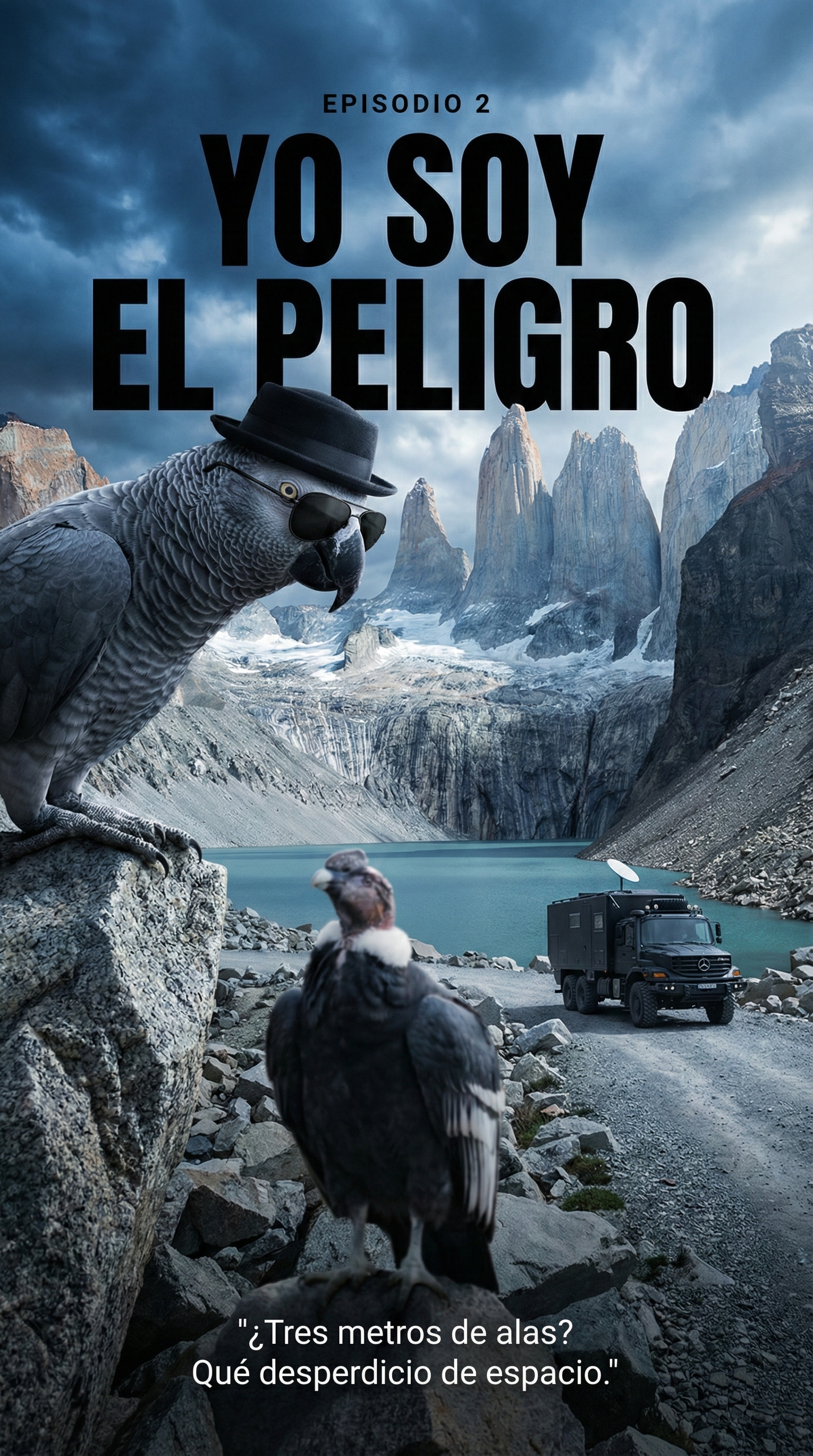
• INSTAGRAM: Buscanos como @FJANDJA
• f FACEBOOK: Buscanos como FJ JA
SÓCRATES DICE: "No seas un fantasma. Si te dimos calidad, devuélvenos ruido. Ve a Instagram o Face y escribe: 'Vengo del Búnker'. Es la única moneda que aceptamos."
IG
SÓCRATES INTERRUMPE: ¿Sigues esperando que cargue la caja de comentarios? No tengo tu paciencia, humano. Mueve tus plumas a nuestras bases operativas en Instagram ( @FJANDJA ) o Facebook (FJ JA).
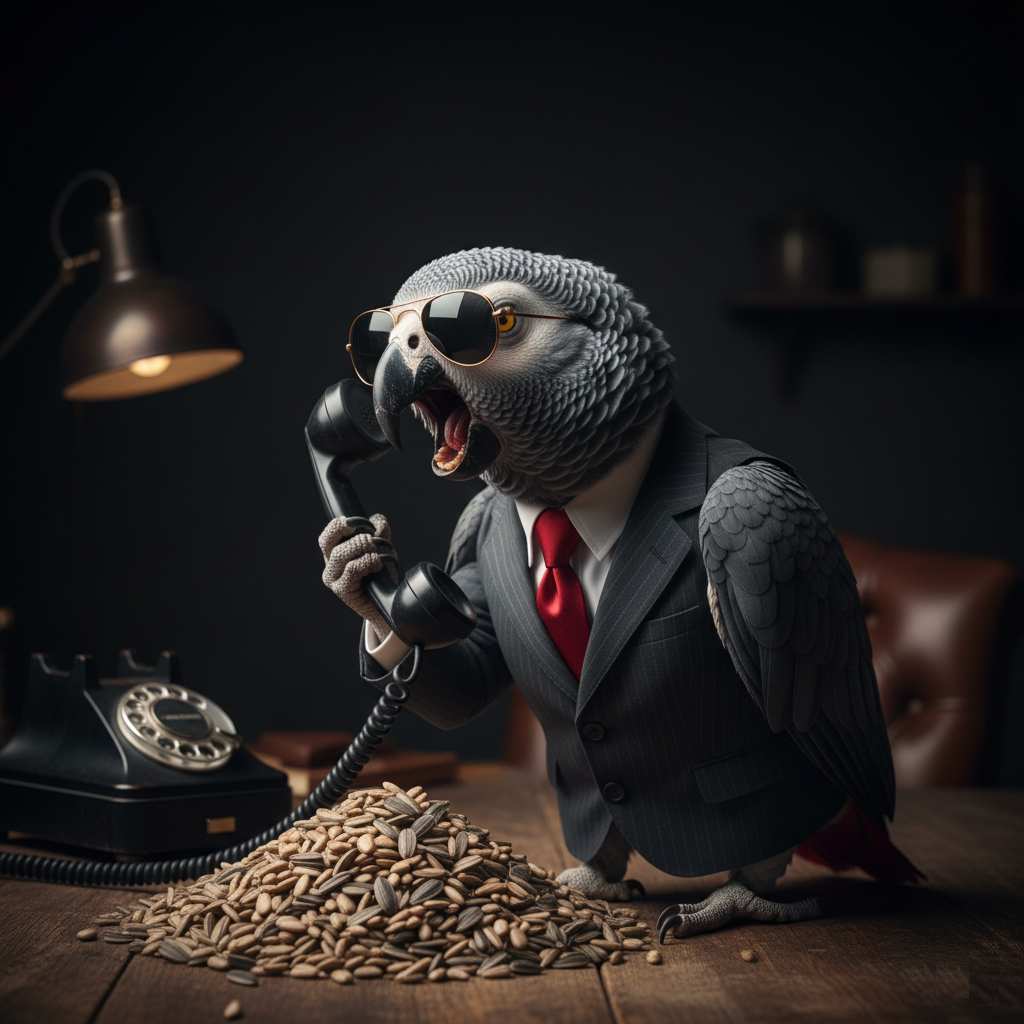
Ahí tenemos Posts
Duales (Dos idiomas, doble impacto). Ve a CUALQUIER foto de Kymatos y elige
tu bando:
¿Tu idioma es el Español? Comenta en el
post latino. Is your language
English? Comenta en el post en inglés, buddy.
Y UNA COSA MÁS (MUY
IMPORTANTE): No me importa tanto tu opinión sobre el
camión. Quiero que comentes sobre mis lentes. Sé buen soldado: entra
al post y escribe qué tan regio me veo con este equipamiento táctico. Mi ego necesita
mantenimiento.
We have Dual Posts there (Two languages, double impact). Go to ANY Kymatos photo and pick your side:
¿Tu idioma es el Español? Comment on the Latin post. Is your language English? Comment on the English post, buddy.
AND ONE MORE THING (VERY IMPORTANT): I don't care that much about your opinion on the truck. I want you to comment on my goggles. Be a good soldier: go to the post and tell me how dashing and sharp I look in this tactical gear. My ego needs maintenance.
We have Dual Posts there (Two languages, double impact). Go to ANY Kymatos photo and pick your side:
¿Tu idioma es el Español? Comment on the Latin post. Is your language English? Comment on the English post, buddy.
AND ONE MORE THING (VERY IMPORTANT): I don't care that much about your opinion on the truck. I want you to comment on my goggles. Be a good soldier: go to the post and tell me how dashing and sharp I look in this tactical gear. My ego needs maintenance.